

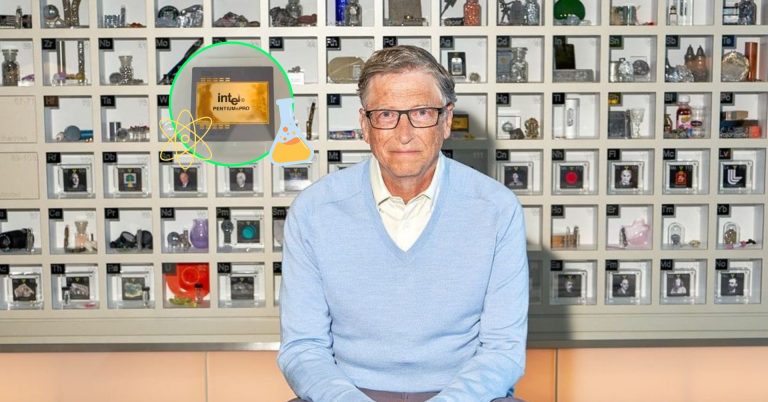
Bill Gates has long been a voice on technology’s potential to reshape society. Now, as artificial intelligence accelerates workplace disruption, the billionaire Microsoft cofounder says the ability to use AI tools is both “fun and empowering” — advice he especially directs at Gen Z.
However, whether early adoption of smart systems will be enough to shield graduates from economic dislocation remains deeply uncertain.
Speaking with CNN, Gates described AI as a force that can unlock creativity and productivity, yet he also tempered expectations.
Register for Tekedia Mini-MBA edition 20 (June 8 – Sept 5, 2026).
Register for Tekedia AI in Business Masterclass.
Join Tekedia Capital Syndicate and co-invest in great global startups.
Register for Tekedia AI Lab.
“Embracing [AI], and tracking it, will be very, very important,” he said. “That doesn’t guarantee we’re not going to have a lot of dislocation.”
He recommended that young people “be curious, read, and use the latest tools.”
AI has shaken up entry-level careers
Gen Z is entering a job market that feels unusually unforgiving. On TikTok and other platforms, frustrated applicants have voiced despair about constant rejection emails and the sense that the system is broken. The data backs them up. Entry-level job postings in the U.S. have fallen by about 35% since January 2023, and roles most vulnerable to automation — research, administrative assistance, data gathering — have been among the hardest hit.

A recent survey cited by Fortune found nearly half (49%) of Gen Z job hunters believe AI has eroded the value of their degrees. Meanwhile, the unemployment rate for recent college graduates climbed above 6% in the 12 months ending in May, compared to the broader U.S. rate of about 4%.
Global firms are already restructuring around AI. At Carlyle, a major investment firm, tasks once assigned to new analysts — combing through articles, requesting documents, and processing data — are now being executed by AI systems. Junior staff are hired not to perform the initial research but to verify the accuracy of machine-generated work. Smaller businesses are following suit. Bill Balderaz, CEO of Ohio-based consulting firm Futurety, told the Wall Street Journal he skipped hiring an intern this summer, choosing instead to run social media copy through ChatGPT.
A cycle of disruption — with a twist
Although this dislocation echoes earlier periods of technological upheaval, what makes today’s AI disruption more acute is its reach. Instead of erasing only low-skilled jobs, it is undermining entry-level white-collar roles that traditionally served as stepping-stones into higher-paying careers. Without those on-ramps, Gen Z risks being blocked from traditional career ladders.

How Gen Z is repositioning itself
Faced with these pressures, many young workers are recalibrating their ambitions. Much like investors retreat to Treasury bonds during times of economic turbulence, Gen Z is gravitating toward stability in trades and people-centered professions.
A recent survey of 1,000 Gen Z workers found that 53% are considering skilled or licensed trades such as construction, plumbing, and electrical work — fields where automation has made less headway, according to Fortune. These roles can offer solid earnings, with elevator installation jobs paying six-figure salaries without requiring a four-year degree. Others are gravitating toward healthcare, education, and social work — careers rooted in empathy and human presence that machines cannot yet replicate.
Gates’ advice — to stay curious and master emerging tools — is consistent with his lifelong advocacy for technological literacy. But the uncertainty surrounding AI’s effect on the labor market means curiosity alone may not protect a generation from economic volatility.
For Gen Z, the question is not whether to use AI, but whether mastering it will be enough to carve a secure path through a shifting, unforgiving job landscape.