

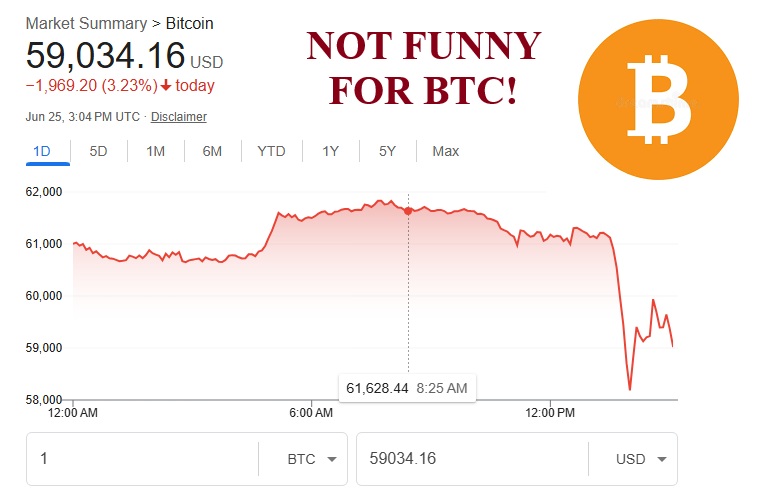
What happens if Bitcoin falls below $40,000 per coin? This question is becoming increasingly important because Bitcoin does not have an earnings report, cash flow statement, or productive output that can fundamentally alter its trajectory.
In the world of productive assets, there is usually a mechanism for changing the narrative. A company’s share price may be collapsing, but then it reports exceptional revenue growth, introduces a breakthrough product, or delivers strong profits, and suddenly the market reprices the business. Fundamentals can change the direction of the asset.
For Bitcoin, however, the principal driver remains belief and collective conviction. There is no quarterly earnings report, no dividend, no new factory, and no productive activity that directly influences its valuation. Its value is primarily anchored on what market participants believe it should be worth.
Register for the next Tekedia Mini-MBA.
Register for Tekedia AI in Business Masterclass.
Join Tekedia Capital Syndicate and co-invest in great global startups.
Unfortunately, in the economics many of us learned from A. O. Lawal’s textbooks, belief by itself is not directly recognized as a factor of production. Land, labour, capital, knowledge, and entrepreneurship create economic output and provide the basis for valuation. Bitcoin’s challenge is that its valuation is much more dependent on sustained confidence than on productive fundamentals.
That does not mean Bitcoin cannot rise again. It simply means that when confidence weakens, there is no earnings report waiting around the corner to reset the narrative. And that is BTC’s weakest point.
---
Connect via my
LinkedIn |
Facebook |
X |
YouTube
