

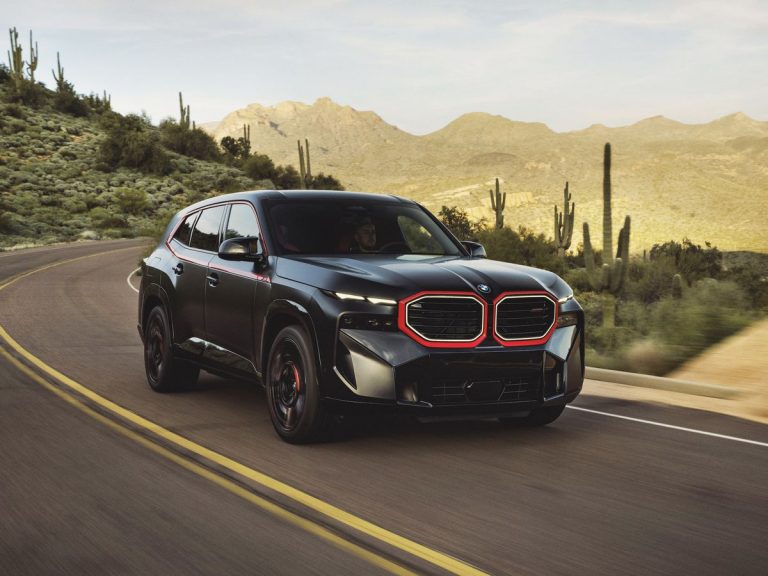
The BMW iX3 is emerging as a significant milestone in the German automaker’s transition toward a new generation of electric mobility. Roughly a year after the vehicle’s world premiere, BMW says it is approaching 100,000 orders in Europe.
Highlighting strong customer interest in the first model built around its Neue Klasse technology platform. The new iX3 was unveiled at the IAA Mobility show in Munich in September 2025 as the first production model of BMW’s Neue Klasse.
Rather than treating the vehicle as simply another electric SUV, BMW positioned it as the beginning of a broader technological and design transformation that will extend across its portfolio.
Register for the next Tekedia Mini-MBA.
Register for Tekedia AI in Business Masterclass.
Join Tekedia Capital Syndicate and co-invest in great global startups.
The company plans to introduce more than 40 new or updated models by 2027, with Neue Klasse technologies gradually spreading throughout the range.
The speed of the iX3’s order intake is particularly notable. By the end of March 2026, BMW had already recorded more than 50,000 European orders. By mid-2026, the company said it was on course to reach the 100,000-order milestone.
BMW’s latest announcement indicates that the vehicle is now nearing that level, demonstrating that demand has remained strong beyond the initial excitement surrounding its launch. The figures provide an important indication of how BMW’s electric strategy is developing in its home region.

In the second quarter of 2026, BMW Group deliveries of fully electric vehicles in Europe reached 81,445 units, representing growth of about 38% from the previous year. During the first half of the year, fully electric vehicles represented around 28% of BMW Group sales in Europe.
The iX3 has become a particularly important component of that expansion. BMW says that since the model’s world premiere, approximately one in three fully electric BMW vehicles ordered in Europe has been an iX3. Within the broader X3 family, one out of every two orders is now for the fully electric version.
Those figures suggest that electrification is increasingly penetrating one of BMW’s most important vehicle segments. Production has had to respond to the strength of demand.

BMW manufactures the new iX3 at its Debrecen plant in Hungary, where the company introduced a second shift earlier than originally planned. BMW has described the production ramp-up as exceptionally fast, with the plant reaching 50,000 iX3 vehicles produced since the start of series production.
The vehicle represents a technological statement from BMW. The company says the iX3 can achieve up to 805 kilometres of range under the WLTP testing cycle, while its Neue Klasse architecture introduces new technology clusters and an updated design language.
More broadly, the iX3’s reception arrives at an important moment for the European automotive industry. Automakers are balancing the transition toward electric vehicles with varying consumer demand, charging infrastructure, pricing pressures and competition from established and emerging manufacturers.
BMW’s strategy has been to maintain a broad drivetrain portfolio while expanding its battery-electric range. The approaching 100,000-order milestone therefore carries significance beyond one vehicle. It provides BMW with evidence that its Neue Klasse strategy can generate substantial demand in Europe.
The next challenge will be translating orders into efficient production, timely deliveries and sustained demand as more Neue Klasse models reach customers. The iX3 has moved from being the opening chapter of its electric transformation to becoming one of its clearest early indicators of how customers may respond to the company’s next generation of vehicles.