

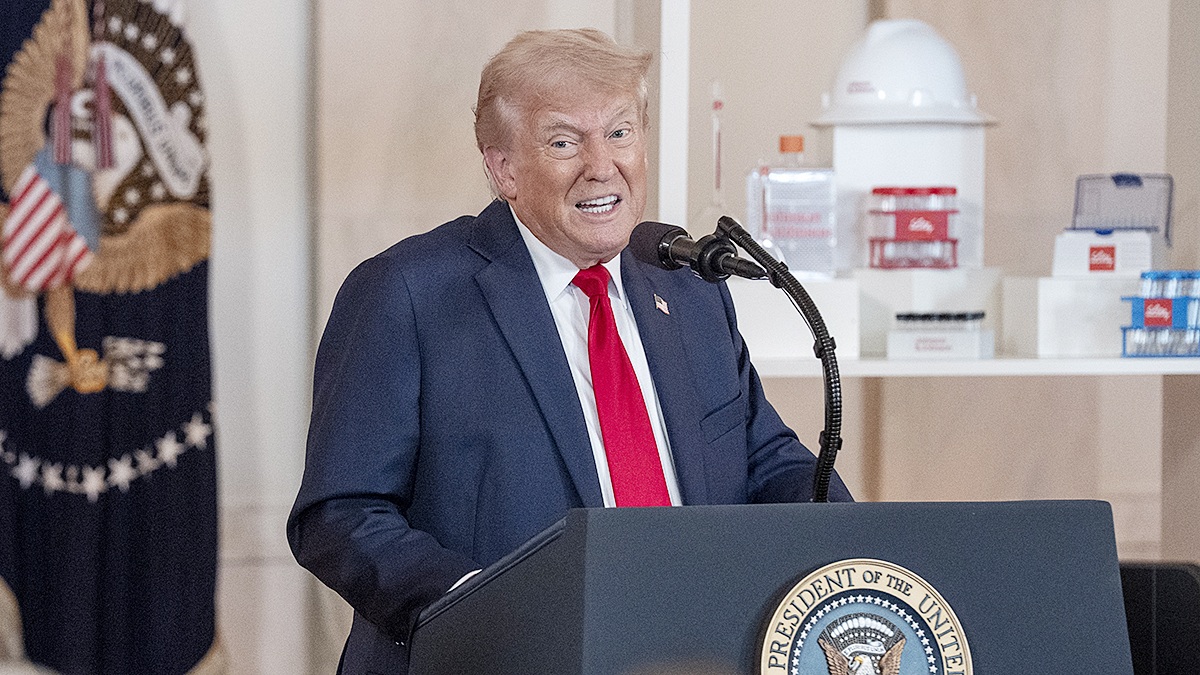
Officials associated with U.S. President Donald Trump’s “Board of Peace”—a body established to oversee the reconstruction and economic recovery of postwar Gaza—are exploring the introduction of a US dollar-backed stablecoin for the enclave.
This initiative is still in very preliminary stages, according to multiple sources including an article in the Financial Times, which cited five people familiar with the discussions. The stablecoin would not create a new “Gaza Coin” or replace any existing Palestinian currency.
Instead, it aims to enable digital transactions for everyday Gazans in a region where the traditional banking system, cash supply, and physical infrastructure like ATMs have been severely damaged or destroyed during the prolonged conflict.
It would be pegged to the US dollar to maintain stable value, facilitating payments for aid distribution, salaries, goods, and services without relying on scarce physical cash. Work on the idea is reportedly being led by Liran Tancman, an Israeli tech entrepreneur and former reservist, serving as an unpaid adviser to the Board.
Register for Tekedia Mini-MBA edition 20 (June 8 – Sept 5, 2026).
Register for Tekedia AI in Business Masterclass.
Join Tekedia Capital Syndicate and co-invest in great global startups.
Register for Tekedia AI Lab.
There are discussions about involving Palestinian and Gulf Arab companies with expertise in digital currencies to help implement it. The Board of Peace and related entities such as any transitional administration in Gaza would likely decide on the regulatory framework, access controls, and implementation details—though nothing is finalized yet.
This fits into the Board’s larger efforts to rebuild Gaza’s economy after years of war. The Board itself was formalized in early 2026 following UN Security Council endorsement, with Trump pledging significant US funding of $10 billion and requiring member countries to contribute $1 billion each for participation.
Some see it as a pragmatic way to restore financial normalcy and potentially reduce reliance on unregulated cash flows which could limit channels for groups like Hamas, while others express concerns about surveillance, control over transactions, limited internet infrastructure in Gaza, or broader geopolitical implications.

Similar ideas have surfaced in past Trump-related postwar Gaza planning discussions; digital tokens for relocation or development incentives, but this stablecoin concept appears distinct and focused on payments rather than land or incentives.
President Donald Trump’s Gaza reconstruction plans center on his “Comprehensive Plan to End the Gaza Conflict,” a 20-point roadmap endorsed by UN Security Council Resolution 2803 in late 2025. This has transitioned into Phase Two (post-ceasefire), focusing on demilitarization, transitional governance, and large-scale rebuilding under the newly formed Board of Peace.
The Board of Peace, chaired by Trump himself, held its inaugural meeting on February 19, 2026, in Washington at the renamed Donald J. Trump United States Institute of Peace. It serves as an international body with a broader potential mandate beyond Gaza to oversee reconstruction, mobilize funds, and ensure accountability until the Palestinian Authority can assume control after reforms.
Trump pledged $10 billion from the U.S. toward the Board and Gaza efforts. Member countries over 40 nations, including Gulf states like UAE, Qatar, Saudi Arabia, plus others like Kazakhstan, Azerbaijan, Morocco, Bahrain, and more have committed at least $7 billion as an initial down payment for reconstruction and relief.

This is a fraction of estimates: the World Bank projects $50-53 billion needed, with some sources citing up to $70 billion due to extensive war damage. A National Committee for the Administration of Gaza (NCAG), comprising 15 Palestinian technocrats, handles restoration of public services, civil institutions, and daily stabilization.
An Office of the High Representative supports NCAG. A Gaza Executive Board (under the Board of Peace) oversees operations, excluding direct Palestinian or Israeli members initially. Full disarmament of Hamas remains a core goal but is ongoing and challenging.
An International Stabilization Force (ISF), potentially led by a U.S. general and involving troops from countries like Albania, Indonesia, Kazakhstan, Kosovo, and Morocco, would deploy in phases starting in areas like Rafah under Israeli control. Plans include a major 5,000-person multinational military base in southern Gaza to support operations.
Emphasis on modern, efficient governance to attract investment and create “thriving miracle cities” inspired by Gulf models. Proposals include building 100,000 housing units for ~500,000 residents, $5 billion in initial infrastructure, and transforming Gaza into an economic/investment hub.
Jared Kushner presented AI-generated concepts at Davos for high-rises, marinas, and redevelopment zones—though population transfers are explicitly ruled out in the plan. Gulf and Palestinian digital currency experts may assist, with the Board and NCAG setting regulations—still very preliminary.
The plans build on a 2025 ceasefire and hostage deal and aim for a “deradicalized, terror-free” Gaza with prosperity. Trump has touted it as a path to lasting peace, with some nominating him for the 2026 Nobel Peace Prize. However, skepticism persists: many Western allies have been wary or declined full involvement, fearing it rivals the UN or lacks Palestinian input.
Critics describe it as top-down, real-estate-focused (prioritizing “real estate over rights”), potentially fragmenting Gaza or sidelining political aspirations for statehood. Implementation faces hurdles like ongoing security issues, massive funding gaps, infrastructure collapse, and debates over control and surveillance in any digital systems.