

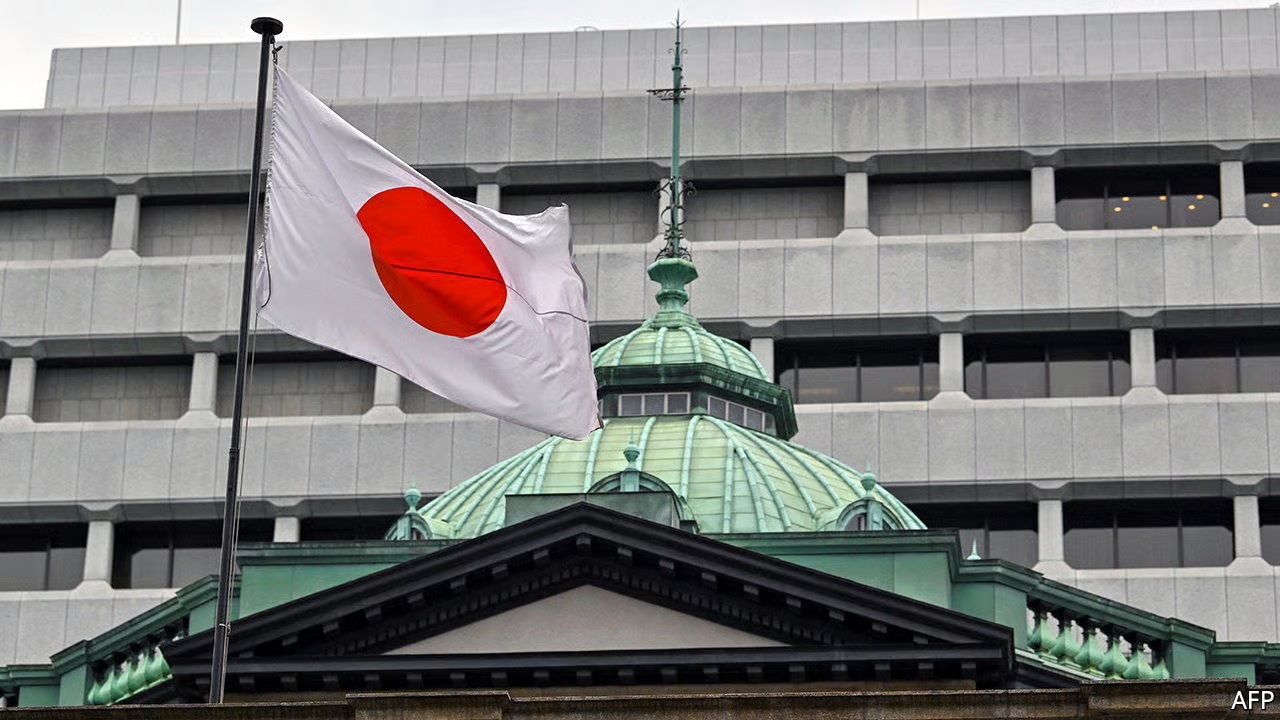
The Bank of Japan raised its policy rate by 25 basis points to 1.25% on Friday, taking borrowing costs to their highest level since 1995, but a split decision and limited guidance on further tightening sent the yen sharply lower.
The increase was widely anticipated, with nearly 90% of economists surveyed by CNBC expecting the BOJ to deliver a quarter-point hike. The decision nevertheless unsettled currency markets because two of the central bank’s nine policymakers voted against it, raising questions about how much support there is within the board for maintaining an accelerated pace of monetary tightening.
The vote was 7-2, with Toichiro Asada and Ayano Sato dissenting. Both were appointed by Prime Minister Sanae Takaichi earlier this year and are viewed as reflationists. Asada argued that core inflation was below the BOJ’s 2% target and that the economic situation might not be sufficiently strong to justify another increase, while Sato said economic and price developments had not accelerated substantially from their previous pace.
Register for the next Tekedia Mini-MBA.
Register for Tekedia AI in Business Masterclass.
Join Tekedia Capital Syndicate and co-invest in great global startups.
The hike marks a faster pace of normalization for the BOJ since it began dismantling its long-running ultra-loose monetary policy in March 2024. The latest increase came only three months after the previous hike, compared with a six-month interval before that.
In its policy statement, the BOJ said it acted because of the risk that inflation could deviate upward beyond its 2% target. The central bank said it wants underlying inflation to stabilize at around 2%, arguing that a sustained overshoot could eventually have adverse consequences for the Japanese economy.
The decision comes against a complicated backdrop for Japan’s policymakers. Inflation remains close to the BOJ’s target, while the yen continues to trade at historically weak levels against the dollar. Japan and the United States have also undertaken coordinated action aimed at supporting the currency.

Yet the immediate market reaction was the opposite of what a rate increase might normally imply.
The dollar climbed 1.2% against the yen to 157.84, its highest level in two weeks. The move put the Japanese currency on track for its biggest daily decline against the dollar since December and its strongest weekly loss since September 2024.
“They’ve just clearly underwhelmed versus expectations here,” said Ray Attrill, head of FX strategy at National Australia Bank in Sydney.

“And I think that one of the more staggering aspects of it was that they couldn’t even get the unanimous vote for that,” he added. “That really raised eyebrows in the market.”
The yen had strengthened sharply earlier in September, reaching its strongest level since February as investors increased bets that the BOJ would embark on a series of rate increases. Friday’s decision has complicated those expectations.
The issue for currency traders was not the 25-basis-point increase itself, which had been largely priced in, but what the decision said about the path ahead.
“The statement offered little additional hawkish guidance to support bullish Japanese yen positions,” said Frantisek Taborsky, a currency strategist at ING.
“The dissent from [Toichiro] Asada and [Ayano] Sato points to resistance against the fastest pace of rate increases in more than three decades and suggests they may increasingly act as a brake on further tightening,” he said.
The market reaction also highlights the difficulty facing BOJ Governor Kazuo Ueda as the central bank tries to balance inflation risks against concerns about economic growth and financial conditions.
Japan’s core inflation remained close to the BOJ’s target in August. The core measure stood at 1.7%, down from 1.8% in July, while headline inflation was 1.9%. Asada specifically pointed to the core reading in arguing for a pause.
The BOJ’s decision therefore leaves policymakers confronting two competing pressures. Inflation is sufficiently persistent for the central bank to worry about an upside deviation from its target, but some policymakers believe the underlying economy and price trends do not yet justify a faster tightening cycle.
For the yen, the uncertainty is growing larger because interest-rate expectations have become an important driver of the currency. Investors had been betting that Japan’s move away from decades of ultra-low rates would narrow the interest-rate gap with the United States and other major economies, supporting the yen.
That trade has become less straightforward as markets reassess the speed at which Japanese rates can rise.
The possibility of currency intervention remains another constraint on yen traders. Finance Minister Satsuki Katayama said Tokyo would not hesitate to conduct further coordinated action to support the currency, following a joint U.S.-Japan move in late July.
The warning means traders must weigh the BOJ’s monetary-policy trajectory against the government’s willingness to intervene if yen weakness becomes excessive.
The benchmark 10-year Japanese government bond yield fell 4.9 basis points to 2.947% after the decision, another indication that markets did not interpret the BOJ’s latest move as a clear signal of substantially faster tightening ahead.
For the central bank, the challenge now is communicating how much further rates can rise without creating unnecessary volatility in the economy or financial markets. The 1.25% rate is the highest Japan has seen since 1995, marking a significant shift from the negative-rate and ultra-loose monetary-policy era that defined the country’s financial system for decades. But Friday’s dissent means the next stage of normalization could be more contested within the BOJ than the headline rate increase suggests.
The data will now take on greater importance. With core inflation below 2% in August and the yen again under pressure, policymakers will need to determine whether price pressures are persistent enough to justify another increase or whether the economy requires a longer period at the current rate.