

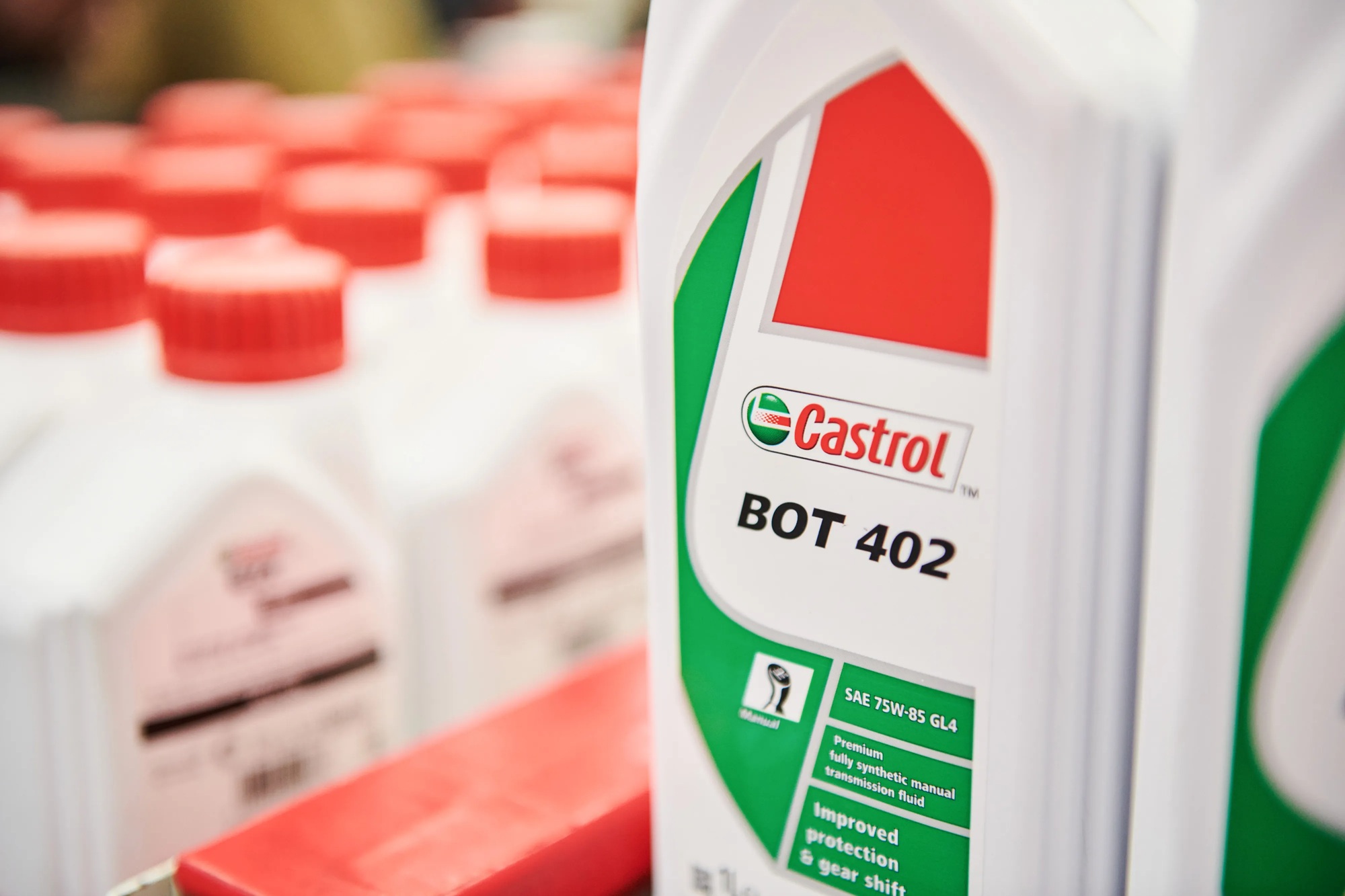
British Petroleum has agreed to sell a 65% stake in its iconic Castrol lubricants business to U.S.-based infrastructure investor Stonepeak in a deal generating approximately $6 billion in net proceeds, valuing the unit at an enterprise value of $10.1 billion, including debt.
The transaction, announced on Christmas Eve, represents BP’s largest asset sale to date and propels the company past the halfway mark in its ambitious $20 billion divestment program by 2027, aimed at strengthening the balance sheet and simplifying operations amid a volatile energy market.
BP will retain a 35% minority interest in a newly formed joint venture, preserving exposure to Castrol’s growth while allowing an option to exit fully after a two-year lock-up period.
Register for Tekedia Mini-MBA edition 20 (June 8 – Sept 5, 2026).
Register for Tekedia AI in Business Masterclass.
Join Tekedia Capital Syndicate and co-invest in great global startups.
Register for Tekedia AI Lab.
All proceeds will be directed toward reducing net debt—standing at $26.1 billion as of Q3 2025—toward a target range of $14-18 billion by 2027, while funding accelerated shareholder returns, including potential share buybacks or dividend enhancements.
Interim CEO Carol Howle, who assumed the role in October 2025 following Murray Auchincloss’ abrupt departure, described the deal as “a very good outcome for all stakeholders,” highlighting its role in realizing shareholder value amid Castrol’s strong momentum (nine consecutive quarters of year-over-year earnings growth).
“With this, we have now completed or announced over half of our targeted $20 billion divestment programme,” Howle said, emphasizing reduced complexity and sharper focus on integrated core businesses like upstream oil/gas and low-carbon energy.

Stonepeak, managing $71 billion in assets with a focus on energy infrastructure and real assets, is partnering with Canada Pension Plan Investment Board (CPPIB)—which will commit up to $1.05 billion for an indirect stake through its infrastructure arm—to drive Castrol’s expansion.
Stonepeak Managing Director Trent Vichie praised Castrol’s “iconic brand” and innovation pipeline, including emerging products like immersion cooling fluids for data centers and sustainable lubricants.
The sale process, initiated in May 2025 with extensive bidder interest, attracted suitors including India’s Reliance Industries (potentially expanding its Jio-BP joint venture), Saudi Aramco (seeking downstream diversification), and private equity firms Apollo Global Management and Lone Star Funds.

Stonepeak emerged victorious after competitive bidding, with UBS advising the buyer and Goldman Sachs handling BP’s side.
Castrol, established in 1899 as “CC Wakefield & Company” and rebranded in 1960, was acquired by BP (then Burmah-Castrol) in 2000 for $4.7 billion. The business, generating $2.5 billion in 2024 revenue with ~7,000 employees across 100+ countries, specializes in premium lubricants for automotive, marine, aviation, and industrial applications, including EV fluids and data center cooling solutions.
It holds a 20% global market share in passenger car lubricants and has partnerships with automotive giants like BMW, Volkswagen, and Ford.
Market and Analyst Reaction
BP shares opened up 1.3% on Wednesday before settling around 0.9% higher, trading near 426p in thin holiday volume.
The stock is up approximately 9% year-to-date after a 15.7% decline in 2024, buoyed by leadership changes, cost cuts (targeting $2 billion savings in 2026), and upstream discoveries like the Tiber field extension in the Gulf of Mexico (adding 200 million barrels equivalent).
Analysts hailed the deal as an “early Christmas present” and a “positive step,” reinforcing debt reduction and downstream refocus.
Stephen Isaacs of Alvine Capital, a BP shareholder, noted the CEO change as potentially “the last piece of the jigsaw” for turnaround, while Dan Boardman-Weston of BRI Wealth Management predicted further divestments to refocus on “bread and butter” oil/gas exploration.
The transaction aligns with BP’s broader strategic reset under new Chairman Albert Manifold, including a partial U-turn on aggressive renewables targets (capping low-carbon spend at $6-8 billion annually through 2030) to prioritize hydrocarbons amid shareholder demands for returns.
It follows last week’s appointment of Meg O’Neill—current Woodside Energy CEO—as BP’s next permanent chief executive, effective April 1, 2026.
O’Neill, the first woman and external hire to lead a top-five oil major, replaces Murray Auchincloss after less than two years amid shareholder pressure over underperformance.
BP’s leadership churn—four CEOs in six years—reflects challenges adapting to energy transition pressures.
The London-listed company has underperformed peers like Shell (+15% YTD) and ExxonMobil (+12%), with declining annual profits in 2023 ($13.8 billion from 2022’s record $27.7 billion) and 2024 ($9.3 billion), driven by lower oil prices (Brent averaging $80/bbl in 2024 vs. $100 in 2022) and refining margins.
Q3 2025 results showed underlying replacement cost profit of $2.3 billion, beating estimates on higher production (2.4 million boe/d) but down from the prior year.
Expected to close by the end of 2026, subject to regulatory approvals (including antitrust in key markets like India, where Castrol holds 25% share), the Castrol divestment underscores BP’s pivot toward simplicity, profitability, and shareholder returns—potentially paving the way for further portfolio rationalization in a volatile energy landscape marked by OPEC+ cuts and net-zero transitions.