

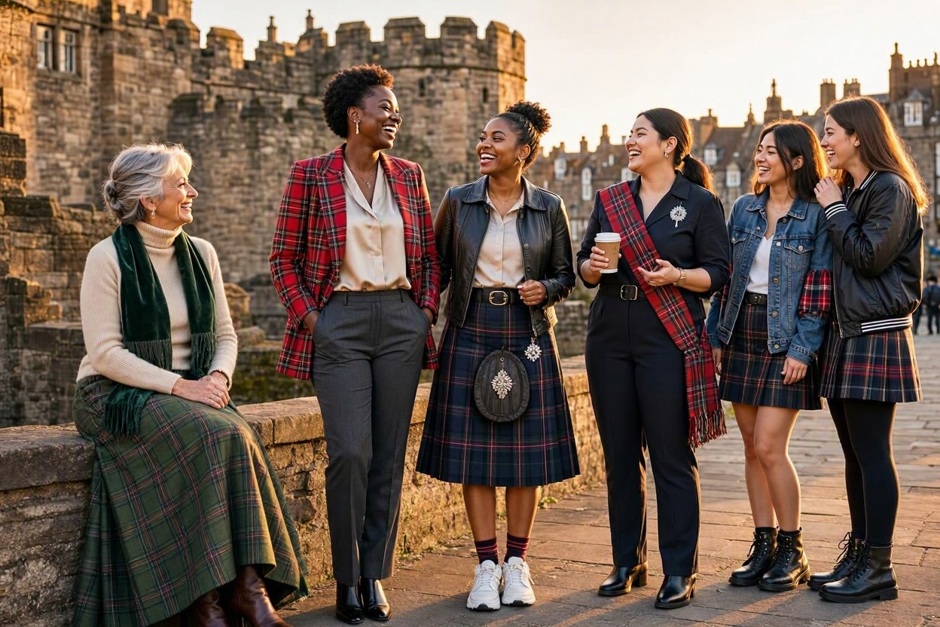
Tradition exists in constant tension with progress. For Scottish women, this tension is particularly acute. Scotland’s cultural identity is wrapped in deeply rooted traditions: kilts, whisky, bagpipes, clan histories, religious practices. These traditions carry meaning and beauty. They’re also, historically, defined largely by male experience and male authority.
A new generation of Scottish women is navigating this tension with sophistication that goes beyond simple rejection or blind preservation. They’re asking: which traditions serve us? Which do we want to evolve? Which do we want to abandon? And crucially, who gets to decide? The answer they’re arriving at reshapes Scottish identity without erasing it. These conversations happen in communities and platforms where women can discuss their heritage openly, from formal cultural organisations to spaces where shared interests bring people together like onjabet. This isn’t tradition dying. It’s tradition being reclaimed.
The Weight of Heritage: Tradition as Both Anchor and Constraint
Scottish identity is profoundly rooted in history. The Highland Clearances, industrial revolution, migration patterns, religious divisions—all created a culture where understanding your past matters deeply to understanding yourself. This historical consciousness is culturally valuable. It creates continuity, meaning, and a sense of belonging that modern society often lacks.
Yet tradition can become constraining. Historical gender roles embedded in Scottish culture—the woman as keeper of hearth, the man as provider and warrior—persist in subtle ways. They appear in language, in family expectations, in how women are expected to perform Scottish identity. A woman wearing traditional dress might be celebrated. A woman questioning the traditions might be seen as rejecting identity itself.
This creates impossible binds. To be authentically Scottish, you’re expected to embrace traditions. To be authentically modern, you’re expected to question traditions. Modern Scottish women are refusing the false binary. They’re asking: what if you can do both?
The Reclamation: Making Traditions Your Own
The most interesting cultural movement happening in Scotland right now is women deliberately reclaiming traditions and remaking them. This isn’t passive acceptance. It’s active interrogation followed by intentional choice.
Some examples:
Women are becoming distillers and whisky experts—not in spite of whisky’s traditionally male associations, but precisely because those associations meant women were historically excluded from this knowledge. Now, female distillers are creating distinct products, perspectives, and innovations that expand what Scottish whisky can be.
Women are learning bagpipes at rates that would astound previous generations. They’re competing in pipe bands, winning championships, bringing new musical interpretations. The tradition persists. The exclusion doesn’t.
Women are investigating their clan histories with rigorous scholarship, not accepting male-authored narratives as definitive. They’re discovering female ancestors whose stories were minimised or erased. They’re contributing new understanding of Scottish history itself.
Women are wearing kilts—not as costumes, but as intentional cultural practice. They’re choosing which clans to honour, which designs to wear, how to integrate tartans into modern life. The tradition remains. The authorship changes.
This pattern repeats across domains. The tradition survives. The authority over how it’s practiced expands. Women aren’t destroying Scottish identity. They’re expanding it to include themselves fully.
Identity as Conversation, Not Monument
The deeper shift is philosophical. Traditional culture often treats heritage as monument—fixed, preserved, passed down unchanged. Modern Scottish women are treating heritage as conversation. Traditions are offered to you. You engage with them, question them, decide what serves you, and contribute your own additions.
This is risky culturally. There’s always anxiety that change will destroy meaning. What if every generation modifies traditions? Won’t they eventually become unrecognisable?
History suggests otherwise. Every tradition is already modified. The kilt as we know it was invented relatively recently. Tartan patterns have changed repeatedly. Scottish identity itself has been continuously reconstructed. The difference now is that women are conscious participants in that reconstruction rather than observers of decisions made without them.
Platforms and communities that facilitate this conversation—where women discuss Scottish identity, share traditions, and challenge outdated interpretations—have become invaluable. These conversations are happening increasingly openly.
The Strength That Comes from Choosing Your Own Culture
There’s unexpected power in deliberately choosing your traditions rather than inheriting them passively. A woman who studies her clan history because it matters to her, who learns bagpipes because she loves the instrument, who wears tartans because she’s claimed them—that’s not losing authenticity. That’s gaining it. You can’t fake genuine connection.
This is different from the previous generation’s relationship to Scottish tradition, which often felt obligatory. You maintained traditions because that’s what you did, because your community expected it, because alternative identity felt like betrayal.
Modern Scottish women are saying: I maintain these traditions because I choose them. I modify them because they matter enough to make mine. I abandon some because I’m not obligated to carry everything. This deeper commitment—rooted in choice rather than obligation—actually strengthens cultural transmission. It ensures traditions survive because they’re genuinely valued, not because they’re habitually performed.
The Ongoing Negotiation: Neither Rejection Nor Submission
This isn’t a completed project. Scottish culture will continue negotiating its traditions for generations. What’s shifted is that women are now full participants in that negotiation. That’s not tradition being destroyed. That’s tradition maturing.
Some challenges remain. Patriarchal interpretations of tradition still exist. Some communities still resist women’s participation in practices historically reserved for men. Conservative voices argue that any change betrays authenticity.
But the trajectory is clear. Each generation of Scottish women claims more authority over their own cultural practice. Each one contributes innovations. Each one questions inherited assumptions. The tradition persists, evolves, and becomes stronger for including full participation.
The Lesson Beyond Scotland
What’s happening in Scottish culture offers a model for how any community can navigate tradition and progress. It’s possible to love your heritage without being imprisoned by it. It’s possible to change traditions without abandoning them. It’s possible to be authentically rooted and authentically modern simultaneously.
For Scottish women specifically: your identity isn’t threatened by your own full participation in it. It’s strengthened. The traditions that matter will survive your questions. The ones that don’t matter will gracefully fade. That’s how cultures stay alive.
Note on Cultural Change: Traditions carry meaning and continuity. Respectful evolution—where communities deliberately choose what to preserve and what to reimagine—strengthens cultural identity rather than weakening it. The most vibrant cultures are those where new generations actively engage rather than passively inherit.