

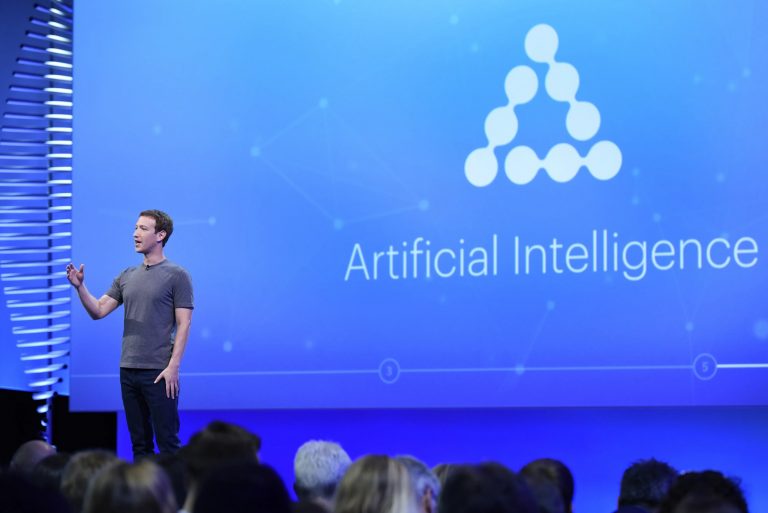
Meta CEO Mark Zuckerberg has revealed the company’s next major leap into artificial intelligence—a bold mission to develop “personal superintelligence” for billions of people.
In a lengthy note published on Tuesday, Zuckerberg said the next generation of AI will be “a trusted assistant, coach, creative partner, and helper,” one that aligns with individual goals rather than replacing human labor. He cast this new direction as central to Meta’s future, describing AI not as a means to automate work but to amplify human potential—a framing that sets Meta apart from rivals like OpenAI and Google DeepMind.
“A Trusted Companion That Helps You Get Things Done”
Zuckerberg’s definition of superintelligence focuses on AI that deeply understands its user—down to their preferences, goals, history, and relationships—and acts in alignment with them.
Register for Tekedia Mini-MBA edition 20 (June 8 – Sept 5, 2026).
Register for Tekedia AI in Business Masterclass.
Join Tekedia Capital Syndicate and co-invest in great global startups.
Register for Tekedia AI Lab.
“This is a different vision than building AI to replace people, which seems to be a popular narrative in the industry right now,” he wrote. “We are focused on building AI that works for you.”
Meta’s vision is to embed this kind of intelligence in everyday life, using devices like Ray-Ban Meta smart glasses to make AI accessible at all times. He hinted that this wearable form factor could eventually replace smartphones as the primary computing device.
He said this approach is more sustainable and broadly beneficial than competing models of centralized AI that automate tasks at scale.

“People pursuing their individual aspirations is how we have always made progress,” he said. “That’s why we’re building personal AI for everyone, not just a few.”
Meta Superintelligence Labs and the Return of Alexandr Wang
To carry out this vision, Meta has created a new elite research division called Meta Superintelligence Labs (MSL), which quietly began operations on June 30, 2025. The unit is being led by Alexandr Wang, the 27-year-old founder of Scale AI, who resigned from his own company to take on the role. Meta has also acquired a 49% stake in Scale AI for $14.9 billion, making it one of the largest AI mergers in history.
MSL is tasked with building next-generation AI infrastructure that powers personal superintelligence. The team will operate out of the U.S., UK, and Canada, with plans for a gigawatt-scale data center site named Hyperion, which could consume more energy than entire tech campuses. Zuckerberg said that Meta is investing more than $68 billion in AI-related capital expenditures in 2025 alone—a level of spending that rivals OpenAI’s ambitions and surpasses Alphabet’s annual AI outlay.

Recruiting the Best Minds in AI—at Any Price
Since forming the lab, Meta has aggressively poached top AI talent from its competitors. The company reportedly made a failed acquisition attempt of Thinking Machines Lab, an independent AI research group, offering over $1 billion. Though the offer was rejected, it signaled how far Meta is willing to go. Nearly two dozen researchers from OpenAI, Anthropic, DeepMind, and even Apple have joined Meta Superintelligence Labs.
Some of these hires have received sign-on bonuses and equity packages in the nine-figure range, according to reports from Wired and The Financial Times. Former OpenAI and DeepMind scientists have described Meta’s outreach as “relentless,” with some offers structured to give new hires control over research direction and long-term compute resources.
Zuckerberg has also been holding weekly AI strategy meetings since January 2025, treating this new mission as an all-hands transformation of the company—one that affects not only research but products, infrastructure, and governance.
Balancing Open Models With Safety
While Meta has already released its Llama family of large language models as open-source software, Zuckerberg’s manifesto took a more cautious tone. He acknowledged the benefits of open innovation but warned against the risks of releasing models that could be used maliciously.
“We will continue to open source models where we believe it’s safe and can benefit the community,” he said.
The company is expected to release Llama 4.5 later this year, ahead of the full launch of Llama 5 in 2026. These models, Meta says, will power personalized interactions via WhatsApp, Messenger, Instagram, and the company’s virtual reality platforms.
Investor and Industry Reaction
Internally, some at Meta have called MSL a “Manhattan Project” for AI. While Wall Street has largely welcomed Meta’s AI push—helping drive a 20% rise in its stock in 2025 so far—analysts are also growing nervous. The Financial Times reports that some investors are questioning whether such capital-intensive ambitions can yield returns, especially as Meta still derives most of its revenue from advertising.
Meta’s prior AI product, Behemoth, was reportedly scrapped earlier this year after failing to match GPT-4-class benchmarks. Insiders say the new strategy is partly a response to those stumbles—and to maintain Meta’s relevance in the AI race. Critics have noted that the company has yet to prove that its AI tools offer tangible value beyond experimental demos.
There are also growing tensions between MSL and Meta’s legacy AI team, FAIR (Facebook AI Research), which has seen some of its responsibilities sidelined. “They’ve created a parallel AI empire inside Meta,” one executive told The Verge, “and no one knows yet if it will work.”
With Zuckerberg personally taking control of Meta’s AI transformation, and with billions committed to building “personal superintelligence,” the company is banking on a future where AI doesn’t displace humans, but amplifies their lives. It’s a gamble that could define Meta’s identity for the next decade, and perhaps the future of AI itself.