

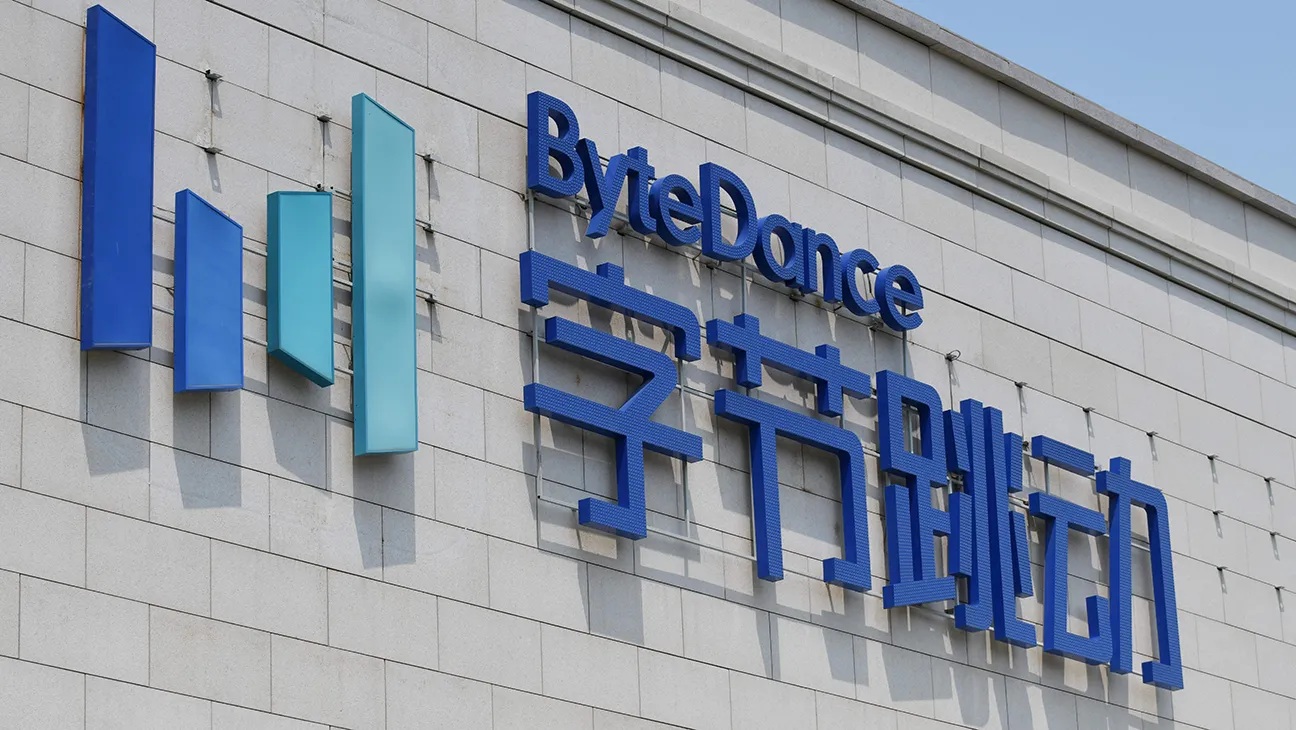
Chinese technology giant ByteDance is moving deeper into the global artificial intelligence infrastructure race with plans to develop its own central processing units, Reuters reports, citing people familiar with the matter.
The parent company of TikTok is developing proprietary CPUs to support its expanding AI infrastructure needs, according to people familiar with the matter, as soaring chip prices, tightening supply, and geopolitical uncertainty force major technology companies to seek greater control over their computing stacks.
The shift highlights how the AI boom is rapidly evolving beyond Nvidia’s graphics processors and into a broader battle over the foundational chips powering next-generation computing.
Register for the next Tekedia Mini-MBA.
Register for Tekedia AI in Business Masterclass.
Join Tekedia Capital Syndicate and co-invest in great global startups.
For the past several years, the AI surge has largely revolved around graphics processing units, or GPUs, particularly those made by Nvidia, which dominate the training of large AI models. But as companies increasingly deploy AI systems into commercial products and services, attention is shifting toward “inference” computing, where trained AI models perform real-time tasks for users.
That shift is dramatically increasing demand for CPUs, which manage memory allocation, networking, workload orchestration, and data processing inside AI data centers.
Industry executives say the demand surge has created an emerging supply crunch.

The move by ByteDance places it alongside global hyperscalers such as Amazon, Microsoft, and Google, all of which are aggressively developing custom processors to reduce dependence on external suppliers and lower the enormous cost of scaling AI infrastructure.
Sources familiar with ByteDance’s plans said the Beijing-based company intends to deploy the CPUs across its own servers and data centers as it prepares a large-scale expansion of agent-based AI products, including its Coze platform and other internal artificial intelligence systems.
The company is reportedly evaluating two chip architecture paths simultaneously. One design is based on technology from Arm Holdings, while another uses the open-source RISC-V instruction set architecture.

The dual-track approach is borne out of the uncertainty facing many technology companies attempting to build custom silicon. Arm-based chips benefit from a mature software ecosystem and widespread adoption across cloud infrastructure, while RISC-V offers greater flexibility and lower licensing costs, making it increasingly attractive to Chinese technology firms seeking technological independence.
People familiar with the matter said ByteDance has approached several external partners to assist with both chip design and manufacturing coordination. Securing foundry capacity has become a critical challenge as semiconductor manufacturers struggle to meet exploding demand from AI companies worldwide.
ByteDance is making its move as the global AI infrastructure market is entering a new phase where the economics of inference computing are beginning to rival, and in some cases exceed, the importance of model training. While training frontier AI systems requires immense bursts of GPU power, inference workloads require sustained, large-scale deployment across millions of users and devices.
That creates enormous demand for CPUs capable of coordinating AI systems efficiently and cheaply.
The market dynamics are already reshaping the semiconductor industry. Intel and AMD, whose dominance had appeared threatened by Nvidia’s rise, are now benefiting from renewed investor interest as CPUs regain importance inside AI data centers. Intel warned earlier this year that Chinese customers faced server CPU lead times stretching up to six months, while AMD CEO Lisa Su recently described the global CPU market as “tight,” with demand significantly exceeding expectations.
Sources said ByteDance has experienced substantial increases in server CPU pricing in recent months, with some products rising between 10% and 35% quarter-on-quarter. Those cost pressures are said to have accelerated the company’s internal chip efforts.
The development also points to China’s broader push toward semiconductor self-sufficiency. As Washington continues tightening restrictions on advanced semiconductor exports to China, major Chinese technology firms are increasingly seeking to reduce dependence on U.S. suppliers. Export controls introduced since 2022 have already restricted Chinese access to Nvidia’s most advanced AI chips due to concerns about potential military applications.
Although ByteDance’s CPU project is primarily commercially driven, it aligns with Beijing’s wider objective of strengthening domestic semiconductor capabilities amid escalating technology tensions with the United States.
The move comes as Nvidia itself attempts to expand beyond GPUs. Nvidia CEO Jensen Huang recently said the company’s new “Vera” CPU platform could give the chipmaker access to a $200 billion market, highlighting how central processors are becoming increasingly important in the next phase of AI development.
Nvidia has also begun integrating CPUs more deeply into its AI systems to create vertically integrated computing platforms capable of handling both training and inference workloads.
Custom chip development allows companies to optimize performance for specific workloads, reduce long-term procurement costs, and lessen dependence on external suppliers during periods of shortage or geopolitical disruption.
But building advanced processors remains a high-risk undertaking. Even for well-funded technology giants, designing competitive chips requires deep engineering expertise, sophisticated software integration, and reliable access to advanced manufacturing nodes.
Many custom silicon projects fail to achieve broad deployment because of technical complexity, escalating development costs, and software compatibility challenges.