

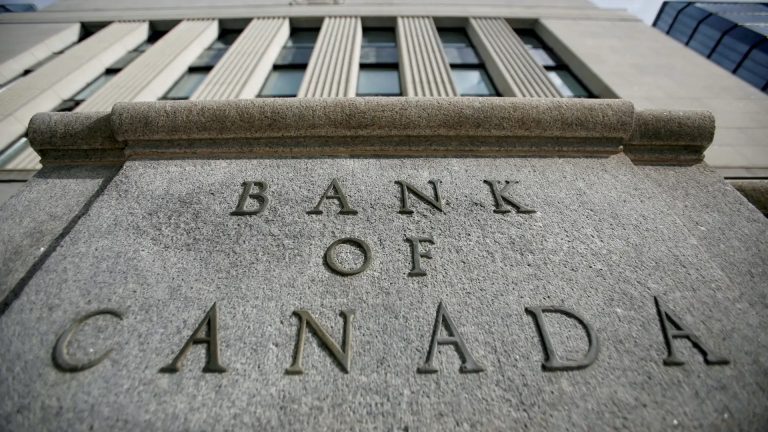
The Canadian dollar strengthened against its US counterpart on Wednesday after the Bank of Canada raised interest rates for the first time in more than three years, while government bond yields climbed as investors assessed the prospect of further monetary tightening amid rising energy costs.
The loonie was also supported by a broad-based decline in the US dollar after the Federal Reserve kept borrowing costs unchanged, as expected, leaving investors to weigh the contrasting policy outlooks of the two central banks.
The Bank of Canada increased its key interest rate by 25 basis points to 2.50%, warning that further increases might be necessary to prevent higher energy prices from feeding into broader inflation. The decision marks a shift after an extended period without a rate increase and puts renewed attention on how policymakers will respond if energy-driven price pressures persist.
Register for the next Tekedia Mini-MBA.
Register for Tekedia AI in Business Masterclass.
Join Tekedia Capital Syndicate and co-invest in great global startups.
The Canadian dollar rose 0.3% to 1.40 per US dollar, equivalent to 71.43 US cents, after trading between 1.3990 and 1.4068 during the session.
Canadian government bond yields also advanced, with the two-year yield rising as much as 7.2 basis points to 3.441%, its highest level since August 2024, before retreating to 3.406%. The 10-year yield was up 2.6 basis points at 3.857%.
Shorter-dated yields were particularly sensitive to the decision because they tend to reflect expectations for the central bank’s policy rate. The increase suggested investors were reassessing how much further borrowing costs might rise, even as the Bank of Canada’s message left some uncertainty over the timing and extent of additional tightening.

TD Securities strategists said the initial market response was delayed because of the mixed tone of the meeting, but rates ultimately moved higher.
“The initial reaction was delayed given the mixed tone of the meeting, but ultimately rates are moving higher and Canada is giving back the outperformance from this morning,” Andrew Kelvin and other strategists at TD Securities said in a note.
The strategists also pointed to the possibility that the central bank could follow its initial move with another increase relatively soon.

“The Bank of Canada has a tendency to move consecutively after a long pause, and we see a lower bar for a subsequent hike in December,” they said.
Interest-rate swap markets reflected those expectations, pricing in a 45% probability of another Bank of Canada increase in December and fully discounting a second increase by January.
Those market expectations indicate that investors are preparing for further tightening, but they are not a guarantee of the central bank’s next move.
Rising oil prices add another dimension to the Bank of Canada’s decision. Crude oil is a major Canadian export, meaning higher prices can support export revenues and parts of the domestic economy. At the same time, more expensive energy can raise transport, production and household costs, complicating the central bank’s efforts to keep inflation under control.
US crude futures settled 2.9% higher at $102.78 a barrel on Wednesday as fighting in Yemen renewed concerns about potential supply disruptions across the Middle East.
The effect of higher oil prices on Canada’s economy is not straightforward. Stronger export prices can support national income, but sustained increases in energy costs may put pressure on consumers and businesses. For monetary policymakers, the major concern is whether those initial price increases become embedded in inflation expectations, wages, and the prices of other goods and services.
The Bank of Canada’s warning about possible further increases suggests it is prepared to respond if energy-related inflation becomes more persistent. However, tighter monetary policy also raises borrowing costs for households and companies, potentially restraining spending and investment.
The balance between those risks will determine whether the latest rate increase marks the beginning of a sustained tightening cycle or remains a limited response to changing inflation conditions.
The Canadian dollar’s reaction also underlines the interaction between domestic monetary policy and global market movements. Higher expected Canadian interest rates can make the currency more attractive to investors seeking returns, while a weaker US dollar can provide additional support.
In the United States, the Federal Reserve left interest rates unchanged, opting to wait for further evidence on inflation before making another adjustment to borrowing costs. The decision came ahead of the following week’s US midterm elections, adding a near-term political event to the backdrop against which investors were assessing the policy outlook.
The Fed’s pause contrasted with the Bank of Canada’s decision to raise rates, helping shape currency movements during the session. However, the divergence does not automatically imply sustained Canadian dollar strength, particularly if US economic data or expectations for future Fed policy change.
Trade relations between the two countries also remain a source of uncertainty. Progress in discussions aimed at easing US tariffs on Canadian steel and automobiles has been limited, according to a Canadian government official familiar with the talks.
The lack of a breakthrough leaves Canadian exporters exposed to continued trade restrictions and complicates the outlook for industries with close cross-border supply chains. Tariffs can raise costs for businesses, disrupt production decisions and weigh on investment, potentially offsetting some of the support Canada receives from stronger energy prices.
For currency and bond markets, the combination of higher energy prices, a newly restrictive monetary policy stance and unresolved trade issues creates competing forces. Oil may support Canada’s export earnings, but the inflationary consequences could prompt further rate increases. Higher yields may attract investors, while trade uncertainty could weigh on growth and business confidence.