

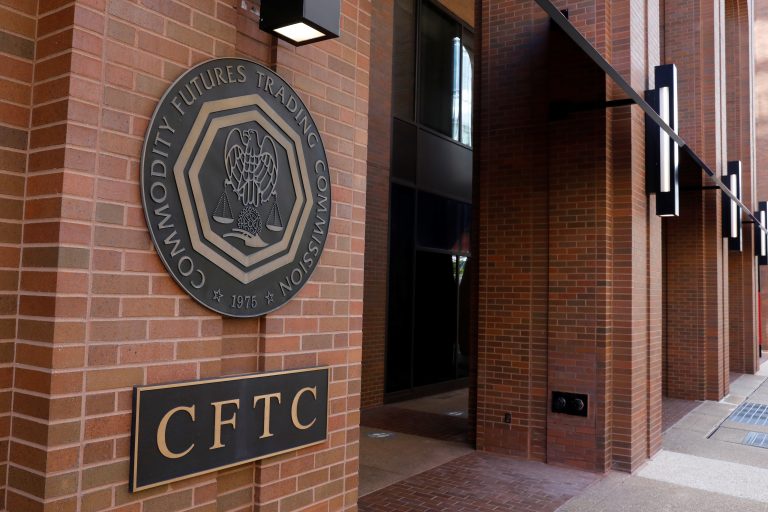
The Chairman of the Commodity Futures Trading Commission, Mike Selig, has disclosed that cryptocurrency is at the center of the next evolution in global finance.
In his address at the 9th Annual DC Blockchain Summit, U.S., the (CFTC) Chairman described cryptocurrency as “the engine of the new frontier”.
His remarks come amid a growing shift of financial activity onto blockchain-based systems, where traditional markets are increasingly being mirrored or even replaced by faster, more transparent on-chain alternatives.
Register for Tekedia Mini-MBA edition 20 (June 8 – Sept 5, 2026).
Register for Tekedia AI in Business Masterclass.
Join Tekedia Capital Syndicate and co-invest in great global startups.
Register for Tekedia AI Lab.
Selig described cryptocurrency as the driving force behind what he called the “new frontier of finance.” He emphasized that financial markets are increasingly moving on-chain, transitioning from traditional centralized infrastructure to decentralized, blockchain-based systems.
“As financial markets move on-chain, I believe the United States should serve as the base layer where builders choose to deploy the systems powering this new frontier of finance,” he stated in his remarks.
His speech reveals a notable shift in regulatory tone. Rather than viewing crypto as a risky asset class, the CFTC chair positioned it as foundational to the next evolution of global finance.

He highlighted key advantages of on-chain systems which include;
•Transparent shared ledgers for recording transactions.
•Programmatic smart contracts that automatically execute obligations.

•Permissionless public blockchains enabling open innovation without centralized gatekeepers.
For years, cryptocurrencies like Bitcoin have largely been viewed through the lens of volatile assets prone to sharp price swings, driven by speculation and sentiment.
While that characterization is not entirely inaccurate, it captures only one side of a much broader transformation underway. The CFTC’s stance highlights a deeper reality: crypto is increasingly functioning not just as an asset, but as infrastructure.
At the heart of this shift is blockchain technology, the underlying system powering cryptocurrencies. Unlike traditional financial systems that rely heavily on intermediaries such as banks and clearinghouses, blockchain enables peer-to-peer transactions that can settle almost instantly.
This has profound implications for how value moves across the global economy. Payments that once took days can now be completed in minutes, and often at a fraction of the cost
Notably, the emergence of Stablecoins has further reinforced crypto’s role as infrastructure. Pegged to traditional currencies like the US dollar, stablecoins are emerging as a bridge between conventional finance and blockchain ecosystems.
They are being used for cross-border payments, trading, and as a store of value in regions with unstable currencies. In many ways, they are becoming a new form of digital cash within the global financial system
The CFTC’s speech also suggests an important shift in regulatory thinking. Rather than questioning the legitimacy of crypto, regulators are increasingly focused on how to integrate it safely into the broader financial system.
This includes developing frameworks that ensure transparency, protect investors, and manage systemic risks, while still allowing innovation to thrive.
The CFTC chairman Selig suggested that major traditional exchanges (NYSE, Nasdaq, CME) could eventually operate on blockchain infrastructure with the same reliability as current databases potentially bringing the entire market plumbing on-chain.
Several users expressed excitement at the regulatory embrace, with many stating that crypto isn’t just surviving, rather, it’s powering the new frontier of finance with on-chain markets, transparent ledgers, and programmable smart contracts.
Selig’s speech arrives amid ongoing momentum in U.S. crypto policy, including Project Crypto (a joint CFTC-SEC initiative), clearer asset classification rules, and efforts to protect innovation from outdated regulations.
His vision underscores a belief that America, under current leadership, has a historic opportunity to lead the transformation rather than watch builders migrate overseas.
Whether this regulatory pivot translates into widespread on-chain adoption or resolves the core tensions between decentralization and oversight, remains one of the most watched questions in finance today.
For now, the message from the CFTC Chair is clear. Crypto is no longer on the periphery. It’s becoming the engine of tomorrow’s markets.