

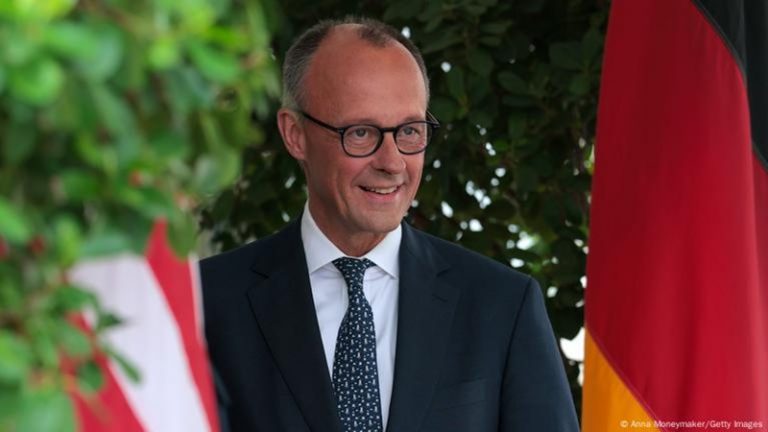
German Chancellor Friedrich Merz has firmly opposed tax increases for medium-sized businesses, emphasizing this stance during a Christian Democratic Union (CDU) event in Osnabrück on August 23, 2025.
He rejected a proposal from his coalition partner, the Social Democratic Party (SPD), specifically countering Vice Chancellor and Finance Minister Lars Klingbeil’s suggestion that tax hikes for high earners and wealthy citizens might be necessary to address a significant federal budget gap.
Merz stated, “There will not be any increase in income tax on medium-sized companies in Germany with this federal government under my leadership,” highlighting his commitment to maintaining economic competitiveness and supporting the Mittelstand, Germany’s small and medium-sized enterprises (SMEs).
This position aligns with his broader economic agenda, which includes tax breaks and incentives to boost investment, as evidenced by a €46 billion tax-break package approved in July 2025. However, Merz acknowledged the structural economic challenges Germany faces, including high energy costs and U.S. tariffs impacting exports, which have contributed to a 0.3% GDP contraction in Q2 2025.
Register for Tekedia Mini-MBA edition 20 (June 8 – Sept 5, 2026).
Register for Tekedia AI in Business Masterclass.
Join Tekedia Capital Syndicate and co-invest in great global startups.
Register for Tekedia AI Lab.
Merz’s commitment to avoiding tax hikes provides certainty for SMEs, which employ around 60% of Germany’s workforce and contribute significantly to GDP (approximately 34% of total value-added, per EU data). This stability encourages investment and hiring, as SMEs can plan without the burden of increased tax liabilities.
The €46 billion tax-break package approved in July 2025, which Merz supports, further incentivizes SME growth by reducing fiscal pressure and boosting competitiveness. Merz’s rejection of the SPD’s proposal for tax hikes on high earners and wealthy individuals signals potential friction within the CDU-SPD coalition. This could complicate budget negotiations, especially with a reported €17 billion federal budget gap for 2026.
If unresolved, this may lead to delays in fiscal policy or compromises that could indirectly affect SMEs (e.g., spending cuts impacting public contracts). Germany faces structural issues, including high energy costs, U.S. tariffs, and a 0.3% GDP contraction in Q2 2025. Merz’s focus on tax relief aligns with efforts to maintain Germany’s export-driven economy, particularly for SMEs reliant on global markets.

Avoiding tax increases could help offset these external pressures, preserving SME profitability. Merz’s clear stance boosts confidence among SME owners, who have expressed concerns about rising costs and regulatory burdens (e.g., 59% of SMEs cite bureaucracy as a top issue, per recent surveys). This could encourage reinvestment of profits into innovation or expansion, critical for long-term growth.
How Tax Increases Affect SMEs
Higher taxes, especially on income or corporate profits, reduce SMEs’ disposable income. Many SMEs operate on thin margins (e.g., 3-7% net profit margins in manufacturing, per industry reports). Increased tax burdens could limit funds for reinvestment, hiring, or debt repayment.

SMEs often lack the financial reserves of larger corporations, making them sensitive to tax hikes. A 2023 study by the German Economic Institute found that a 1% increase in corporate tax rates could reduce SME investment by 0.5-1%. This stifles innovation, particularly in sectors like manufacturing, where Germany’s SMEs are global leaders.
SMEs account for a majority of jobs in Germany. Higher taxes could force cost-cutting measures, such as hiring freezes or layoffs. For example, a 2024 DIHK survey noted that 35% of SMEs planned to reduce staff due to rising operational costs, a situation tax hikes would exacerbate.
Germany’s SMEs face competition from countries with lower tax regimes (e.g., Ireland’s 12.5% corporate tax rate vs. Germany’s effective rate of ~30%). Tax increases would widen this gap, making it harder for SMEs to compete internationally, especially in export markets hit by U.S. tariffs.
Tax hikes often come with complex compliance requirements. SMEs, with limited administrative resources, spend disproportionately on tax compliance (e.g., €3,000-€10,000 annually for small firms, per KfW data). This diverts resources from core business activities.
SMEs are integral to local economies, supporting supply chains and regional development. Tax-induced financial strain could reduce their spending with suppliers, impacting other businesses and potentially leading to broader economic slowdown.
Germany’s economy is under strain, with high energy costs (e.g., electricity prices 30% above EU average) and a 25% drop in automotive exports due to U.S. tariffs (2025 data). Tax increases would compound these challenges, potentially pushing SMEs toward insolvency.
Merz’s rejection of tax hikes suggests reliance on other measures, such as spending cuts or debt financing, to close the budget gap. However, these could have indirect effects on SMEs (e.g., reduced public investment in infrastructure, which 40% of SMEs rely on, per DIHK).
If tax hikes were imposed, SMEs would face reduced profitability, constrained investment, and potential job losses, with ripple effects across Germany’s economy. Merz’s focus on tax breaks and incentives, if maintained, could help SMEs navigate these challenges, but broader fiscal solutions will be critical to avoid unintended consequences.