

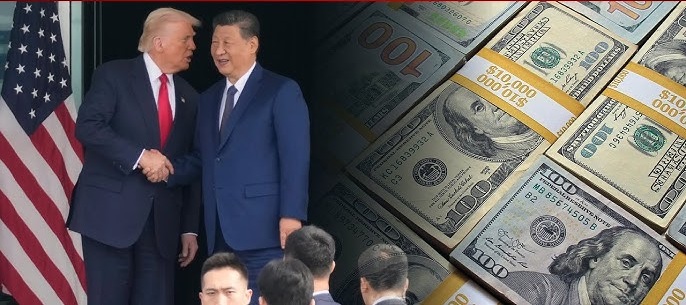
Geopolitics, by design, is built on confusion. Nations speak with one voice in public and act with another in private. It is a theatre of strategic ambiguity where what is declared is rarely what is done. And if anyone still doubted this reality, the latest revelation involving the United States and China should settle the matter.
For close to a decade, Washington has warned countries across the Global South to beware of Beijing’s “debt-trap diplomacy”, the idea that China extends massive loans not only to build bridges and roads, but to tighten geopolitical influence over developing nations. The narrative was clear: accept Chinese credit, and you may lose sovereignty.
Yet, a sweeping new investigation reveals a stunning irony. While the United States was urging the world to avoid China’s lending machine, America itself became China’s largest borrower. A major study by the AidData research lab at William & Mary has uncovered that China’s global lending has been vastly underestimated. Between 2000 and 2023, China extended $2.2 trillion in credit across the world. But the real revelation lies not in the scale of the lending, but in the destination. Instead of focusing solely on poorer nations through the Belt and Road Initiative, Beijing increasingly directed its financial power toward the wealthiest economies on earth. And topping that list is the United States of America.
Register for Tekedia Mini-MBA edition 20 (June 8 – Sept 5, 2026).
Register for Tekedia AI in Business Masterclass.
Join Tekedia Capital Syndicate and co-invest in great global startups.
Register for Tekedia AI Lab.
For the better part of a decade, Washington has sounded a relentless alarm across the Global South, warning developing nations that Beijing’s deep pockets come with a heavy price: a “debt trap” designed to leverage infrastructure loans for geopolitical obedience.
Yet, a sweeping new investigation reveals a staggering economic irony. While American diplomats were cautioning the world against Chinese credit, the United States was quietly becoming its largest customer.
According to a landmark report released Tuesday by the AidData research lab at William & Mary, the sheer scale of China’s global lending has been vastly underestimated, totaling a colossal $2.2 trillion between 2000 and 2023. But the true revelation lies in the destination of these funds. In a stark pivot from the bridge-and-road building of the Belt and Road Initiative in developing nations, China has increasingly directed its financial firepower toward the world’s wealthiest economies.
This discovery highlights the foundational principle of global strategy: power respects power, and interests, not ideology, guide national behavior. Nations criticize publicly but transact privately. The world sees the speeches, but the real deals happen backstage.
History supports the trend we observe today. Over the last ten centuries, China has been the dominant global economy in at least six of them. The United States assumed that role in the late 1800s, propelled by industrialization and innovation. But as the 21st century unfolds, China appears increasingly visible in America’s rear mirror, economically, technologically, and financially.
For Africa, the lesson is profound: Build strategic friendships with both America and China, not as a passive participant, but as a continent that understands how power works. Yes, remember the words of Kwame Nkrumah: no west, no east, just forward. We can work with ALL even now everyone goes to China for money!

---
Connect via my
LinkedIn |
Facebook |
X |
TikTok |
Instagram |
YouTube