

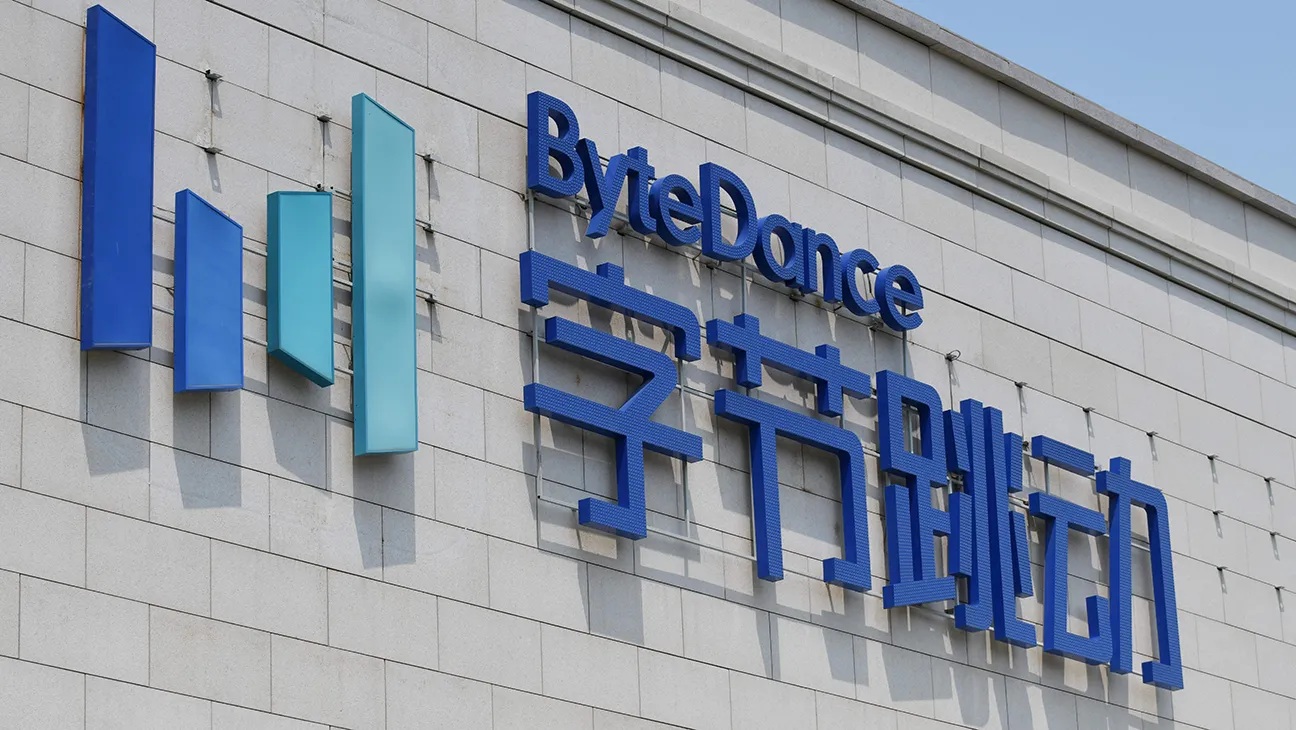
China appears to be preparing to allow some of its largest technology companies to purchase Nvidia’s RTX PRO 5500 chips, potentially creating a narrow opening for US-made computing hardware even as Beijing continues to push domestic alternatives and Washington maintains restrictions on advanced semiconductor exports.
China’s Ministry of Industry and Information Technology has asked companies including ByteDance and Alibaba to submit plans for purchases of Nvidia’s RTX PRO 5500, The Information reported on Sunday, citing two people familiar with the matter.
The ministry has also indicated to some Chinese companies that the government intends to approve the purchases, according to the report.
Register for the next Tekedia Mini-MBA.
Register for Tekedia AI in Business Masterclass.
Join Tekedia Capital Syndicate and co-invest in great global startups.
The potential approvals would be notable because they suggest Beijing is distinguishing between different categories of Nvidia hardware rather than imposing a blanket restriction on US-made chips.
Some industry executives expect the RTX PRO 5500 to fall outside existing US export restrictions, according to The Information. The chip is designed for high-end professional computing rather than Nvidia’s most advanced AI accelerators, which have been at the center of US efforts to limit China’s access to cutting-edge computing technology.
The reported move is expected to give Chinese technology companies access to additional Nvidia computing capacity without directly challenging Washington’s restrictions on the most powerful AI processors.

Nvidia did not confirm whether China had approved purchases by specific companies.
“US firms continue to be restricted by a combination of outdated US export controls, which cover gaming products released nearly half a decade ago, and China’s own limits on US imports,” an Nvidia spokesperson said.
A Narrow Opening in China’s Chip Strategy
The potential purchases underpin the complicated position facing Beijing as it tries to reduce China’s dependence on foreign semiconductor technology while its technology companies continue to require large amounts of computing capacity.

China has spent years promoting domestic chipmakers and encouraging technology companies to substitute locally produced hardware for foreign components. That effort has accelerated as US export restrictions have made access to Nvidia’s most advanced processors increasingly difficult.
But replacing Nvidia hardware across the entire computing ecosystem is much more complicated.
Professional GPUs can be used for a wide range of workloads, including graphics, engineering, simulation, content creation and certain AI applications. Allowing selected companies to purchase RTX PRO 5500 chips could therefore provide additional computing capacity without necessarily giving them access to the highest-end AI technology targeted by US restrictions.
This provides a lifeline for companies such as ByteDance and Alibaba, which operate large-scale cloud, software and AI businesses and require substantial computing resources.
For Nvidia, meanwhile, any opening in China represents a potentially important commercial opportunity after US restrictions sharply limited its ability to sell some of its most advanced products into the world’s second-largest economy.
Nvidia Faces A Two-Sided Regulatory Squeeze
Nvidia’s comment also points to an unusual problem for US semiconductor companies operating in China. American companies face restrictions imposed by Washington on what they can sell, while Beijing has introduced its own measures affecting the purchase and deployment of US-made technology.
That creates uncertainty over which products can actually reach Chinese customers, even when a particular chip does not fall directly under US export controls.
Nvidia has already developed modified products for the Chinese market in response to US restrictions. The company has also faced growing pressure as Chinese authorities encourage domestic companies to use locally produced processors.
The reported RTX PRO 5500 discussions suggest that the market remains fragmented rather than completely closed.
For Chinese technology companies, the calculation is also changing. Domestic chips have improved significantly, but access to foreign hardware remains valuable where performance, software compatibility, and availability matter. A company can support China’s semiconductor industry while still seeking access to Nvidia hardware where domestic alternatives do not yet provide an equivalent combination of performance and software support.
The Bigger Battle Remains Over Advanced AI Chips
The reported purchases should not be interpreted as a broad easing of restrictions on Nvidia’s advanced AI processors. The most consequential part of the US-China semiconductor confrontation remains access to high-end accelerators used to train and operate frontier AI systems.
Washington has sought to restrict China’s access to advanced computing capabilities on national-security grounds, while Beijing has responded by accelerating efforts to build a domestic semiconductor ecosystem.
The RTX PRO 5500 sits in a different part of that technology landscape. If it remains outside the relevant US export thresholds, Chinese companies could potentially obtain Nvidia hardware without undermining the core objective of the restrictions.
That is expected to result in a delicate boundary for policymakers.
If export controls are drawn too broadly, US semiconductor companies risk losing additional Chinese business and encouraging customers to accelerate their transition to domestic alternatives. If controls are too narrow, Chinese companies could potentially obtain hardware that provides useful computing capabilities for AI and other advanced applications.
The reported discussions offer Nvidia a potential source of Chinese demand at a time when the company is navigating an increasingly fragmented global semiconductor market. For Beijing, allowing selected purchases would mark a pragmatic use of foreign technology while the country’s domestic chip industry continues to develop.