

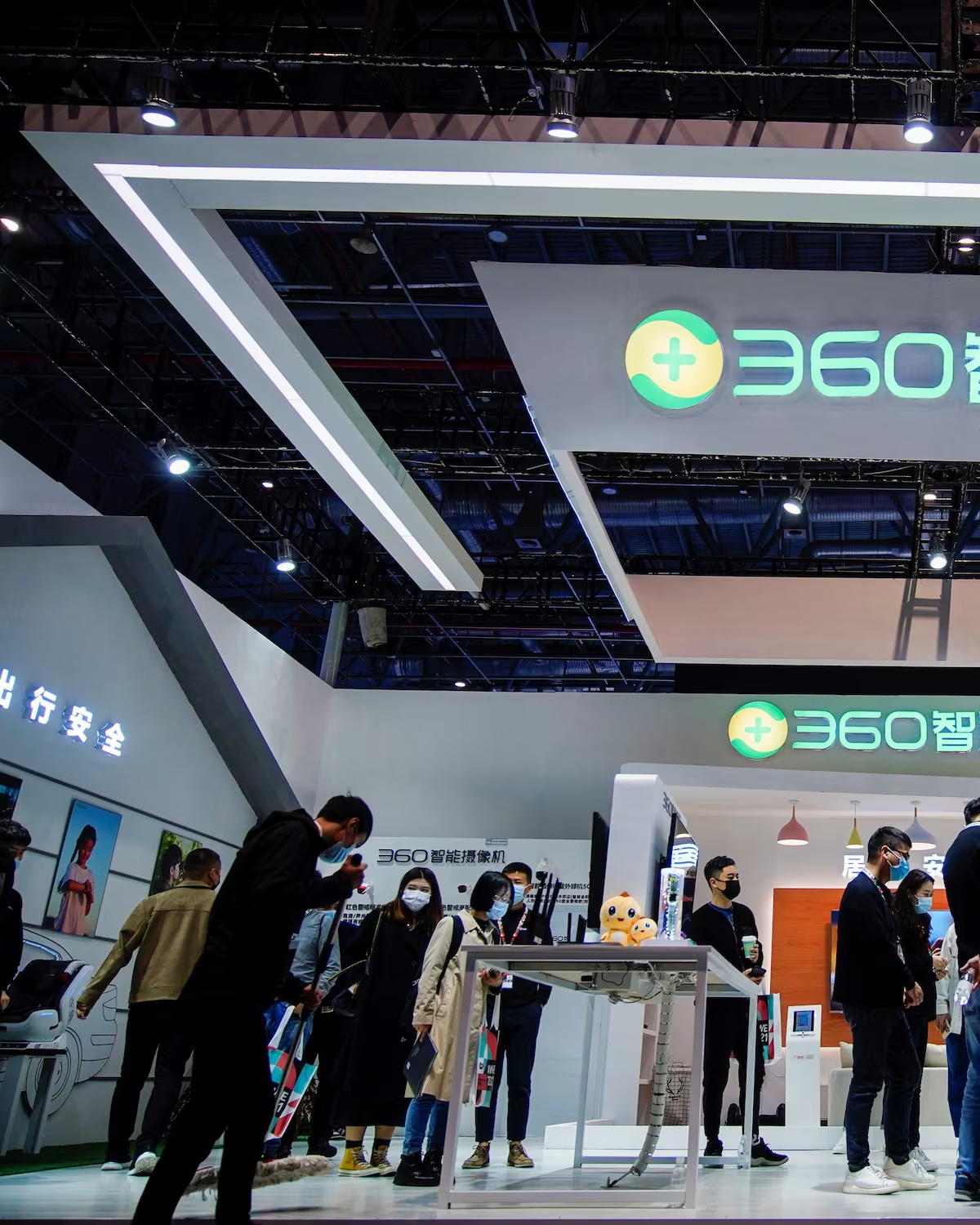
In a pointed declaration of technological self-reliance, Chinese cybersecurity powerhouse 360 Security Technology has rolled out what it describes as a homegrown counterpart to Anthropic’s powerful Mythos AI system, framing the U.S. model as a strategic capability that Beijing simply cannot allow to remain a one-sided advantage.
Speaking at the ISC.AI 2026 cybersecurity conference in Beijing on Wednesday, 360 founder Zhou Hongyi unveiled two new AI-driven security tools under the banner “Yitian Tulong” — a reference to legendary weapons from a classic Chinese martial arts novel, evoking themes of unmatched power and national defense.
The announcement underpins China’s accelerating push to close the gap in offensive and defensive cyber tools amid deepening U.S. restrictions on advanced AI technologies.
Register for the next Tekedia Mini-MBA.
Register for Tekedia AI in Business Masterclass.
Join Tekedia Capital Syndicate and co-invest in great global startups.
One tool, dubbed “Tulongfeng,” is designed to automatically discover software vulnerabilities, which Zhou boldly called “China’s version of Mythos.” A second system, “Yitianzhen,” focuses on automating cyber defense and incident response. Together, they represent 360’s bid to build a comprehensive AI-powered security arsenal capable of both identifying weaknesses and mounting rapid countermeasures.
“This kind of powerful weapon that can change the landscape of cyber offence and defense cannot be held only by others,” Zhou said in his speech, according to a transcript published by the company. “We cannot afford to wait.”
Mythos, previewed by Anthropic in April, has sparked alarm in Washington and beyond for its ability to rapidly uncover vulnerabilities in operating systems, browsers, and other critical software. In a dramatic move earlier this month, the U.S. government ordered Anthropic to suspend exports of a less powerful version of the model worldwide, citing national security risks. Cybersecurity experts have warned that such tools could dramatically amplify the speed and scale of cyberattacks if they fall into the wrong hands.

Zhou argued that allowing the U.S. to maintain exclusive access to Mythos-like capabilities would create “one-way transparency,” where American entities could scan Chinese systems while Beijing lacked comparable tools. His remarks echo a growing sentiment in Chinese state media and policy circles that the country must match or surpass Western advances in AI-driven cyber tools to protect critical infrastructure and maintain strategic parity.
A Calculated Response to U.S. Export Controls
360’s development is believed to be part of China’s broader strategy of circumventing U.S. export restrictions on advanced chips and frontier AI models. Since 2022, Washington has tightened controls on high-end semiconductors, arguing they could enhance Chinese military capabilities. While domestic models still lag U.S. counterparts by an estimated 20-30% in base capability, according to Zhou, Chinese firms are increasingly turning to “agent”-based architectures that combine existing models with specialized security expertise, vulnerability databases, and automated workflows.
Objectively speaking, domestic models still have a 20%-30% gap in base capability,” Zhou acknowledged. “China cannot wait until model capabilities have fully caught up before starting vulnerability discovery.”

He contrasted the U.S. approach, relying on the “strongest model, the strongest computing power and the strongest chips”, with 360’s method of building a complete, reliable system.
“If Mythos is a top-end chip, what we are building is a complete machine that can run stably, work 24 hours a day and make fewer mistakes. If the U.S. route is to cultivate a genius hacker, 360’s route is to organize a professional attack-and-defense team,” he said.
The development comes against a backdrop of mutual accusations between Washington and Beijing over offensive cyber operations targeting critical infrastructure. Last year, Anthropic reported that hackers had exploited vulnerabilities in its Claude AI to attack around 30 global organizations. A separate IBM and Palo Alto Networks survey found that 67% of executives had been targeted by AI-enhanced attacks in the past year.
For China, the stakes are existential. With its economy and military increasingly digitized, vulnerability to advanced AI-driven reconnaissance or attacks could have devastating consequences. Zhou, a veteran entrepreneur and member of China’s top political advisory body, framed the issue in stark national security terms, reflecting Beijing’s view that AI cybersecurity tools are no longer optional luxuries but strategic necessities.
360’s move also illustrates a growing trend in China: leveraging “agentic” AI systems that integrate multiple tools and domain expertise rather than depending solely on raw model scale. This pragmatic approach may help narrow the capability gap faster than attempting to match U.S. frontier models head-on under export control constraints.
Implications for Global Cybersecurity and Tech Competition
However, the emergence of a credible Chinese response to Mythos is expected to accelerate an AI-driven cyber arms race, with both sides racing to develop tools that blur the lines between defense and offense. For global companies and governments, this raises difficult questions about supply chain security, vulnerability disclosure, and the dual-use nature of advanced AI systems.
Against that backdrop, Western nations may view 360’s tools with suspicion, similar to how they regard other Chinese cybersecurity offerings. At the same time, the development underscores the challenges of containing AI proliferation in a world of fragmented technology supply chains and competing national interests.
However, the announcement reinforces 360’s evolution from a consumer antivirus provider to a major player in enterprise and government security. Founded by Zhou, the company gained prominence through antivirus software before expanding into broader digital defense solutions. With the ability to deliver “Mythos-equivalent capabilities” through integrated agent systems, the company’s position in China’s domestic market and potentially in friendly international markets wary of full U.S. alignment is expected to be strengthened.