

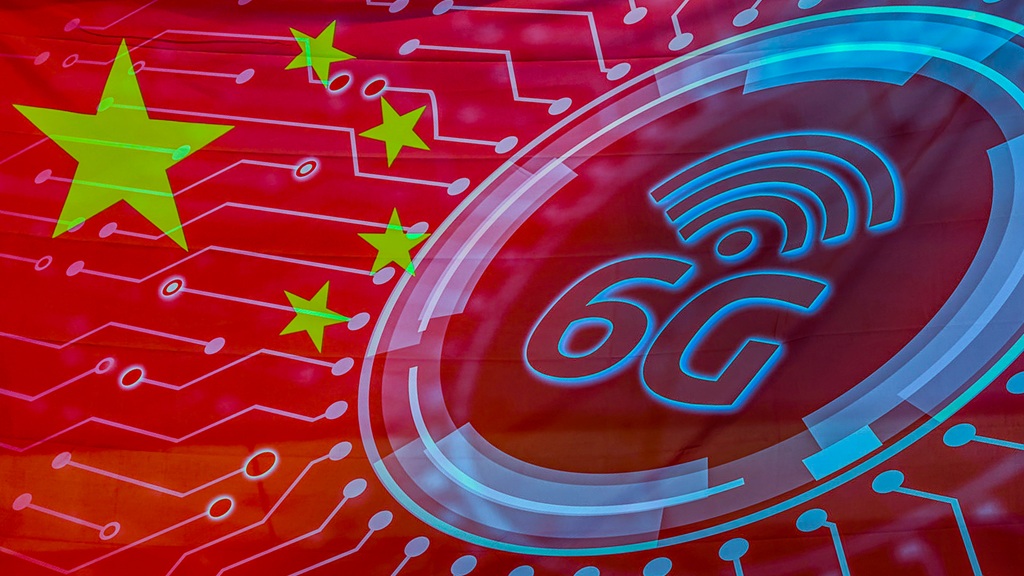
China has unveiled an ambitious roadmap to accelerate the development of its industrial internet ecosystem, setting out plans to dramatically expand industrial 5G networks, strengthen industrial data infrastructure and embed artificial intelligence across the country’s manufacturing sector.
The plan, jointly released on Tuesday by eight government agencies led by the Ministry of Industry and Information Technology (MIIT), lays out a long-term strategy to modernize China’s factories by integrating next-generation communications networks, AI, cloud computing and industrial data systems into production processes.
The move is part of Beijing’s efforts to reinforce its position as a global industrial and technology powerhouse.
Register for the next Tekedia Mini-MBA.
Register for Tekedia AI in Business Masterclass.
Join Tekedia Capital Syndicate and co-invest in great global startups.
At the center of the blueprint is a target to deploy 50,000 industrial 5G private networks by 2030, alongside the creation of a comprehensive industrial data mechanism that will support intelligent manufacturing, automation and real-time industrial decision-making.
Private 5G networks differ from public mobile networks because they are dedicated to individual factories, ports, mines or industrial campuses, providing highly reliable, low-latency and secure connectivity for automated production lines, industrial robots, autonomous vehicles and machine-to-machine communications.
Chinese policymakers view such networks as essential infrastructure for the next generation of smart manufacturing.

The roadmap also calls for the development of globally competitive industrial internet platforms, expansion of industrial data resources, stronger telecommunications capabilities, technological innovation, improved cybersecurity protections, and deeper integration between artificial intelligence and industrial operations.
According to the government plan, advances in industrial internet technologies, standards, and product development are expected to generate more than 2.5 trillion yuan ($368 billion) in value added over the next five years, highlighting the sector’s growing importance to China’s economic transformation.
The initiative forms part of Beijing’s broader strategy to cultivate what it describes as “new quality productive forces”—an economic model centered on advanced technologies including artificial intelligence, robotics, semiconductors, quantum computing and intelligent manufacturing to drive future growth.

Unlike earlier industrial internet policies that focused primarily on expanding digital connectivity, the new strategy places greater emphasis on what officials describe as “integrated applications”—the practical deployment of AI, industrial internet platforms and 5G technologies inside real production environments.
The objective is not simply to digitize factories but to fundamentally reshape manufacturing through intelligent automation, predictive maintenance, digital twins, machine vision, industrial AI agents and data-driven production management. Authorities said these integrated technologies will support China’s transition toward a “new type of industrialization,” with advanced digital manufacturing becoming a central pillar of the country’s long-term economic competitiveness.
The roadmap sets an even more ambitious objective for 2035.
By then, Beijing aims to establish what it describes as a world-leading industrial internet infrastructure, with integrated applications spanning major sectors of the national economy, including automotive manufacturing, electronics, chemicals, energy, logistics, heavy industry and advanced equipment production.
The strategy builds on nearly a decade of industrial modernization efforts. In 2017, China’s State Council introduced a three-stage development roadmap for the industrial internet covering milestones for 2025, 2035, and 2050.
According to the Ministry of Industry and Information Technology, the country has now completed all of the objectives originally established for 2025, including the construction of industrial internet infrastructure across key industries. The ministry added that several of those targets were achieved “far exceeding expectations,” providing the foundation for the next phase of industrial digital transformation.
China’s renewed focus on industrial internet infrastructure comes as global competition over manufacturing leadership intensifies.
While the United States and Europe are investing heavily in reshoring semiconductor production and strengthening domestic supply chains, China is concentrating on making its existing manufacturing base more intelligent, automated and data-driven.
Industrial internet technologies have become a critical component of that strategy because they allow manufacturers to improve productivity, reduce energy consumption, optimize supply chains and shorten product development cycles through continuous data collection and AI-powered analytics.
The initiative also aligns with China’s broader ambition to become a global leader in artificial intelligence. Rather than limiting AI deployment to consumer applications such as chatbots and digital assistants, Beijing has increasingly prioritized industrial AI, viewing manufacturing as one of the sectors where artificial intelligence can generate the greatest economic impact.
Industry analysts say combining AI with industrial internet infrastructure could significantly improve factory efficiency, enhance predictive maintenance, enable autonomous production systems, and strengthen China’s competitive position in high-value manufacturing sectors.
The emphasis on developing international technology standards is also strategically significant.
By taking a leading role in establishing industrial internet standards, China hopes to increase the global adoption of its industrial technologies while strengthening the international competitiveness of Chinese telecommunications equipment, industrial software, and smart manufacturing solutions.
The latest roadmap demonstrates that Beijing sees industrial digitalization not merely as a technology initiative but as a national economic strategy aimed at sustaining China’s manufacturing dominance.