

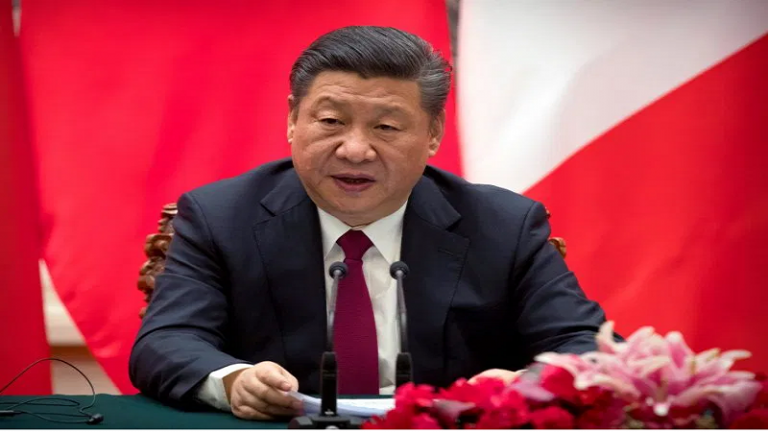
On Thursday, backed by China’s political leadership in Beijing, President Xi Jinping unveiled a sweeping blueprint for the country’s economic and strategic direction over the next five years.
The gathering of nearly 3,000 delegates at the Great Hall of the People marks one of the most closely watched political events in China’s calendar, according to Reuters. This year’s meeting comes at a delicate moment for the world’s second-largest economy, which is navigating slowing domestic demand, geopolitical tensions with the United States, and a global economic environment increasingly shaped by technological competition and supply-chain realignment.
China’s leadership used the congress to roll out the next phase of its Five-Year Plan—an expansive framework covering economic growth targets, fiscal policy, industrial strategy, defense spending, and demographic challenges. The blueprint underscores Beijing’s determination to maintain economic stability while accelerating a long-term push toward technological self-sufficiency and strategic independence.
Register for Tekedia Mini-MBA edition 20 (June 8 – Sept 5, 2026).
Register for Tekedia AI in Business Masterclass.
Join Tekedia Capital Syndicate and co-invest in great global startups.
Register for Tekedia AI Lab.
Moderate growth target
At the heart of the new policy framework is China’s growth objective. Beijing signaled it expects the economy to expand at a pace of between 4.5% and 5% annually in the coming period—slightly below the roughly 5% growth recorded last year.
The target reflects both caution and realism. Policymakers are attempting to manage a complex transition as the country moves away from an investment-driven growth model toward one supported more by technology, consumption, and advanced manufacturing.
To sustain activity, the government plans to maintain steady fiscal support. Officials set a budget deficit target of about 4% of gross domestic product, roughly in line with last year’s level, signaling that stimulus policies will continue but without the massive expansion seen during previous downturns.

The decision suggests Beijing wants to keep fiscal support in place while avoiding the risks associated with excessive debt accumulation in local governments and state-owned enterprises. Economists say the moderate growth target also reflects lingering structural weaknesses that emerged after the COVID-19 pandemic, including weak household spending, a fragile property sector, and uneven industrial demand.
Technology Push to intensify amid U.S. rivalry
A major focus of the plan is China’s push to dominate strategic technologies. Premier Li Qiang told lawmakers that China must “seize the commanding heights of science and technological development,” signaling that investment in advanced industries will remain central to economic policy.
Key areas highlighted include artificial intelligence, quantum computing, advanced semiconductors, and next-generation telecommunications infrastructure. The push comes as competition with Washington intensifies over control of the technologies expected to define future economic and military power.

Restrictions imposed by the United States on exports of advanced chips and manufacturing equipment to China have accelerated Beijing’s efforts to build domestic capabilities across the semiconductor supply chain.
China also holds a strategic advantage in rare earth minerals—materials essential for electric vehicles, defense systems, renewable energy equipment, and consumer electronics. As the world’s largest producer of these critical materials, Beijing is positioning itself to maintain leverage in global technology supply chains.
China aims to secure an edge in industries ranging from batteries to aerospace components by strengthening its grip on rare earth production and refining.
Defense spending rises to boost military modernization
Alongside economic reforms, China’s leadership reaffirmed plans to strengthen the country’s military capabilities. The government announced a 7% increase in defense spending for 2026, continuing a steady expansion of the military budget over the past decade.
The increase will fund efforts to enhance combat readiness and accelerate the development of advanced military technologies, including hypersonic weapons, cyber capabilities, and space-based systems.
Beijing has set a long-term goal of completing the modernization of the People’s Liberation Army by 2035. Military analysts say the push reflects China’s broader ambition to project greater power in the Indo-Pacific region, particularly as tensions persist around Taiwan and maritime disputes in the South China Sea.
Strengthening the financial system
The government also outlined measures aimed at stabilizing the financial sector and preventing systemic risks.
Beijing plans to inject roughly $44 billion into state-owned banks this year, providing additional capital to support lending and strengthen balance sheets.
The move is designed to ensure financial institutions can continue funding strategic industries while absorbing potential losses tied to property developers and local government financing vehicles.
Officials also said more financing will be directed toward technology companies and advanced manufacturing firms as part of the broader push to upgrade China’s industrial base.
Demographic crisis pushes pro-birth policies
China’s shrinking population remains one of the most pressing challenges confronting policymakers. After decades of strict population controls under the one-child policy, the country now faces a rapidly ageing population and declining birth rates.
In response, the government pledged to create a “childbirth-friendly society” over the next five years. Officials said they will expand support for childcare, education, and healthcare while addressing employment pressures that discourage young families from having children.
Demographers warn that population decline could weigh heavily on China’s long-term economic growth by shrinking the workforce and increasing pension and healthcare burdens.
Food security takes center stage
Food security was another major theme in the government’s roadmap. China plans to increase grain production capacity to roughly 725 million metric tons between 2026 and 2030. The emphasis reflects Beijing’s growing concern about supply-chain vulnerabilities in an increasingly fragmented global economy.
Despite being one of the world’s largest agricultural producers, China remains heavily dependent on imports of certain key commodities. Soybeans, for example, are widely imported for livestock feed, with the United States ranking among China’s largest suppliers.
Strengthening domestic agricultural output is therefore viewed as a strategic priority, particularly amid global trade tensions and climate-related disruptions.
Climate policy shifts toward carbon intensity
Environmental policy also featured prominently in the government’s plans.
Beijing announced that it will accelerate efforts to reduce the carbon intensity of its economy over the next five years. The shift marks a subtle change in policy focus: instead of targeting reductions in overall energy intensity, the government will measure progress more directly through cuts in carbon emissions relative to economic output.
The strategy aligns with China’s broader climate commitments while still allowing room for economic expansion.
Together, the announcements from the National People’s Congress highlight the balancing act confronting China’s leadership. The government must stabilize economic growth, manage demographic decline, reduce financial risks, and compete technologically with the United States—all while maintaining political control and social stability.
For President Xi, the new Five-Year Plan represents not just an economic programme but a blueprint aimed at reshaping China’s global position.