

China has warned that the United Kingdom’s decision to nationalize British Steel could damage Chinese investor confidence and strain bilateral investment relations, marking the latest escalation in a dispute that has become a test case for the balance between national security and foreign investment.
China’s Foreign Ministry said on Saturday it would closely monitor Britain’s handling of the nationalization and take “appropriate measures” to protect the legitimate rights and interests of Chinese companies if necessary.
The warning follows Britain’s formal nationalization of British Steel on Thursday, completing the government’s takeover of the loss-making steelmaker from China’s privately owned Jingye Group after months of political and legal wrangling over the future of the strategically important business.
Register for the next Tekedia Mini-MBA.
Register for Tekedia AI in Business Masterclass.
Join Tekedia Capital Syndicate and co-invest in great global startups.
“The issue has drawn widespread attention in China,” the ministry said in a statement.
It added that Britain’s handling of the case would “directly affect Chinese investors’ confidence in the UK’s investment climate” and influence public perceptions in China regarding the credibility and reliability of the British government as a destination for foreign investment.
The ministry urged London to pursue a mutually acceptable resolution with Jingye, including arrangements for compensation, rather than relying solely on administrative action.

The statement comes off as one of Beijing’s strongest public interventions over the dispute and suggests the issue is no longer viewed as a commercial disagreement but as a matter affecting broader China-UK economic relations.
Jingye Steel has already signaled that it intends to seek compensation for losses arising from the takeover.
The company said it has initiated consultation procedures under the China-United Kingdom Bilateral Investment Treaty (BIT), the first formal step before potential international investment arbitration.

Under most bilateral investment treaties, investors can seek compensation if they believe a host government has unlawfully expropriated assets or failed to provide fair and equitable treatment. If consultations fail, disputes can typically proceed to international arbitration, where governments may face substantial compensation claims.
Jingye said it hopes the British government will fully protect the legitimate rights and interests of the company as well as those of other Chinese businesses and international investors.
The Chinese steelmaker has argued that it invested heavily after acquiring British Steel in 2020, committing significant capital to modernize production facilities and replace ageing equipment.
From Jingye’s perspective, the nationalization risks depriving it of the value created through those investments.
National Security Concerns Drove Britain’s Intervention
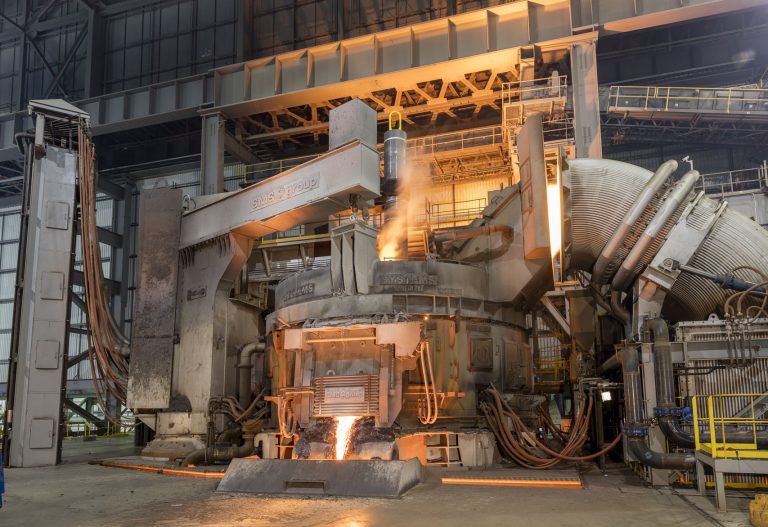
Britain’s takeover culminates a process that began in April 2025 when the government seized operational control of British Steel, citing national security concerns and the importance of maintaining domestic steel production. British Steel operates one of the country’s last remaining blast furnace facilities capable of producing virgin steel, which is considered critical for sectors including defense, infrastructure, railways, and major construction projects.
Prime Minister Keir Starmer’s government subsequently announced plans to fully nationalize the company, arguing that continued government ownership was necessary to safeguard jobs, preserve industrial capacity and secure long-term steel production.
The formal nationalization completed this week transfers ownership entirely to the British state after the government concluded that a private-sector solution was no longer viable.
The dispute comes at a sensitive time for China’s overseas investments. Chinese companies have increasingly faced tighter scrutiny across Western economies as governments expand national security reviews covering sectors such as steel, semiconductors, telecommunications, critical minerals, energy infrastructure and artificial intelligence.
The British Steel case is seen as another indication that geopolitical considerations are increasingly influencing investment policy, even where assets are owned by private rather than state-owned Chinese companies. Beijing’s warning suggests Chinese authorities are concerned that the nationalization could discourage future Chinese investment in Britain by raising questions about regulatory certainty and property rights.
China’s Foreign Ministry urged the British government to “make decisions prudently,” calling on London to respect market principles, honor companies’ wishes and avoid what it described as the abuse of administrative coercive measures.
Potential Impact on UK-China Relations
Beyond British Steel itself, the dispute risks becoming another point of friction in an already complicated UK-China relationship. Britain has in recent years tightened investment screening rules under the National Security and Investment Act, giving ministers broad powers to block or unwind foreign acquisitions involving strategically sensitive sectors.
Several Chinese investments have faced increased regulatory scrutiny as successive British governments have sought to reduce dependence on foreign ownership in critical infrastructure while strengthening economic security.
If Jingye proceeds to international arbitration under the bilateral investment treaty, the dispute could extend over several years and potentially result in a substantial compensation claim against the British government.
The outcome may also serve as an important precedent for how future disputes involving Chinese investors are handled, particularly as Western governments continue to strengthen national security oversight of foreign investment in strategic industries.