

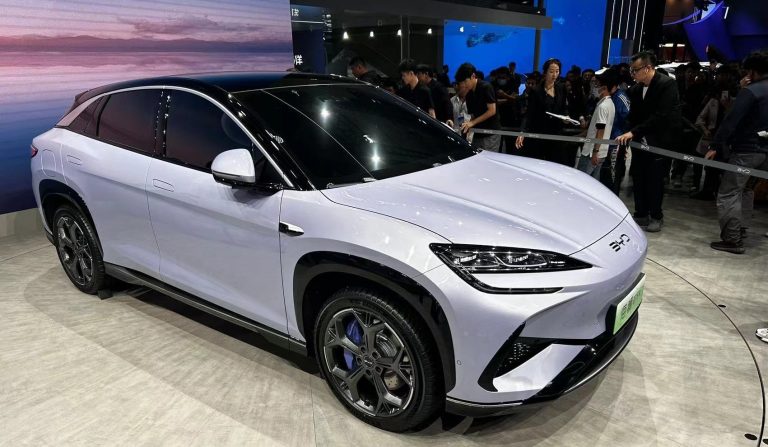
China’s passenger vehicle market is on course for its sharpest annual decline since 2021, with analysts warning that slowing consumer demand, fading government incentives and intensifying price competition are pushing the world’s largest automobile market into one of its toughest periods in years.
The China Passenger Car Association (CPCA) has sharply downgraded its outlook for 2026 after first-half sales disappointed, underscoring the reversal from the record-breaking performance seen in 2025. The slowdown is expected to accelerate consolidation across China’s overcrowded auto industry, leaving only a handful of manufacturers with the scale and financial strength to survive.
The downturn also comes at a delicate moment for the global automotive industry. China accounts for roughly one-third of global vehicle sales and has become the world’s largest electric vehicle market. Weakness in Chinese demand, therefore, carries implications not only for domestic automakers but also for international manufacturers and suppliers that rely heavily on the country’s consumers.
Register for the next Tekedia Mini-MBA.
Register for Tekedia AI in Business Masterclass.
Join Tekedia Capital Syndicate and co-invest in great global startups.
Passenger vehicle retail sales fell 20.2% in the first half of 2026, prompting the CPCA to revise its full-year forecast from flat growth to a 14% annual decline.
The association now expects passenger vehicle deliveries to total 20.4 million units this year, down sharply from the record 23.7 million vehicles sold in 2025. Sales during the first six months reached only 8.7 million units, leaving the industry facing an uphill battle to recover in the second half.
Some analysts quoted by CNBC believe the slowdown could be even more severe.

Xiao Feng, Head of Hong Kong/China Industrials Research at Citic CLSA, forecasts a 20% contraction in overall vehicle sales this year, substantially worse than the CPCA’s projection. Even the new energy vehicle (NEV) segment, which has powered China’s auto growth in recent years, is expected to decline by 5% to 6%, marking a significant slowdown after years of rapid expansion.
“This is going to continue to be a brutal year,” said Tu Le, founder of Sino Auto Insights, pointing to fierce competition as manufacturers fight for a shrinking pool of buyers.
Several factors have converged to weaken demand.

One of the biggest headwinds has been Beijing’s gradual withdrawal of generous subsidies for electric and hybrid vehicles. Those incentives helped pull forward demand into 2025, leaving fewer consumers in the market this year.
“Policy only moves demand around,” Feng said, arguing that the weak sales in 2026 represent a payback for purchases that were effectively brought forward by last year’s incentives.
Higher operating costs have also weighed on purchasing decisions. According to China’s National Bureau of Statistics, transportation energy costs increased 15.3% year-on-year in June, undermining demand for conventional gasoline-powered vehicles.
Retail sales of internal combustion engine (ICE) vehicles plunged 39% in June, while pure gasoline-powered models recorded an even steeper 42% decline, accounting for 78% of the overall drop in passenger vehicle sales during the month.
The slowdown is also exposing the financial strain across China’s automotive sector. Battery materials, lithium, and memory chip prices have risen sharply, increasing manufacturing costs at a time when automakers continue cutting prices to defend market share.
Between January and May, industry profit margins fell to just 3.4%, while total profits dropped 20% year-on-year, according to CPCA Secretary General Cui Dongshu. Meanwhile, passenger vehicle prices declined more than 1% year-on-year in June, extending a prolonged price war that has eroded profitability across much of the industry.
Industry Consolidation Gathers Pace As Exports Emerge As The Next Growth Engine
The deteriorating economics are expected to accelerate consolidation across China’s fragmented EV market, where dozens of manufacturers have entered the sector over the past decade.
Feng expects only seven or eight major automakers to remain by 2030, as weaker companies struggle to survive. His assessment highlights the important role of scale in China’s EV market. According to Feng, manufacturers need annual sales of approximately 500,000 vehicles merely to break even. Sustainable profitability requires sales of around 1 million vehicles, while achieving full economies of scale demands roughly 2 million units annually.
Those thresholds explain why industry leaders continue pursuing aggressive volume growth despite weakening margins.
Among domestic manufacturers, BYD remains the clear leader after delivering 1.8 million vehicles during the first half of 2026, putting it on course to exceed the scale required for long-term profitability. Geely followed with 1.4 million deliveries, while Leapmotor sold 356,000 vehicles.
Foreign Automakers Continue to Lose Ground
Volkswagen Group, despite accelerating its transition toward electric vehicles in China, reported 973,000 deliveries during the first half, representing a 25.9% year-on-year decline. Toyota delivered 579,000 vehicles between January and May.
Feng believes several international manufacturers, particularly American brands, may ultimately fail to maintain meaningful positions in China, leaving a smaller competitive landscape dominated by BYD, Geely, Leapmotor, Volkswagen and Toyota.
While domestic demand remains under pressure, exports are emerging as an important growth driver for Chinese automakers. Passenger vehicle exports reached 877,000 units in June, rising 11.5% month-on-month and 82.3% year-on-year, according to CPCA data.
The export boom underpins the growing global competitiveness of Chinese manufacturers, particularly in electric vehicles, as well as shifting consumer preferences driven by higher fuel prices.
Feng expects the current downturn to give way to a recovery in 2027, arguing that China’s auto market remains fundamentally cyclical as aging vehicle fleets eventually generate replacement demand.
However, experts note that a stronger economy and continued EV adoption could further support the rebound, while external markets may also provide additional momentum.
According to Fengming Lu, Assistant Professor at the Australian National University, rising global fuel costs are making Chinese-made EVs increasingly attractive overseas.
“The war in the Middle East, which has resulted in shipping disruptions and soaring fuel prices worldwide, is one of the major motivations” encouraging consumers to switch to electric vehicles, Lu said.