

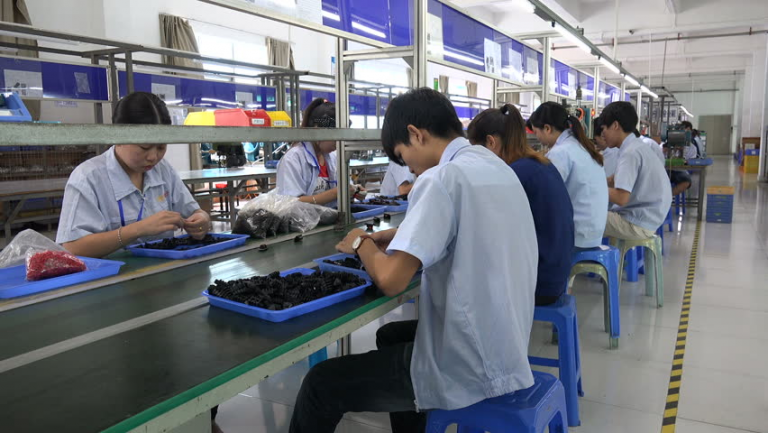
China’s factory sector is poised to shrink for the eighth consecutive month in November, highlighting the challenges facing policymakers as they navigate faltering domestic demand and weakening external markets.
A Reuters poll of 21 economists forecast the official purchasing managers’ index (PMI) would inch up slightly to 49.2 from October’s 49.0, still below the 50-point mark that separates growth from contraction. The data is due on Sunday.
The persistent softness underscores the difficulties manufacturers face in sustaining a post-COVID recovery. Many firms continue to grapple with fallout from the U.S.–China trade war, which has disrupted export channels and forced some manufacturers to seek alternative markets. These headwinds are compounded by sluggish domestic consumption, a prolonged property crisis, and mounting local government debt, leaving Beijing with few conventional levers to revive growth.
Register for Tekedia Mini-MBA edition 20 (June 8 – Sept 5, 2026).
Register for Tekedia AI in Business Masterclass.
Join Tekedia Capital Syndicate and co-invest in great global startups.
Register for Tekedia AI Lab.
For decades, Chinese policymakers relied on two principal tools to sustain expansion. The first was revving up the industrial machine to boost exports whenever household spending slowed. The second was state-led infrastructure spending to drive momentum across local economies. Today, both strategies are under strain. Global economic slowdown and fiscal constraints at the local level mean that traditional stimulus alone may be insufficient, forcing officials to contemplate deeper structural reforms to correct supply-demand imbalances, lift household consumption, and address ballooning local debt.
Industrial profit data released Thursday further reinforced the narrative of weakness, falling short of expectations. Analysts attributed some of the shortfall to a high base effect from last year, when stimulus temporarily boosted profits. Yet the underlying trend remains concerning: third-quarter GDP growth slowed to its weakest pace in a year, emphasizing China’s vulnerability to both domestic and external pressures.
Policymakers face a delicate balancing act. While reforms are essential for long-term economic sustainability, implementing them now carries risks, especially against the backdrop of trade tensions with the United States. Abrupt measures could destabilize regions heavily reliant on government employment or industries susceptible to contraction, making the political calculus as critical as the economic one.

Even so, Beijing is exploring ways to stimulate consumption without relying solely on traditional stimulus. A new plan announced Wednesday targets consumer upgrades, focusing on rural areas and niche sectors such as pets, anime, and trendy toys. By encouraging discretionary spending, officials hope to generate a more market-driven source of growth and support domestic manufacturers as industrial output remains constrained.
Meanwhile, private-sector activity is expected to remain muted. Economists polled by Reuters forecast the private-sector RatingDog PMI at 50.5, slightly down from 50.6 in October, signaling only marginal expansion.
Comparing China to Other Major Economies
China’s manufacturing malaise contrasts sharply with trends in other major economies. In India, the industrial sector continues to expand, bolstered by domestic consumption, government investment, and growing foreign direct investment, particularly in sectors such as information technology and renewable energy infrastructure. The country’s manufacturing PMI has consistently hovered above the 50-point growth threshold, highlighting the divergence from China’s prolonged contraction.

In the Eurozone, manufacturing is grappling with uneven demand and energy-related cost pressures, but some countries have experienced modest recovery thanks to government stimulus and gradual stabilization of supply chains post-pandemic. Germany, Europe’s industrial engine, remains under pressure due to weakening exports, yet smaller economies such as Italy and Spain are showing pockets of resilience driven by domestic investment and service-sector strength.
The United States presents another contrast. While industrial growth has moderated amid rising interest rates, inflation pressures, and slowing exports, the manufacturing PMI has largely stayed in expansion territory, supported by strong technological investment and resilient domestic demand. The U.S. energy and tech sectors, in particular, have helped offset softness in traditional manufacturing.
This divergence illustrates the broader global challenge: China’s reliance on exports and heavy industry leaves it more exposed to trade shocks and cyclical slowdowns, whereas economies with more diversified domestic demand or technology-driven growth engines are faring comparatively better.
The Road Ahead for China
China’s policymakers face a critical juncture. Local governments’ stretched finances, persistent property sector challenges, and the trade war’s lingering effects constrain traditional stimulus options, emphasizing the need for sustainable structural reforms. Analysts note that targeted consumption initiatives may provide a temporary boost, but without addressing debt, labor, and efficiency constraints, industrial weakness is likely to persist.
Global markets are watching closely as China’s manufacturing output is considered not just a domestic concern. It has cascading implications for commodities, supply chains, and trade flows worldwide. Sunday’s PMI reading will be scrutinized not merely as a reflection of factory activity, but as a barometer of Beijing’s ability to navigate one of the most complex economic periods in recent memory.