

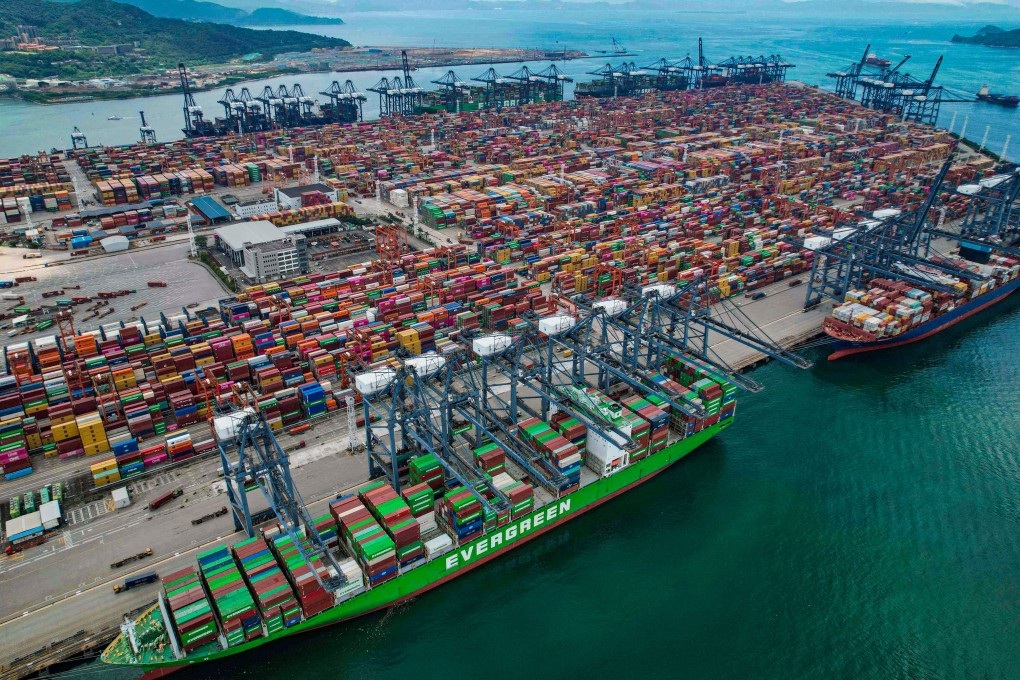
China’s trade surplus widened more than expected in September as exports accelerated to their fastest growth since February, putting the world’s second-largest economy on course to approach or exceed last year’s record and increasing the risk of further trade restrictions from major trading partners.
Exports surged 36.3% year-on-year, up from 25.0% growth in August and significantly above economists’ expectations of 25.5%, customs data showed on Wednesday. The expansion was the strongest since February, when shipments increased 39.6%, highlighting the continued strength of external demand for Chinese manufactured goods.
Imports also exceeded forecasts, rising 31.0% from a year earlier after growing 28.2% in August. Economists had expected import growth of 24.5%, suggesting that trade activity remained strong on both sides despite persistent weaknesses in China’s domestic economy.
Register for the next Tekedia Mini-MBA.
Register for Tekedia AI in Business Masterclass.
Join Tekedia Capital Syndicate and co-invest in great global startups.
The export performance has been supported by global demand for semiconductors, artificial intelligence infrastructure and green technology products. These industries have helped sustain factory activity and provided an important source of growth while domestic consumption, investment and the property sector remain under pressure.
However, the strength of China’s export machine is creating a growing policy dilemma. Robust overseas sales are helping Beijing meet its economic growth objectives, but the widening trade imbalance is intensifying criticism from the United States and Europe over Chinese industrial policy, market access and the competitiveness of its manufacturers.
Wang Jun, a vice customs minister, acknowledged that geopolitical conflicts and other external uncertainties could affect trade. Nevertheless, he said there was a foundation and support for continued growth in both exports and imports during the fourth quarter.

Analysts expect technology products to remain central to that momentum. “Key trade ties look set to remain stable through year-end, which should keep this year’s key growth engine humming,” said Lynn Song, ING’s chief Greater China economist.
China’s yuan held steady against the dollar on Wednesday, supported by the stronger trade figures, although mainland stocks fell.
Surplus Approaches $1 Trillion as US and EU Imbalances Widen
China recorded a trade surplus of $1.189 trillion last year, a record that followed the surplus surpassing $1 trillion in November. The cumulative surplus reached $938.11 billion in the first nine months of this year, putting the country on course to reach the $1 trillion threshold again unless exports slow sharply in the final quarter.

September’s surplus widened to $133.53 billion, including a $34.01 billion surplus with the United States, the highest in 20 months, and a $34.8 billion surplus with the European Union.
The growing imbalances are likely to complicate Beijing’s trade relations with both economic blocs. Washington and Brussels have repeatedly criticized China’s industrial and monetary policies, arguing that state support, manufacturing overcapacity and currency management contribute to an uneven trading relationship.
Although US-China relations have benefited from a temporary easing of tensions, the underlying trade dispute remains unresolved. A September summit between Chinese President Xi Jinping and US President Donald Trump in Washington secured an extension of their tariff truce and an agreement to cut tariffs on $30 billion worth of goods from each side.
That agreement provides some near-term stability for exporters, but it does not eliminate the possibility of additional restrictions if the trade imbalance continues to widen.
The European Union also faces pressure to protect domestic manufacturers from Chinese competition. Earlier this month, the bloc announced a deal to limit Chinese exports of hybrid vehicles to Europe. The measures could weigh on China’s expanding automotive trade over time, although the timing of implementation may encourage exporters to accelerate shipments before the restrictions take effect.
Nguyen Hoang Nam, a China economist at Capital Economics, warned that the widening surplus with Europe could prompt broader restrictions beyond the latest agreement. However, the firm expects the resulting economic fallout for China to be small.
The immediate risk is that stronger exports reinforce political arguments for additional trade barriers, particularly in industries where Chinese manufacturers have gained substantial global market share.
Semiconductors and AI Demand Sustain Export Momentum
Technology products have become an important source of China’s trade strength. Semiconductor exports rose 108.1% year-on-year in value terms during the first nine months of the year, while automobile exports increased by more than 50% in both value and volume terms.
The figures denote the growing importance of higher-value manufacturing to China’s external trade performance. Demand for semiconductors and other technology components has benefited from the global expansion of artificial intelligence infrastructure, while Chinese manufacturers continue to supply a broad range of industrial and consumer products.
The continued build-out of AI infrastructure is expected to support demand for technology goods, although the extent to which Chinese suppliers benefit will depend on product capabilities, market access and restrictions imposed by major economies.
The strength of technology exports also gives Beijing some room to avoid more aggressive stimulus measures in the near term. If overseas demand remains robust, policymakers may be able to rely on moderate policy support to meet China’s annual economic growth target of 4.5% to 5%.
Yet export strength does not resolve the underlying weakness in domestic demand. The recovery remains uneven, with separate data showing that Chinese factory-gate prices rose in September at their fastest pace in more than four years, while consumer inflation increased but fell short of expectations. The divergence indicates that rising costs and industrial activity have not translated into equally strong household demand.
The Canton Fair, China’s largest trade exhibition, opens on Thursday, offering manufacturers another opportunity to secure overseas orders and showcase products to international buyers. Its timing comes as exporters seek to sustain momentum amid uncertainty over future trade restrictions.
Other trade figures point to differences across commodity categories. China’s crude oil imports fell 21.5% year-on-year in volume terms in September, while soybean imports declined 7.7% from the same month a year earlier.
Despite the strong September figures, China’s reliance on external demand leaves its growth outlook vulnerable to changes in trade policy. Any significant restrictions on Chinese goods could undermine a key source of economic expansion at a time when household spending remains subdued, and the property market continues to struggle.
Beijing has also pushed back against accusations that its currency policy artificially supports exports. China’s central bank issued a lengthy statement last week rejecting claims that it deliberately keeps the yuan weak to gain a competitive advantage, arguing that it has never pursued a policy of competitive depreciation.
Against that backdrop, analysts say the currency debate is likely to remain part of broader trade tensions as the United States and Europe examine the causes of China’s persistent surpluses. Even if the yuan remains broadly stable, the scale of Chinese manufacturing exports could intensify calls for tariffs, quotas or other protective measures.