

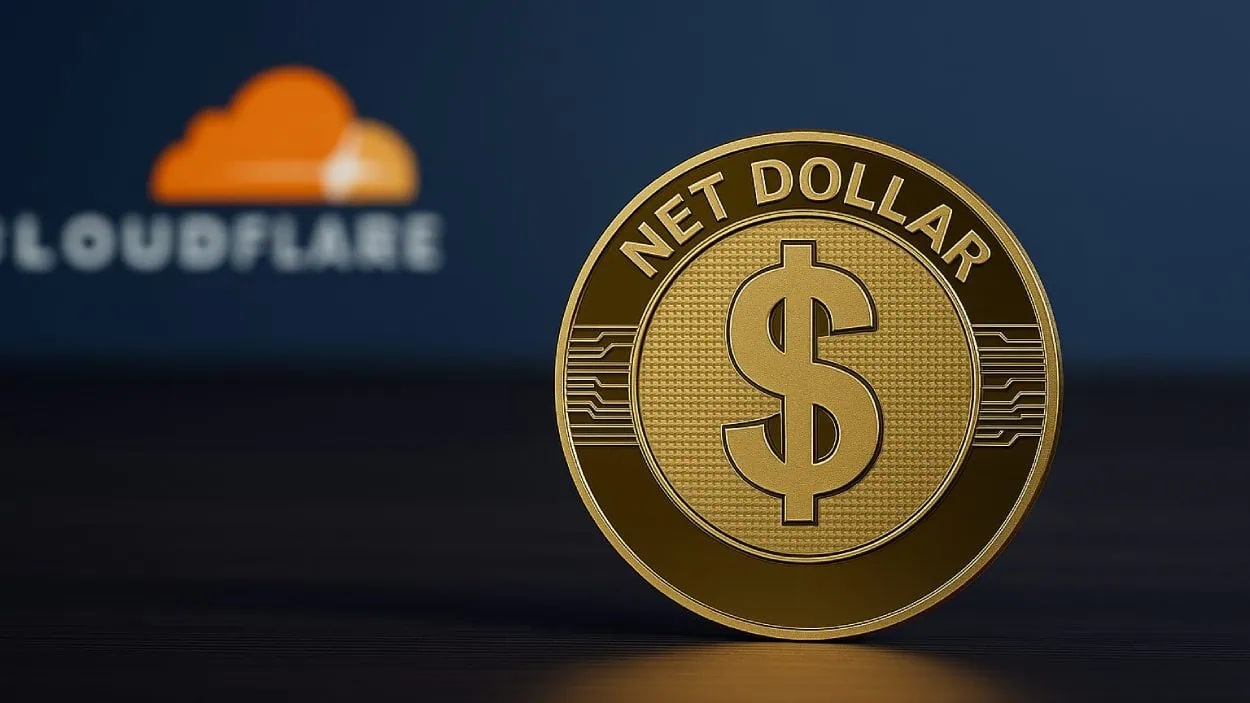
Cloudflare, the global cloud infrastructure provider, revealed plans to launch NET Dollar, a fully U.S. dollar-backed stablecoin designed to facilitate instant, secure, and programmable transactions in an AI-driven “agentic web.”
loudflare, Inc. (NYSE: NET), the leading connectivity cloud company, today announced plans to introduce NET Dollar, a new U.S. dollar-backed stablecoin that will enable instant, secure transactions for the agentic web. NET Dollar will help power a new business model for the Internet that rewards originality, sustains creativity, and enables innovation in an AI-driven world.
AI is fundamentally changing how humans interact with the web. Instead of driving every interaction themselves, humans are beginning to delegate tasks to autonomous AI agents to book a flight, order groceries, manage calendars and more. For this to happen, the underlying financial system will also need to evolve. The AI-driven Internet will need money that is instant, global, and secure so that AI agents, developers, and creators can transact instantly, automatically, and reliably.
This ecosystem envisions autonomous AI agents handling tasks like booking travel, ordering goods, or managing schedules without human intervention, with payments occurring seamlessly across networks.
CEO Matthew Prince highlighted that NET Dollar could redefine the internet’s business model by enabling microtransactions, pay-per-use services, and fractional payments, shifting incentives toward rewarding original content creators, developers monetizing APIs, and AI firms compensating data sources fairly.
Register for Tekedia Mini-MBA edition 20 (June 8 – Sept 5, 2026).
Register for Tekedia AI in Business Masterclass.
Join Tekedia Capital Syndicate and co-invest in great global startups.
Register for Tekedia AI Lab.
The stablecoin will leverage Cloudflare’s vast network—handling 78 million HTTP requests per second across 330+ cities in 120 countries—for real-time settlement and global interoperability, integrating with open standards like the Agent Payments Protocol and x402.
No exact launch date was specified, but it’s slated for “soon,” positioning Cloudflare alongside players like Tether (USDT) and emerging entrants in the booming stablecoin market, projected to reach $1.9 trillion in issuance by 2030 in Citi’s base case.
Gate Crypto Exchange’s L2 Announcement
In a parallel development on the same day, September 25, 2025, Gate (formerly Gate.io), a leading centralized crypto exchange with over 23 million users and support for 3,600+ tokens, officially launched Gate Layer, its high-performance Layer 2 (L2) network built on the Optimism (OP) Stack.

Secured by GateChain as the settlement layer and using the upgraded GT token as native gas, Gate Layer aims to deliver faster, cheaper, and more secure Web3 services globally, addressing blockchain inefficiencies like high fees and slow finality.
Key specs include over 5,700 transactions per second (TPS), 1-second block times, and EVM compatibility for easy dApp migration via tools like MetaMask. It supports cross-chain transfers to Ethereum mainnet and other L2s via LayerZero, with GT staking enhancing consensus and security.
To bootstrap the ecosystem, Gate introduced three flagship products: Perp a decentralized perpetual futures DEX, Gate Fun a memecoin launchpad inspired by Pump.Fun and Meme Go a meme token trading/monitoring platform.

The launch coincides with a GT tokenomics overhaul, elevating GT from an exchange utility to the “fuel” of Gate’s Web3 infrastructure, complete with staking rewards and ecosystem incentives. This positions Gate among eight major exchanges including Coinbase’s Base and Kraken’s Ink racing to own L2s, capturing DeFi value like trading, lending, and staking.
Cloudflare’s entry into the stablecoin space with NET Dollar represents a pivotal convergence of cloud infrastructure, AI, and blockchain, potentially reshaping the internet’s economic foundation.
As a U.S. dollar-backed asset designed for the “agentic web”—where AI agents autonomously handle tasks like booking flights or ordering goods—NET Dollar enables instant, programmable microtransactions across global networks. This could disrupt traditional revenue models reliant on advertising and slow bank transfers, shifting toward pay-per-use and fractional payments that reward creators for original content, developers for APIs, and AI firms for data usage.
By leveraging Cloudflare’s network—processing 78 million HTTP requests per second across 330+ cities—NET Dollar promises real-time settlement and interoperability via standards like the Agent Payments Protocol and x402.
This could unlock a $1.9 trillion stablecoin market by 2030 (base case), or up to $4 trillion in a bull scenario, fueling AI-driven economies where agents become primary users for everyday transactions. However, fragmentation risks loom, as competing stablecoins from tech giants could create silos, complicating adoption unless interoperability standards prevail.
NET Dollar’s full USD collateralization ensures stability and trust, positioning Cloudflare—already powering 20% of websites—as a leader in secure, AI-native finance. It complements existing systems while addressing pain points like cross-border delays, potentially accelerating mainstream AI commerce.
Developers and projects like OPUS are already integrating, signaling ecosystem momentum. Challenges include regulatory scrutiny for stablecoins and proving utility beyond hype, but Cloudflare’s developer trust could drive rapid uptake.
This move drags enterprises onchain, rewiring treasury, payroll, and BI tools for real-time flows, while pressuring legacy SaaS to adapt or perish. It underscores stablecoins’ role in AI, with Galaxy Digital’s Mike Novogratz predicting agents as top users.
Implications of Gate Exchange’s Gate Layer L2 Network
Gate’s launch of Gate Layer, an OP Stack-based L2 secured by GateChain and fueled by the upgraded GT token, intensifies competition in the blockchain scaling wars, empowering centralized exchanges (CEXs) to capture DeFi value directly.
With 5,700+ TPS, 1-second blocks, and EVM compatibility, it slashes fees—e.g., $30 for a million transfers vs. $700 on Base—while enabling seamless cross-chain bridges via LayerZero. This positions Gate among eight CEXs including Coinbase’s Base and Kraken’s Ink building L2s to retain users and bootstrap ecosystems.
GT’s overhaul—from exchange utility to L2 gas token—includes dual deflation (burns from trading fees and network usage), with 60% of supply already burned, tightening scarcity and incentivizing staking for security.
Flagship dApps like Perp (perp DEX), Gate Fun (memecoin launchpad), and Meme Go (meme tracker) leverage Gate’s 23 million users for instant liquidity, fostering DeFi innovation in trading, lending, and staking. This “All in Web3” strategy could sustain long-term growth by reducing reliance on external chains.
Gate Layer enhances scalability and cost-efficiency, addressing blockchain bottlenecks and appealing to global users via MetaMask integration. It signals a trend where CEXs evolve into full-stack Web3 providers, deepening liquidity and control over on-chain activity.
Risks include OP Stack saturation and execution challenges, but Gate’s dual security GateChain settlement + GT staking mitigates single points of failure. Broader implications: L2 proliferation could fragment liquidity but drive Ethereum ecosystem TVL, with exchanges like Gate prioritizing speed over decentralization.
Both launches, highlight 2025’s theme of infrastructure convergence: Cloudflare bridges AI/web with payments, while Gate fortifies crypto trading/scaling. Together, they could enable hybrid ecosystems—e.g., AI agents settling trades on low-cost L2s via stablecoins—accelerating Web3 adoption amid projected stablecoin volumes hitting $1 trillion annually by 2030.