

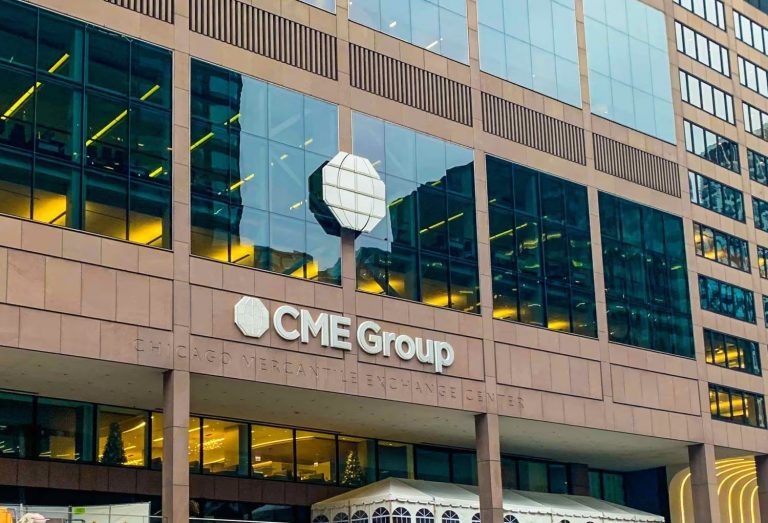
Wall Street is eyeing a CME Coin, and it could matter more than Stablecoins. This stems from comments made by CME Chairman and CEO Terry Duffy during the company’s Q4 2025 earnings call.
CME Group is actively exploring the launch of its own proprietary digital token, often referred to in coverage as a “CME Coin.” This would be a blockchain-based asset potentially operating on a decentralized (public) network, setting it apart from many institutional tokens that run on private or permissioned systems like JPMorgan’s JPM Coin on closed networks.
It’s tied to CME’s broader push into tokenized collateral and tokenized assets for margin, settlement, and risk management in derivatives markets. This is distinct from a separate but related project: CME is collaborating with Google Cloud on a “tokenized cash” solution, expected to roll out later in 2026.
Register for Tekedia Mini-MBA edition 20 (June 8 – Sept 5, 2026).
Register for Tekedia AI in Business Masterclass.
Join Tekedia Capital Syndicate and co-invest in great global startups.
Register for Tekedia AI Lab.
That product would enable tokenized deposits or cash equivalents likely backed by a depository bank for use as collateral in trading, including crypto derivatives. The “CME Coin” concept appears aimed at broader industry use—allowing other participants to leverage it for margin posting, settlement, or related functions in regulated markets.
CME has not confirmed specifics like whether it would be a stablecoin, a settlement token, or another format. No launch timeline, technical details, or regulatory filings have been announced yet—it’s still in the exploratory phase.
This aligns with CME’s aggressive expansion in crypto: Record volumes in 2025 averaging billions daily in crypto derivatives, plans for 24/7 trading of crypto futures/options in early 2026 pending approval, and upcoming launches like futures on Cardano (ADA), Chainlink (LINK), and Stellar (XLM) starting February 9, 2026.
Stablecoins primarily facilitate retail/crypto-native payments, trading, and DeFi by providing dollar-like stability on public blockchains. A CME-issued coin, however, would target institutional and regulated environments: CME clears trillions in derivatives exposure across interest rates, equities, commodities, FX, and now crypto.

If a CME Coin became eligible as margin/collateral, it could embed itself at the core of global risk management and price discovery. It might “move risk” more than money—enhancing efficiency in post-trade processes, reducing counterparty risk, and potentially sidelining less-regulated stablecoins in institutional settings by raising the bar for collateral “pedigree.”
This reflects TradFi deepening its integration with blockchain, potentially challenging or complementing crypto-native infrastructure while reinforcing CME’s dominance in market infrastructure. In short, while still speculative and early-stage, this signals Wall Street’s accelerating embrace of tokenization—not just for payments, but for controlling core financial plumbing.
If realized, it could reshape how institutional risk flows in a tokenized world. Tokenized collateral refers to the process of representing traditional financial assets such as cash, U.S. Treasuries, money market fund shares, or other high-quality liquid assets as digital tokens on a blockchain or distributed ledger technology (DLT).

These tokens serve as collateral — primarily for posting margin in derivatives markets, repo transactions, securities lending, or other secured obligations. In traditional finance, collateral management involves slow, siloed processes: assets are held in separate custody accounts, transfers require intermediaries like correspondent banks or tri-party agents, settlements often take T+1 or T+2 days or longer across borders/time zones, and reconciliation between parties is manual and error-prone.
This leads to inefficiencies, excess collateral buffers, and challenges for 24/7 operations. Tokenization addresses these by moving collateral onto programmable, shared ledgers, enabling near-instant, transparent, and automated movements.
A qualified issuer creates a digital token that represents ownership or a claim on an underlying real-world asset (RWA). Tokenized cash/deposits — A 1:1 claim on USD held at an insured depository institution potentially FDIC-insured.
Digital representation of U.S. government securities. Tokenized money market funds — Shares in government or prime funds tokenized for on-chain use. The token embeds key details: asset type, issuer, identifiers, rights, redemption rules, and compliance logic.
Tokens are held in wallets controlled by qualified custodians, clearing members, or the clearinghouse (DCO) itself. Segregation ensures client assets remain separate from the issuer’s or intermediary’s proprietary funds critical for bankruptcy remoteness and regulatory compliance.
Multi-signature controls, hardware security modules, and proof-of-reserves attestations provide transparency and security. Collateral moves via on-chain transactions, often on permissioned networks or potentially public/decentralized ones. Transfers can occur in seconds/minutes, 24/7, using mechanisms like: Delivery versus payment (DvP) — Collateral and payment/obligation settle simultaneously.
Clearinghouses apply haircuts (discounts for risk) — potentially with slight premiums for tokenization mechanics/operational risks.
Holders can redeem tokens back to the underlying asset via the issuer or custodian, often with same-day or next-day liquidity for eligible assets.
CME Group is actively advancing this through: A partnership with Google Cloud on tokenized cash expected rollout in 2026 for margin/settlement in derivatives. Exploration of a proprietary “CME Coin” or similar token potentially on a decentralized network, aimed at broader industry use for collateral.
This targets institutional-grade plumbing: enabling faster, more reliable margin flows in CME’s massive derivatives ecosystem; trillions cleared daily. Regulators are aligning frameworks — e.g., allowing tokenized assets/stablecoins as eligible collateral under strict rules on reserves, attestations, redemption, and custody — to support this without compromising stability.
Tokenized collateral upgrades the “plumbing” of risk management from slow, fragmented legacy systems to fast, shared, blockchain-based rails — potentially freeing up hundreds of billions in trapped liquidity while enabling continuous, efficient markets.