

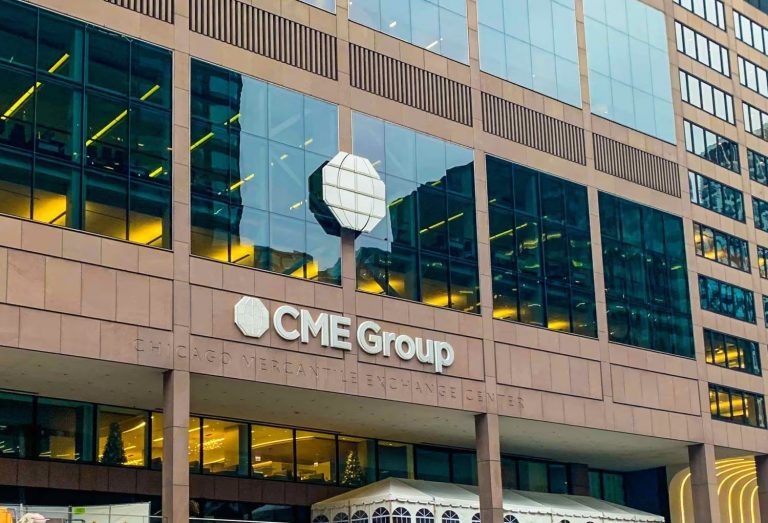
CME Group— the world’s leading derivatives marketplace—officially announced plans to expand its cryptocurrency futures and options trading to a 24/7 model, starting in early 2026, subject to regulatory approval from bodies like the U.S. Commodity Futures Trading Commission (CFTC).
This move aligns regulated crypto derivatives more closely with the nonstop nature of spot cryptocurrency markets, addressing growing institutional demand for round-the-clock risk management.
The products will trade continuously on the CME Globex electronic platform, with only a brief two-hour weekly maintenance window over the weekend exact timing TBD. This eliminates the current pauses outside traditional business hours and on weekends.
Register for Tekedia Mini-MBA edition 20 (June 8 – Sept 5, 2026).
Register for Tekedia AI in Business Masterclass.
Join Tekedia Capital Syndicate and co-invest in great global startups.
Register for Tekedia AI Lab.
Affected Products: This applies to CME’s suite of crypto derivatives, including:Bitcoin (BTC) and Micro Bitcoin futures and options.
Ether (ETH) and Micro Ether futures and options.
Recently launched Solana (SOL) futures and upcoming XRP futures set for October 2025.
Trades executed from Friday evening through Sunday evening will carry the next business day’s trade date.
Clearing, settlement, and reporting will occur on the following business day, maintaining standard operational integrity. As stated by Tim McCourt, CME Group’s Global Head of Equities, FX, and Alternative Products:

While not all markets lend themselves to operating 24/7, client demand for around-the-clock cryptocurrency trading has grown as market participants need to manage their risk every day of the week. This reflects the maturation of digital assets and bridges traditional finance with crypto’s global, always-on ecosystem.
CME has been a pioneer in regulated crypto trading since launching Bitcoin futures in 2017. In 2025 alone, its crypto products have hit record highs:Open Interest: $39 billion in notional value across contracts.
335,200 contracts (Q3 2025), equating to ~$14.1 billion in notional value. Over 1,010 large open interest holders by late September 2025, signaling strong engagement from hedge funds, asset managers, and other pros.
This expansion could further boost liquidity and price discovery, especially as Bitcoin and Ether prices surge BTC recently hit a two-month high around $125,000. However, it remains pending approval, so watch for updates from regulators in the coming months.

Constant access to hedging tools could dampen volatility during off-hours (e.g., weekends), as institutional traders can actively manage positions in response to global events, reducing the risk of large price gaps.
24/7 trading caters to international investors across time zones, potentially increasing trading volumes and reinforcing CME’s role as a global pricing benchmark for crypto.
Institutional investors hedge funds, asset managers, often avoid crypto due to its volatility and lack of regulated hedging tools outside traditional hours. 24/7 access allows them to hedge spot crypto holdings or speculative positions at any time, likely attracting more institutional capital.
The move could draw in new players, such as pension funds or banks, who require robust, regulated markets. CME’s existing 1,010+ large open interest holders as of September 2025 suggest strong institutional interest, which could grow further.
With continuous trading, crypto derivatives become more viable for inclusion in traditional portfolios, blending digital assets with equities, bonds, and commodities.
Historically, CME’s crypto product expansions via Bitcoin futures in 2017, Ether futures in 2024 have coincided with price rallies, as they signal mainstream acceptance. Bitcoin’s recent climb to ~$124,000 could see further upside if 24/7 trading fuels demand.
24/7 futures trading may reduce price discrepancies between spot and futures markets, as traders can exploit arbitrage opportunities in real-time, potentially stabilizing prices across exchanges.
The plan requires CFTC approval, which could set a precedent for other exchanges to offer 24/7 crypto derivatives. A smooth approval process might encourage regulators to greenlight additional crypto products, like spot ETFs or new futures.
CME’s move could pressure competitors like CBOE or emerging crypto-native platforms to extend trading hours, intensifying competition in the regulated crypto derivatives space.
While CME’s products primarily serve institutions, increased liquidity and price stability could benefit retail traders on spot exchanges, as CME’s futures often influence spot market pricing.
Retail traders may not directly access CME’s futures due to high contract sizes like 5 BTC per standard contract, but micro futures 0.1 BTC or 0.01 ETH make participation more feasible. 24/7 trading could encourage retail brokers to offer similar products.
24/7 crypto trading on a regulated platform like CME further integrates digital assets into mainstream finance, blurring the line between crypto and traditional markets.
Success here could spur other exchanges to experiment with 24/7 trading for other asset classes, potentially reshaping how global markets operate.
As crypto becomes a larger part of institutional portfolios, its correlation with traditional markets may increase, impacting broader market dynamics during economic events.
Continuous trading demands robust systems to handle high volumes and prevent outages. Any technical failures could erode trust, especially during volatile periods.
24/7 trading could amplify risks of manipulation in less liquid hours, though CME’s surveillance and regulatory oversight mitigate this compared to unregulated spot markets.
Newer products like Solana futures and upcoming XRP futures could gain traction faster with 24/7 access, potentially elevating their market profiles.