

After two years of aggressive cost-cutting and promises that artificial intelligence would replace large sections of the workforce, a growing number of companies are reversing course, rehiring employees after discovering that AI systems still struggle with complex, judgment-based and customer-facing tasks.
The trend is emerging at a time when investors are questioning how quickly companies can generate meaningful returns from the hundreds of billions of dollars being poured into artificial intelligence. It also suggests that many businesses are moving away from an “AI replacing humans” strategy toward one where AI augments employees rather than eliminates them.
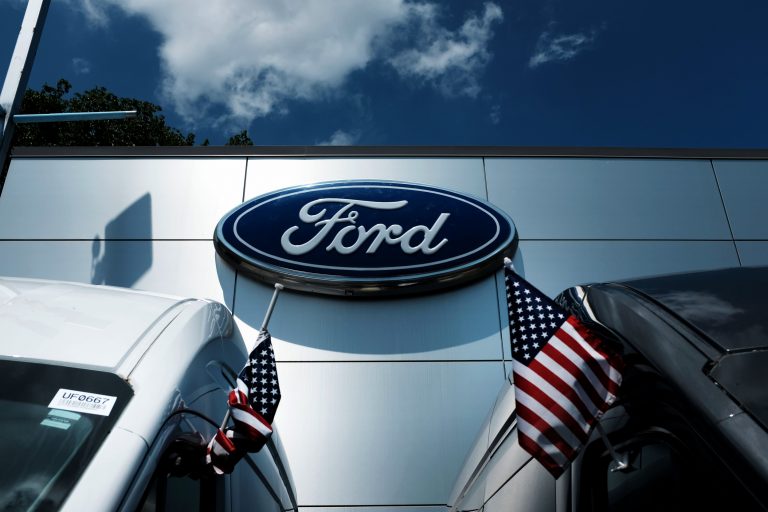
Among the latest companies to reverse course is Ford Motor, which is bringing back hundreds of experienced engineers after finding that automated systems could not adequately address vehicle quality issues.
Register for the next Tekedia Mini-MBA.
Register for Tekedia AI in Business Masterclass.
Join Tekedia Capital Syndicate and co-invest in great global startups.
The automaker said experienced human engineers remain essential in areas requiring technical judgment and real-world problem-solving.
“Artificial intelligence is a fantastic tool, but it’s only as good as the information you use to train it,” Charles Poon, Ford’s vice president of vehicle hardware engineering, said.
Ford’s decision highlights one of the industry’s biggest challenges: while AI excels at analyzing large volumes of structured data, it remains less capable when confronted with unpredictable manufacturing defects, engineering trade-offs and nuanced quality assessments that rely heavily on human experience.

Besides Ford, several large companies that previously reduced headcount in favor of AI have since reinstated workers after finding the technology unable to fully perform critical business functions.
Australia’s Commonwealth Bank (CBA) became one of the highest-profile examples.
Last year, the bank eliminated more than 40 customer service positions after deploying an AI-powered voice assistant designed to automate customer enquiries. But the system struggled to manage customer interactions effectively, contributing to increased call volumes and forcing the bank to reverse the redundancies.

“Getting CBA to rescind these job cuts is a massive win,” Australia’s Finance Sector Union said after the decision.
According to an ABC report published in August last year, the bank acknowledged mistakes in its original assessment. CBA admitted it “did not adequately consider all relevant business considerations” before announcing the redundancies and conceded that “we should have been more thorough in our assessment of the roles required.”
The experience reveals a broader issue confronting many organizations: replacing experienced customer service professionals with AI often creates new operational bottlenecks rather than eliminating them.
IBM Discovers Limits Of AI In HR
IBM has also reassessed how far AI can replace employees. The company successfully automated around 94% of routine human resources enquiries, dramatically improving efficiency in repetitive administrative work.
However, the remaining 6% proved significantly more challenging. Those requests frequently involved ethical questions, complex employment issues or situations requiring human judgment and empathy—areas where AI struggled to provide satisfactory responses.
Rather than continuing to reduce headcount, IBM announced plans to triple its U.S. entry-level hiring across all business units during 2026, recognizing that future talent pipelines require sustained investment.
“If we don’t continue to invest in entry-level hires, what happens in three-five years?” IBM Chief Human Resources Officer Nickle LaMoreaux said during the Charter AI Summit in New York.
“There’s no pipeline; the well simply dries up.”
Her comments bolster growing concern among corporate leaders that excessive reliance on automation risks creating long-term shortages of experienced professionals.
Businesses Admit AI-Related Layoffs Were Mistakes
Evidence is increasingly emerging that many companies may have underestimated the continued importance of human workers.
According to research by Orgvue, 39% of business leaders said their organizations made employees redundant because of AI deployment. However, 55% of those executives later acknowledged that at least some of those redundancy decisions had been wrong.
The findings suggest many companies moved too aggressively in replacing staff before fully understanding AI’s operational limitations.
Research from Robert Half paints a similar picture.
Data shared with CNBC found that 32% of U.S. hiring managers said they eliminated a role primarily because of AI and subsequently rehired someone for the same or a similar position. That trend indicates that while AI can improve productivity, it often cannot fully substitute for experienced workers, particularly in positions involving customer interaction, decision-making, creativity or oversight.
Industry analysts note that many organizations focused too heavily on reducing labor costs without investing sufficiently in employee training and AI integration.
According to Intuition Labs, companies frequently underestimate the importance of maintaining experienced staff capable of supervising AI systems.
“Budgeting on ‘tech to replace humans’ without investing in training or upskilling left teams unprepared to leverage AI.”
The report added that many organizations eventually regretted removing precisely the employees needed to make AI successful.
“Notably, among companies pushing automation, many later ‘regretted’ layoffs, having cut the very people needed to oversee AI.”
Human oversight has become increasingly important as businesses encounter inconsistent AI outputs, hallucinations and difficulties applying AI-generated recommendations in real-world situations.
Jessica Zhang, Senior Vice President for Asia-Pacific at HR technology provider ADP, said organizations frequently discover that AI still requires substantial human supervision.
“Where AI outputs are inconsistent, inaccurate, or difficult to apply, companies often need to reintroduce human oversight,” Zhang said.
“This can lead to duplicated effort, slower decision-making and diminished productivity gains.”
AI Shifts From Replacement To Collaboration
Rather than abandoning artificial intelligence, companies appear to be adopting a more balanced strategy in which AI enhances employee productivity instead of replacing workers outright. This shift aligns with broader industry thinking that AI delivers its greatest value when paired with skilled professionals capable of interpreting, validating and applying its outputs.
Capitol Technology University said the latest hiring trends illustrate that businesses are moving toward collaborative AI models.
“AI is changing the workplace, but it’s becoming clear that organizations are finding more value in building human-AI collaboration versus replacing human work entirely,” the university said.
The changing strategy also comes as investors scrutinize whether the massive wave of AI spending by corporations can generate sustainable returns. Technology companies and large enterprises are collectively investing hundreds of billions of dollars in AI infrastructure, software and automation, yet many executives are discovering that productivity gains often depend as much on skilled employees as on the technology itself.