

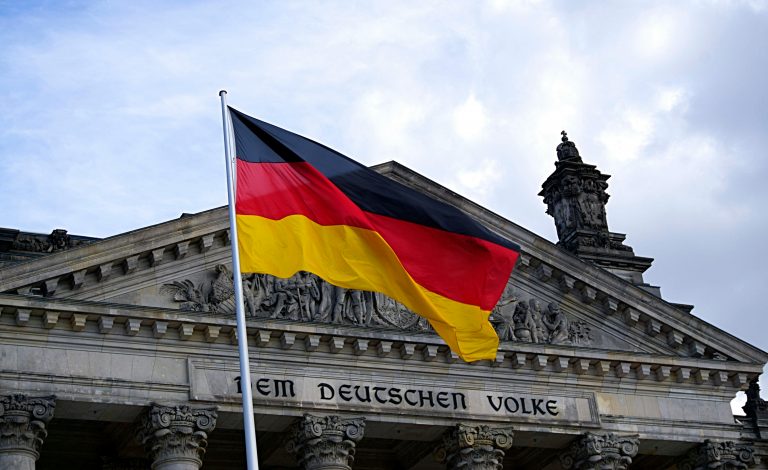
Germany’s political landscape is undergoing a notable shift as the recent federal election on February 23, 2025, has delivered a complex outcome for the conservative Christian Democratic Union (CDU), led by Friedrich Merz. The CDU emerged as the largest party, securing around 28-29% of the vote according to projections, but this victory falls short of a clear mandate, setting the stage for challenging coalition negotiations.
Meanwhile, the far-right Alternative fu?r Deutschland (AfD) has surged to second place with approximately 20-21%, doubling its support from the 2021 election and signaling a significant rightward tilt in German politics. This development complicates the path forward for Merz and the conservatives as they navigate a fragmented parliament and deep societal divisions.
The CDU’s performance, while enough to claim first place, marks its second-worst postwar result, reflecting a loss of voter confidence compared to historical highs under leaders like Angela Merkel. Merz, a sharp-tongued economic liberal who has steered the party rightward on issues like immigration, now faces the daunting task of forming a government without a majority. The AfD’s strong showing—fueled by public discontent over immigration, violent crime, and economic stagnation—underscores a growing appetite for harder-line policies, yet all mainstream parties, including the CDU, have consistently ruled out any coalition with the AfD due to its extremist ties and monitoring by German security services.
Register for Tekedia Mini-MBA edition 20 (June 8 – Sept 5, 2026).
Register for Tekedia AI in Business Masterclass.
Join Tekedia Capital Syndicate and co-invest in great global startups.
Register for Tekedia AI Lab.
Coalition options for the CDU are limited and fraught with tension. The most likely scenario is a partnership with the center-left Social Democrats (SPD), who finished third with a historic low of around 16%, and possibly the Greens, who garnered about 13-14%. This could lead to a three-party coalition—sometimes dubbed a “Kenya coalition” in German political parlance (black for CDU, red for SPD, green for Greens)—but such an alliance would require reconciling stark policy differences.
Merz’s campaign emphasized a tough stance on migration, including border pushbacks and tax cuts, which clash with the SPD’s and Greens’ more progressive priorities, such as social spending and climate action. The bruising election campaign has left trust between these parties strained, particularly after Merz’s controversial decision in January 2025 to push a migration crackdown through parliament with AfD support, a move that shattered a decades-long taboo and drew fierce criticism from potential partners.
The rise of the AfD, alongside gains by the far-left Linke (around 8-9%) and the Sahra Wagenknecht Alliance (BSW) hovering near the 5% threshold, means that roughly a third of the new parliament could be occupied by parties outside the mainstream consensus. This fragmentation risks paralyzing key decisions, such as reforming Germany’s strict debt brake, which requires a two-thirds majority and is seen as critical to addressing economic woes.

Lengthy or unstable coalition talks could further erode public faith in the political center, potentially boosting the AfD’s prospects in future elections—a concern heightened by endorsements from figures like Elon Musk, who predicted on February 24, 2025, that the AfD could become the majority party by 2029.
Merz has vowed to form a government quickly, aiming for a resolution by Easter, but the road ahead is rocky. The conservatives must balance their rightward shift—driven by voter demand for stricter immigration controls and economic renewal—with the need for compromise to govern effectively. Germany’s right-wing surge, embodied by the AfD’s gains, has reshaped the political calculus, but the immediate future hinges on whether Merz can bridge divides with a weakened SPD and Greens or risk prolonged instability in Europe’s largest economy.