

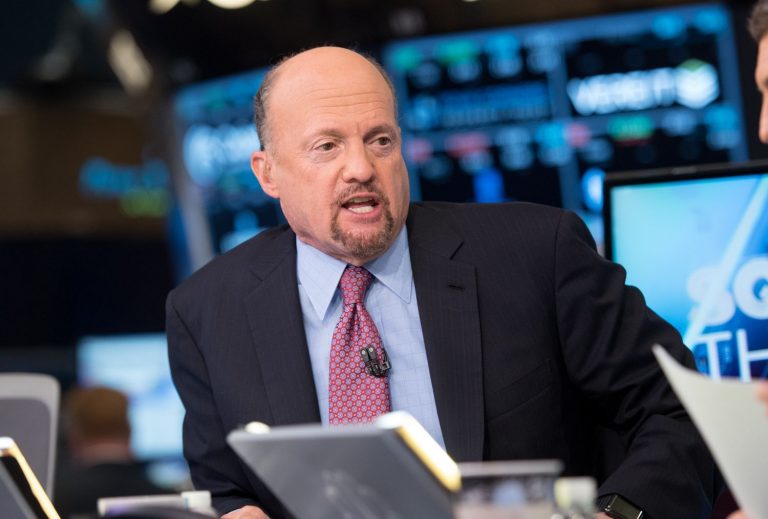
CNBC’s Jim Cramer on Monday delivered a broader cautionary message to investors tempted to chase stocks moving on Venezuela’s sudden political upheaval, arguing that markets routinely overestimate how quickly geopolitical shocks translate into sustainable corporate earnings.
Cramer’s remarks came amid a powerful rally on Wall Street that appeared to shrug off the dramatic news out of Latin America. The Dow Jones Industrial Average surged 594.79 points, or 1.23%, to close at a fresh all-time high, reinforcing his view that U.S. equities remain driven more by earnings, liquidity, and valuation than by short-lived political narratives.
At the heart of Cramer’s argument is a distinction he says investors repeatedly blur: the difference between trading volatility and building long-term wealth.
“Along with an index fund, I want you to own individual stocks — not trade them,” Cramer said. “Let the power of compounding do its work.”
Register for Tekedia Mini-MBA edition 20 (June 8 – Sept 5, 2026).
Register for Tekedia AI in Business Masterclass.
Join Tekedia Capital Syndicate and co-invest in great global startups.
Register for Tekedia AI Lab.
He warned that geopolitical events often create sharp, emotional market reactions that look compelling in the moment but rarely offer durable investment edges. Venezuela, he said, is a textbook case.
While President Donald Trump’s move to oust the country’s leadership has fueled speculation about oil supply, energy infrastructure, and U.S. corporate access to the world’s largest proven crude reserves, Cramer argued that markets have already priced in much of the optimism.
Energy stocks such as Chevron, refiners including Valero, and oil-services firms like Halliburton jumped on the assumption that Venezuela could quickly re-emerge as a major oil supplier aligned with U.S. interests. Cramer pushed back on that narrative, noting that Venezuela’s oil industry has been hollowed out by decades of underinvestment, sanctions, technical decay, and brain drain.

Rebuilding production capacity, he said, would require years of work, billions of dollars in capital, and a stable political framework that does not yet exist. Even under the most favorable assumptions, meaningful cash flow for U.S. companies would likely arrive far later than current share price moves imply.
“People always underestimate how long it takes for political change to show up in corporate profits,” Cramer said, adding that investors often mistake a compelling story for an investable timeline.
He also cautioned that commodity markets tend to front-run geopolitical developments aggressively. Oil prices, he noted, often react immediately to supply narratives, leaving little margin for latecomers once the story is widely understood. In that context, chasing energy stocks after a geopolitical rally can expose investors to sharp reversals if expectations cool or timelines stretch.

Rather than trading headlines, Cramer urged investors to concentrate on businesses with clear earnings visibility and valuations that provide downside protection. He framed this as especially important in a market trading near record highs, where selectivity matters more than broad speculation.
Within financials, Cramer highlighted Goldman Sachs as a potential beneficiary of a recovery in deal-making, capital markets activity, and equity issuance, particularly if market confidence continues to improve. He said Goldman’s earnings power is closely tied to financial activity rather than political events, making it a cleaner long-term bet.
He also pointed to Citigroup, which he believes can continue exceeding earnings expectations as management pares back complexity, exits non-core businesses, and improves returns on capital. Capital One was another standout for Cramer, whom he described as one of the cheapest large U.S. banks following its acquisition of Discover — a deal he said the market has not fully digested in terms of long-term earnings potential.
Stepping back, Cramer framed the Venezuela episode as a reminder that markets are littered with examples where investors chased geopolitical excitement only to be disappointed by the slow grind of reality. From regime changes to wars and sanctions, he said, the economic payoff almost always arrives later and more unevenly than traders expect.
His broader advice was simple but pointed: investors should resist the urge to react to every breaking headline and instead anchor portfolios around high-quality companies with durable cash flows, reasonable valuations, and management teams executing against clear strategies.
“Trading feels productive,” Cramer implied, “but ownership is what actually builds wealth.”
In a market still hitting record highs and navigating global political uncertainty, Cramer’s warning was less about Venezuela specifically and more about discipline — a call for investors to tune out the noise and focus on fundamentals that compound over time.