

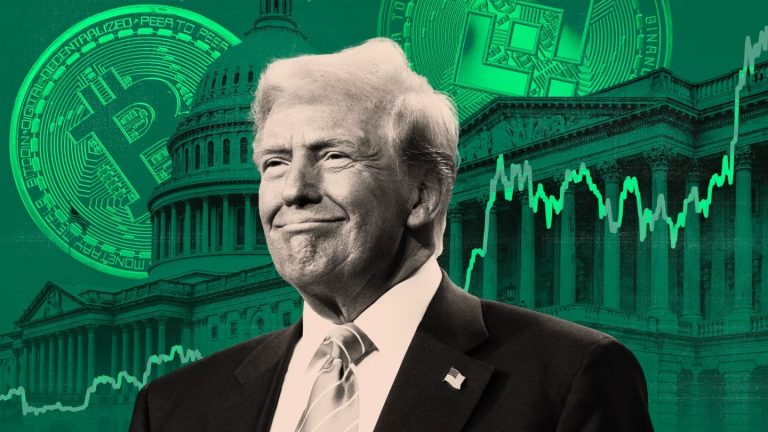
A Reuters investigation alleging that the Trump family has accrued approximately $2.3 billion from crypto-related ventures would represent one of the most consequential intersections of political power, digital assets, and wealth creation in recent memory.
If substantiated, the findings would not only reshape public understanding of how political families engage with emerging financial infrastructure but also intensify already heightened debates around ethics, regulatory capture, and the legitimacy of crypto markets as a vehicle for concentrated wealth transfer.
At the center of the controversy is the suggestion that crypto has evolved from a decentralized financial experiment into a parallel capital formation system capable of generating extraordinary private gains for politically exposed individuals.
The report implies that a combination of token launches, advisory arrangements, early-stage allocations, and infrastructure investments may have collectively contributed to the alleged windfall.
Register for the next Tekedia Mini-MBA.
Register for Tekedia AI in Business Masterclass.
Join Tekedia Capital Syndicate and co-invest in great global startups.
While crypto markets are known for volatility and opacity, the scale of $2.3 billion introduces a different dimension: systemic influence rather than isolated enrichment. For Donald Trump and his extended family network, such an outcome would likely be interpreted through two competing lenses.
Supporters might frame crypto involvement as entrepreneurial foresight—an early recognition of a transformative asset class that rewards conviction and risk tolerance. In that framing, wealth accumulation is not merely incidental but the product of aligning with technological disruption ahead of traditional financial institutions.
Critics, however, would likely interpret the same developments as evidence of blurred boundaries between political influence and financial participation. The crypto sector, still evolving its regulatory framework, offers numerous pathways for value extraction that are not yet fully standardized or transparent.

Token allocations, private liquidity events, and offshore-linked trading venues can all obscure beneficial ownership structures, making it difficult to distinguish legitimate investment from influence-driven advantage. The broader implications extend beyond a single family or political figure.
If political actors can materially benefit from exposure to digital asset ecosystems while simultaneously shaping regulatory discourse, it raises questions about governance integrity. The concern is not unique to crypto, but the scale and speed of value creation in digital markets amplify the stakes.
Unlike traditional industries, where capital accumulation tends to occur over decades, crypto wealth can be realized in compressed cycles driven by speculative demand, token emissions, and network effects.
Institutionally, such a report would likely intensify calls for stricter disclosure requirements for public figures and their families. Legislators and regulators may face renewed pressure to define clearer boundaries around token ownership, advisory roles in blockchain projects, and participation in decentralized finance protocols.

The absence of harmonized global standards further complicates enforcement, as crypto assets routinely cross jurisdictions faster than legal frameworks can adapt. Market participants, meanwhile, may interpret the investigation in multiple ways. Some may view it as validation of crypto’s maturation into a politically relevant asset class, comparable to equities or real estate in its capacity to concentrate wealth.
Others may see it as a warning sign of increasing politicization, where digital assets become entangled in geopolitical narratives and reputational risk premiums. The alleged $2.3 billion figure—whether fully accurate, partially inflated, or context-dependent—serves as a focal point for a larger structural question: who benefits from the next phase of financial innovation, and under what rules?
As crypto continues to integrate with mainstream capital markets, the distinction between technological progress and political economy will only become more difficult to separate, and far more consequential to ignore.