

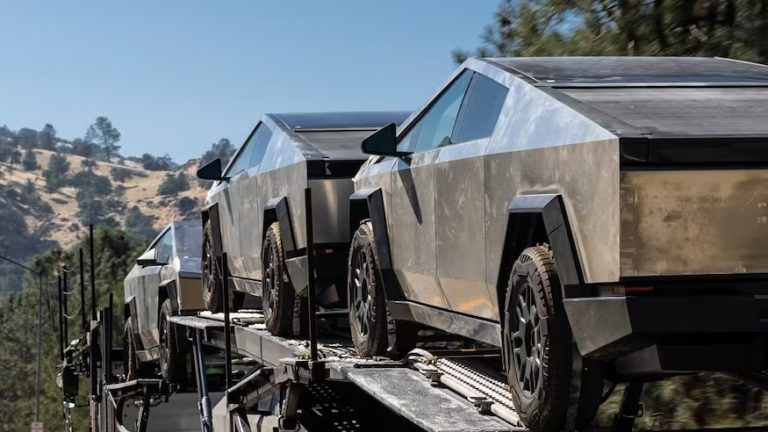
Recent reports from various technology and automotive sources indicate that Tesla’s Cybertruck, once considered a design icon for electric pickups, is experiencing a decline in sales and an increase in public criticism. The contrast is notable, especially as some investors have shifted their attention toward more stable, income-generating assets, such as high dividend stocks, during periods of volatility in the EV sector.
The Tesla Cybertruck was initially expected to achieve strong sales, with projections of around 250,000 units per year.
However, the reality has fallen short of expectations with only an estimated 5,300 units delivered in the third quarter of 2025, representing a 63% drop from the previous year’s figures — a setback for Tesla stock performance.
Moreover, various industry trackers have reported that the used vehicle market is experiencing unusually steep depreciation. Some Cybertrucks depreciate by approximately 35% within a year, with Tesla now offering lower trade-in prices to early buyers.
Additionally, the rollout of the Cybertruck has been impacted by technical issues. A recent report indicated that the U.S. National Highway Traffic Safety Administration (NHTSA) — on behalf of Cybertruck owners — initiated a recall for almost all Cybertrucks built before mid-2025 due to a trim panel defect that could detach while driving.
Many owners have expressed dissatisfaction with the Cybertruck’s quality, reporting issues such as malfunctioning doors, spontaneous glass cracking, and vehicles requiring multiple service calls.
Tesla has addressed some of these complaints through software updates, though questions remain as to why a vehicle starting at around $80,000 faces such quality challenges.
Secret purchases to offset expenses
Some industry sources claim that several companies controlled by Elon Musk have purchased significant numbers of Cybertrucks for internal logistics and other company operations. These purchases have been consuming a significant amount of unsold inventory.
But why would companies buy multiple units of the same vehicle unless they are attempting to downplay concerns about its quality by presenting the Cybertruck as part of their fleet? These purchases may have absorbed some of the excess stock Tesla had on hand.
Elon Musk could also use this strategy to hide disappointing sales. The more the case is examined, the more negative signals it reveals about the situation, which may explain the lengths to which Musk might go to maintain the appearance of robust performance.
Purchasing their own vehicles affects delivery figures, which in turn impact revenue and the company’s overall image, positively influencing investor sentiment and the company’s representation on stock screens.
Cybertruck’s success in the mass market remains uncertain. Experts worry that the vehicle’s unconventional design may hinder its popularity outside the U.S. Currently, the claims that Tesla purchased Cybertrucks haven’t been proven beyond observations made by outlets.
However, the combination of low sales, recalls, and the recent reports of Musk’s companies buying Cybertrucks illustrates the difficulties Tesla faces in sustaining both demand and investor confidence for one of the brand’s most ambitious vehicles to date.