

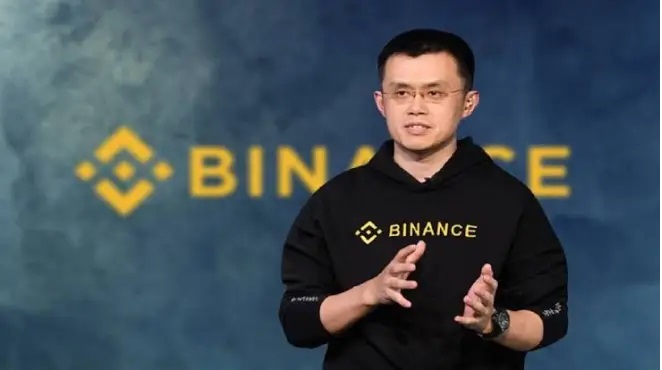
Changpeng Zhao (CZ), the founder of Binance, has joined Genius Trading also known as Genius Terminal as an advisor following a significant investment from YZi Labs, his family office along with co-founder Yi He, spun out from Binance Labs.
YZi Labs made a “multi-8-figure” investment well above $10 million, described in some reports as tens of millions in Genius Trading, a privacy-focused, self-custodial on-chain trading terminal.
The platform aggregates spot trading, perpetual contracts, and copy trading across multiple blockchains like Ethereum, Solana, BNB Chain, and others, aiming to provide CEX-like speed and privacy while remaining fully decentralized and non-custodial.
Register for Tekedia Mini-MBA edition 20 (June 8 – Sept 5, 2026).
Register for Tekedia AI in Business Masterclass.
Join Tekedia Capital Syndicate and co-invest in great global startups.
Register for Tekedia AI Lab.
It positions itself as an “on-chain alternative to Binance,” addressing issues like information leakage for large traders through features like “Ghost Orders” splitting trades across wallets for reduced traceability and cross-chain execution without bridging.
Genius previously raised about $7 million including a $6 million seed in 2024 led by CMCC Global, with investors like Balaji Srinivasan and Anthony Scaramucci. The new funding and CZ’s involvement are accelerating development, with a public beta for its privacy layer planned for Q2 2026 and a full public launch later in the year.
Early users can earn “GP” points through trading volume, swaps, referrals, and daily activities potentially for a future airdrop, and there are competitions with cash prizes. CZ has clarified that Genius is a trading terminal connecting to perp DEXs not a direct competitor to projects like Aster.
Separately, CoinGecko, the popular independent crypto market data platform, is reportedly exploring a potential sale. It has engaged investment bank Moelis to advise on the process, which began late last year. Sources indicate a target valuation of around $500 million, though it’s early stages and no final figure is set—CoinGecko hasn’t publicly confirmed.

This comes amid booming crypto M&A disclosed deals hit ~$8.6 billion across 133 transactions in 2025 and challenges for data platforms, including declining web traffic as users shift to AI tools for info— CoinGecko’s monthly visits dropped sharply from 2024 levels.
It draws comparisons to Binance’s ~$400 million acquisition of rival CoinMarketCap in 2020. These developments highlight ongoing consolidation and investment in crypto infrastructure—privacy-focused DeFi tools on one side, and valuable data assets on the other. The crypto space is moving fast in 2026.
Ghost Orders is the flagship privacy feature of Genius Trading also called Genius Terminal or Genius Pro, a cross-chain, self-custodial on-chain trading terminal.
It addresses a core pain point in decentralized trading: on public blockchains like Ethereum, Solana, BNB Chain, and others, large trades are fully visible in the mempool or on explorers. This transparency often leads to front-running bots or MEV searchers jumping ahead to profit from your intent, slippage from market impact, or copy-trading/sniping of strategies by others watching whale wallets.

Ghost Orders use advanced techniques—primarily Multi-Party Computation (MPC) combined with smart, user-directed order splitting—to execute large or sensitive trades discreetly while keeping everything non-custodial (you always control your keys) and auditable on-chain.
Key mechanics include: Splitting large orders across multiple wallets up to 500 or more, user-managed or orchestrated clusters. Instead of one whale wallet broadcasting a massive buy and sell, the trade fragments into many smaller, seemingly unrelated transactions executed simultaneously.
MPC orchestration coordinates these splits securely without any single party including Genius seeing the full picture or holding funds. This hides concentration of supply and positions and obfuscates the trader’s overall intent and strategy.
Temporary wallet groups/clusters are created for the execution, allowing complex strategies e.g., spot, perps, cross-chain to run across chains without bridging or exposing links between addresses. The result: trades appear as normal, smaller activity on-chain or even “invisible” in some descriptions for certain networks like Solana/BNB/ETH, reducing signal leakage while maintaining cryptographic verifiability and full auditability.
This creates CEX-like privacy where orders aren’t public until filled in a fully decentralized setup—no custody, no relayers holding assets, and protection from common on-chain exploits like sandwich attacks or MEV extraction on your flow. Reduces front-running and slippage for large positions.
Protects strategies from being copied or countered in real time. Works across 10+ chains (Ethereum, Solana, BNB Chain, Base, Arbitrum, etc.) with aggregated liquidity from 300+ DEXs and perps. Fully compliant with on-chain transparency rules—trades remain verifiable, but intent is masked.
It’s positioned as a key differentiator for professional/whale traders who want DeFi’s self-custody and settlement but hate the “information leakage” of public chains. The platform backed by YZi Labs and with CZ as advisor emphasizes this as critical infrastructure for scaling on-chain trading privacy.
This is based on public announcements and reports around the January 2026 funding news—details may evolve as the privacy layer rolls out fully. Genius clarifies it’s a unified terminal connecting to perp DEXs, so Ghost Orders enhance execution across existing venues.
If you’re trading there, early volume especially swaps earns Genius Points (GP) toward potential future rewards.