

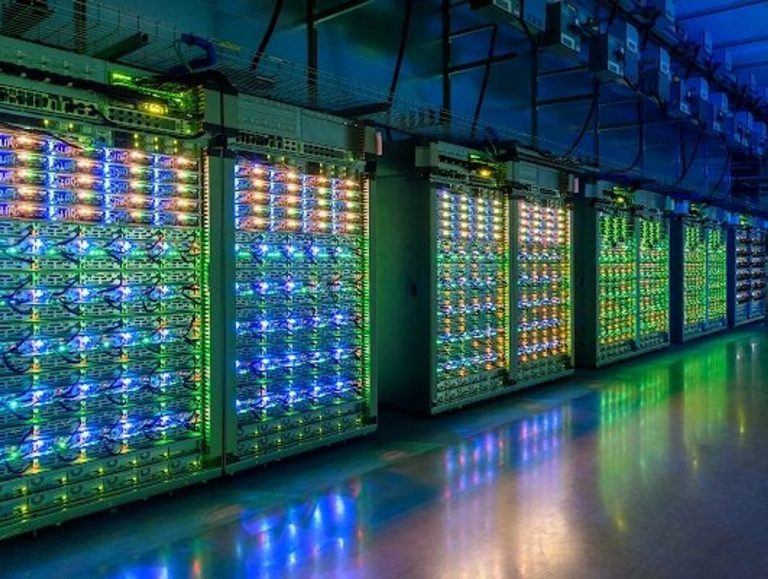
The rapid expansion of artificial intelligence infrastructure in the United States is creating an unexpected political problem for the technology industry.
Data centers, once presented as symbols of economic growth, technological leadership and high-paying jobs, are increasingly becoming a source of public frustration.
In Ohio, the backlash has become serious enough for the National Republican Senatorial Committee (NRSC) to urge major AI companies to improve the public perception of data centers, warning that the issue could damage Republican electoral prospects.
The concern is particularly significant because Ohio has emerged as an important destination for data-center investment. Communities, however, are increasingly questioning whether the economic benefits justify the infrastructure demands created by these facilities.
Register for the next Tekedia Mini-MBA.
Register for Tekedia AI in Business Masterclass.
Join Tekedia Capital Syndicate and co-invest in great global startups.
Concerns include electricity consumption, water usage, environmental impacts, land requirements and whether ordinary residents will ultimately bear higher utility costs. Ohio lawmakers have already established a bipartisan committee to examine the economic, environmental and security consequences of data-center development.
The political stakes are especially high in the state’s Senate race. The NRSC reportedly warned AI companies that public opposition to data centers could become an electoral liability for Republican candidate Jon Husted.
Democratic challenger Sherrod Brown has made the issue a central part of his campaign, attempting to associate Husted with the rapid expansion of data centers. According to reporting on the NRSC memo, Republicans fear that a loss in Ohio could encourage politicians elsewhere to reconsider their support for AI infrastructure.

This development illustrates a broader problem facing the AI industry: technological progress is increasingly colliding with local economic realities. For AI companies, massive computing facilities are essential.
Training and operating advanced models requires enormous amounts of computing power, electricity and cooling infrastructure. Yet the benefits of AI can appear abstract to residents who see construction projects, higher resource demand or potential pressure on electricity prices in their communities.
Ohio polling underscores the challenge. Research from the Ohio Environmental Council found that 86% of voters surveyed supported requiring data centers to pay additional fees to account for their energy and water impacts, with strong support among both Democrats and Republicans.

Another filing citing 2026 polling reported that roughly 65% of Ohio respondents opposed building a data center in their community. The answer therefore cannot simply be better advertising.
AI companies may need to demonstrate that communities receive tangible benefits from hosting these facilities. That could include paying their full share of infrastructure costs, creating durable local employment, investing in power generation and water systems, and providing greater transparency about consumption.
The political backlash also reveals a deeper shift in the AI debate. Artificial intelligence is no longer confined to software, algorithms and futuristic promises. Its physical footprint is becoming impossible to ignore.
The warehouses, power infrastructure and cooling systems required to operate AI are transforming local economies and landscapes. For AI companies, Ohio may be an early warning.
Winning the AI race will require more than building bigger models and faster data centers. It will also require maintaining a social license to operate. If companies fail to convince communities that AI infrastructure creates shared prosperity rather than concentrated corporate gains and localized costs, opposition could spread across the United States.
The future of America’s AI boom may therefore depend as much on public trust as on technological capability. In Ohio, that political reality is already becoming clear.