

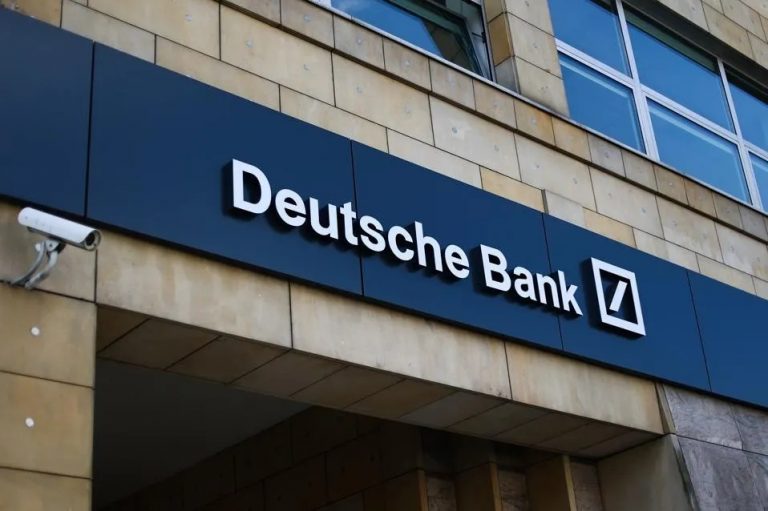
Deutsche Bank is strengthening its position in the rapidly evolving digital asset industry by rolling out cryptocurrency custody services for institutional clients.
The move represents another important step in the integration of traditional banking and blockchain-based financial infrastructure, as major financial institutions increasingly recognize the commercial opportunities emerging from digital assets.
Crypto custody has become one of the most important services in the institutional cryptocurrency market. Banks, asset managers, hedge funds and other professional investors require secure systems to store and manage digital assets while meeting regulatory, operational and compliance obligations.
Register for the next Tekedia Mini-MBA.
Register for Tekedia AI in Business Masterclass.
Join Tekedia Capital Syndicate and co-invest in great global startups.
By entering this market, Deutsche Bank is positioning itself to serve institutions seeking exposure to cryptocurrencies without relying entirely on specialist digital asset companies. The service now forms part of a broader strategy to develop blockchain-based financial services.
Deutsche Bank has signed a memorandum of understanding with Deutsche Asset Management to explore tokenized money market funds, crypto-asset exchange-traded commodities and stablecoins.
The collaboration could connect custody with product development, settlement, liquidity management and distribution. Deutsche Asset Management reported €1.22 trillion in assets under management at the end of September.

The bank has indicated that tokenized financial instruments could eventually join its custody offering. Tokenization converts ownership claims on assets into digital tokens recorded on a blockchain.
Supporters argue it could improve settlement efficiency, increase transparency and enable assets to move across digital platforms. Deutsche Bank’s entry reflects intensifying competition among established financial institutions.
As regulatory frameworks become clearer, banks are seeking to capture demand for Bitcoin, stablecoins and tokenized securities. Deutsche Bank is considering expansion into major Asian financial centers in 2027, potentially extending its reach beyond Europe.

Custody does not eliminate investment risk. Cryptocurrency prices remain volatile, and clients can still face fraud, cyber incidents and failures involving other market participants. Digital assets are not protected by deposit-guarantee schemes comparable to those covering eligible bank deposits.
Deutsche Bank’s launch signals a significant shift in how traditional finance approaches cryptocurrencies. Rather than treating digital assets solely as speculative instruments, the bank is building infrastructure to support their use within regulated financial markets.
Its success will depend on institutional demand, reliable security and its ability to expand services while maintaining regulatory confidence. Another important consideration is the growing demand for institutional-grade security.
Unlike traditional financial assets held through established banking systems, cryptocurrencies require specialized infrastructure for managing private keys, authorizing transactions and protecting digital wallets.
Losing access to private keys can result in the permanent loss of assets. Consequently, institutional investors often prioritize custody providers with strong security arrangements, operational controls and regulatory oversight before entering the cryptocurrency market.
Deutsche Bank’s involvement could help address some of these concerns by bringing its established banking expertise into digital asset management.
Its reputation, international network and experience handling large institutional accounts could make its custody services attractive to financial firms that remain cautious about working with relatively young cryptocurrency companies.
The development comes as governments and regulators work toward clearer rules for digital assets. In Europe, the Markets in Crypto-Assets Regulation provides a framework for crypto-asset service providers, covering authorization, transparency and consumer protection.
Such regulatory developments could encourage more traditional financial institutions to participate in the industry while establishing stronger standards for custody and asset management.
Competition will remain intense. Specialist custody companies and other global banks are already developing services for institutional investors.
Deutsche Bank will therefore need to demonstrate that its offering provides competitive pricing, dependable technology and seamless integration with existing financial operations.
The broader opportunity extends beyond Bitcoin and other cryptocurrencies. As tokenized securities, money market funds and stablecoins gain traction, custody providers could become essential intermediaries in a financial system increasingly supported by blockchain infrastructure.
Entering institutional crypto custody is therefore more than an expansion of its product portfolio. It represents a strategic investment in the future of financial services, where traditional banking expertise and digital asset technology are expected to operate increasingly alongside each other.