

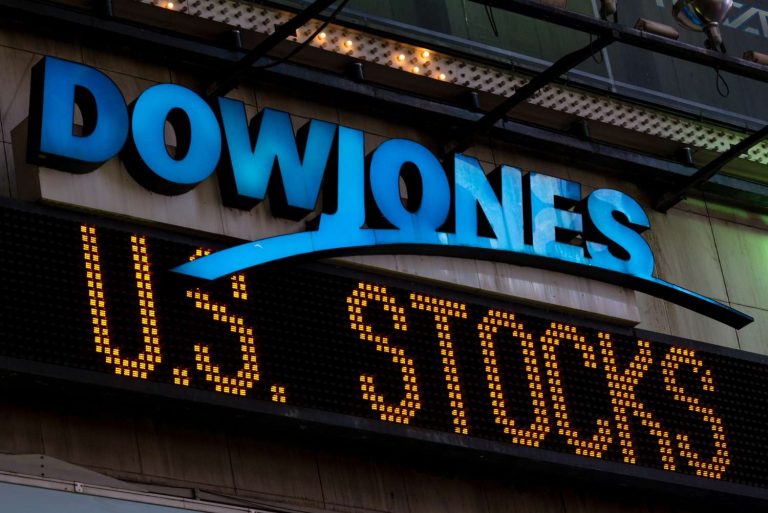
On April 9, 2025, the Dow Jones Industrial Average, Nasdaq Composite, and S&P 500 recorded their most significant single-day gains since 2008, driven by a major policy shift from President Donald Trump. After days of market turmoil following Trump’s announcement of sweeping tariffs on nearly all U.S. trading partners, he reversed course, declaring a 90-day pause on many of those tariffs. This unexpected about-face sparked a massive rally across Wall Street.
The Dow surged by 2,962.86 points, a 7.87% increase, closing at 40,608.45—its largest point gain ever and the biggest percentage jump since March 2020. The S&P 500 climbed 9.52%, or 475.65 points, to 5,456.90, marking its best day since October 2008 during the financial crisis and the third-largest percentage gain since World War II. The Nasdaq outperformed both, soaring 12.16%—a gain of 1,898.36 points—to close at 17,508.90, its biggest single-day advance since January 2001.
This rally came after a brutal four-day stretch where the S&P 500 had briefly entered bear-market territory, down over 12% from its recent highs due to tariff-related fears. The sudden relief from Trump’s pause unleashed a wave of buying, with investors interpreting it as a step toward stabilizing trade policy uncertainty. While these gains are historic in scale, they follow a volatile period, and some analysts note parallels to 2008, when sharp single-day spikes occurred amid broader market declines. The S&P 500 still ended 2008 down 38.49% despite those earlier record bounces.
Register for Tekedia Mini-MBA edition 20 (June 8 – Sept 5, 2026).
Register for Tekedia AI in Business Masterclass.
Join Tekedia Capital Syndicate and co-invest in great global startups.
Register for Tekedia AI Lab.
The massive rally reflects a surge in investor relief following President Trump’s tariff pause. Businesses and markets had been rattled by the prospect of widespread trade disruptions, so this reprieve could stabilize supply chains, consumer prices, and corporate earnings—at least temporarily. While the gains are historic, they come on the heels of a near bear-market plunge. This whipsaw action suggests underlying uncertainty about trade policy and economic direction.
Investors may remain skittish, expecting further policy zigzags. The tariff rollback eases pressure on industries like manufacturing and tech (evident in Nasdaq’s outsized jump), but it doesn’t resolve broader questions about inflation, interest rates, or global demand. The Federal Reserve, already navigating a tricky 2025, might see this as a reason to hold steady—or adjust if inflationary pressures shift.
The market’s euphoric response hands Trump a narrative win, reinforcing his image as a decisive leader who can move markets. However, the initial tariff announcement’s fallout also exposes the risks of his unpredictable style, potentially pressuring him to clarify long-term trade goals. The 90-day pause might soften tensions with trading partners like China, the EU, and Canada, who faced steep tariffs.

Yet, it’s a temporary truce—diplomatic and economic negotiations will likely intensify as the deadline looms, testing Trump’s administration. Critics may argue the initial tariff plan was reckless, given the market chaos it triggered. This could embolden opposition in Congress or among business lobbies, complicating Trump’s agenda if he doubles down later.
Market Implications
Tech (Nasdaq’s 12% leap), industrials, and consumer discretionary stocks likely led the charge, benefiting from reduced tariff threats. Companies with heavy international exposure, like Apple or Boeing, saw outsized gains as trade war fears eased. Single-day surges of this magnitude often signal emotional trading rather than fundamentals. If Trump’s pause proves short-lived or ineffective, a correction could follow. Historical precedents—like 2008’s big bounces amid a crashing year—loom large.
The rally might lure sidelined capital back into equities, especially after weeks of outflows. However, with the S&P 500 still below its pre-turmoil peak, some hedge funds and traders could see this as a “sell the news” moment rather than a buy-in. This event underscores how tightly markets are tethered to policy in 2025. Trump’s tariff pivot turned a potential crisis into a historic win—for now. But the 90-day clock is ticking, and unresolved issues (trade deficits, geopolitical tensions, Fed policy) could temper optimism.

Investors and businesses will watch closely for signals of permanence. If the pause holds or leads to a broader deal, it could fuel a sustained rally; if it unravels, April 9 might just be a blip in a choppy year. Either way, it’s a stark reminder of how fast sentiment can shift—and how much power a single decision wields in today’s economy.