

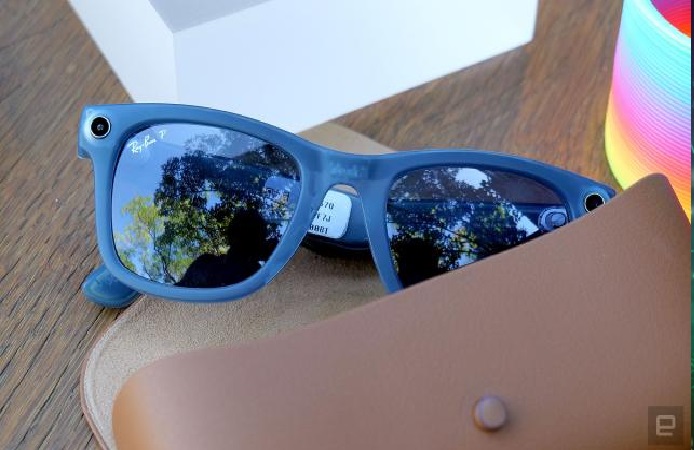
Dutch consumer and digital rights organisations have asked a court to suspend sales of Meta’s AI-powered smart glasses in the Netherlands, arguing that the devices enable people to record others without their knowledge and violate European privacy laws.
The lawsuit, filed at the Amsterdam District Court on Thursday, targets Meta and EssilorLuxottica, the owner of the Ray-Ban brand, which jointly developed the glasses. Although the case concerns sales in the Netherlands, its outcome could influence wider efforts by regulators and consumer groups to restrict covert recording through wearable technology.
A decision in the summary proceedings is expected by December 24 at the latest.
Register for the next Tekedia Mini-MBA.
Register for Tekedia AI in Business Masterclass.
Join Tekedia Capital Syndicate and co-invest in great global startups.
The plaintiffs include Consumentenbond, the Netherlands’ main consumer association, and Offlimits, an organisation campaigning against online sexual abuse. They argue that the glasses create an environment in which people cannot know when they are being recorded, forcing members of the public to remain concerned about surveillance in everyday settings.
The groups want Meta to introduce measures preventing recordings of people without their knowledge, stop using footage captured by the devices to train artificial intelligence models, and suspend sales until the company complies with their demands.
They are also seeking penalties of €100,000 ($109,600) per day for each defendant in the event of non-compliance, subject to a combined cap of €100 million.

Offlimits lawyer Karlijn Han told the court that the glasses had been used for what she described as “creep shots”, raising concerns about recordings in places where people have a strong expectation of privacy.
“Covert recordings are undoubtedly also being made during exams, in changing rooms, at swimming pools, in hotel rooms and hospitals, but also in playgrounds and on beaches,” Han said in her opening remarks. “Each invasion of privacy is worse than the last.”
Meta’s lawyer, Bastiaan Kemp, urged the court to dismiss the case, arguing that the proposed restrictions would harm legitimate users, undermine the company’s competitive position and effectively amount to a product recall without addressing concerns about similar devices made by other manufacturers.

“Providers of products cannot be held responsible for every instance of deliberate misuse,” Kemp told the court.
He also argued that the glasses have a recording indicator light on the frame, which is intended to alert people when the camera is being used.
Meta rejected allegations that it processes images recorded by the glasses in Europe or uses the footage to train its AI models in violation of European data protection rules. Kemp disputed claims made by Consumentenbond’s lawyer that the company engages in such practices.
EssilorLuxottica also opposed the proposed sales ban. Its lawyer argued that the company neither processes nor has access to footage captured by the glasses, adding that suspending sales would be disproportionate and ineffective because consumers could obtain similar products from other manufacturers.
The dispute comes as the market for AI-enabled eyewear expands. Meta and EssilorLuxottica sold more than seven million smart glasses in 2025, accounting for approximately 80% of the global market, according to the figures cited in the case.
The commercial success of the devices has brought growing attention to the privacy implications of integrating cameras, microphones and AI capabilities into ordinary-looking accessories. Unlike conventional cameras and smartphones, smart glasses can be worn throughout the day and may allow recordings to take place without the conspicuous behaviour associated with holding a recording device.
Privacy Backlash Spreads Across Markets
The Dutch proceedings form part of a wider international push to address the risks associated with smart glasses and covert recording.
Governments and judicial authorities have considered restrictions in Australia and Norway, while courts in England, Wales and New York state have introduced bans aimed at preventing covert recording and protecting sensitive information. Cinema operators in the United Kingdom have also begun restricting the devices over concerns about privacy and film piracy.
On Tuesday, Germany’s national consumer federation announced legal action against Meta and Ray-Ban, alleging that the glasses make it difficult for consumers to comply with European data protection requirements when recording in public spaces.
The European Data Protection Board warned in October that smart glasses posed serious privacy risks and called for stronger safeguards.
In the Netherlands, the national privacy regulator, Autoriteit Persoonsgegevens (AP), advised consumers this month against buying smart glasses, describing them as unsafe for both wearers and bystanders. Retail chain Hans Anders had already suspended sales of Meta’s Ray-Ban smart glasses in the Netherlands and Belgium in October.
Meta is also facing proposed class-action lawsuits in the United States over allegations that private images captured through the glasses were improperly shared.
The legal disputes expose a growing regulatory challenge for technology companies developing wearable AI products. Manufacturers must account not only for how devices collect and process data but also for the possibility that users may employ them to record people who have not consented.
For Meta, the Amsterdam case could have consequences beyond a potential interruption to sales in the Netherlands. A ruling requiring changes to recording practices, data processing or product availability could strengthen demands for similar safeguards elsewhere in Europe, where data protection rules apply across national markets.
However, the court must first assess the specific claims against Meta and EssilorLuxottica, alongside the companies’ arguments that existing safeguards and the proposed restrictions are insufficient grounds for a sales ban. The decision, expected by December 24, will provide an early indication of how European courts may address privacy concerns surrounding AI-powered wearable devices.