

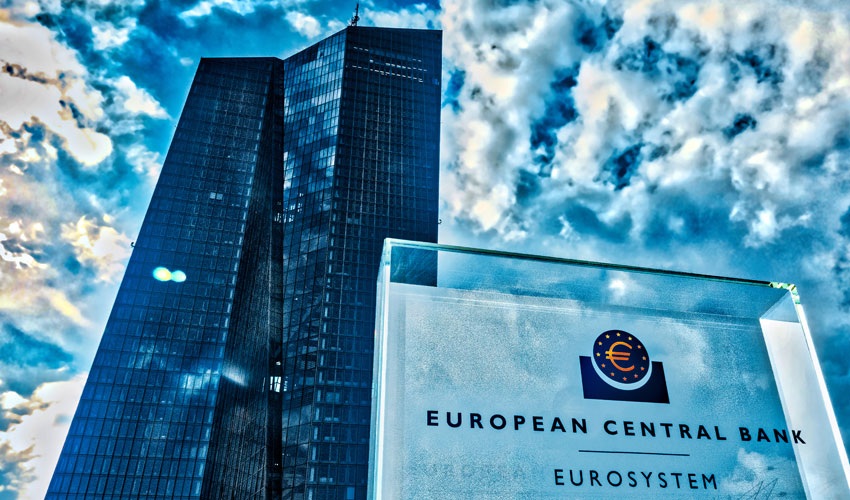
The European Central Bank raised its key deposit rate by 25 basis points to 2.5% on Thursday, delivering the widely expected increase as surging energy prices and geopolitical tensions complicate the outlook for inflation and economic growth across the euro zone.
The decision lifted the deposit rate from 2.25% and marked the latest step in the ECB’s tightening cycle, which began in response to an inflation shock intensified by the war in the Middle East.
Markets had fully priced in the increase ahead of the meeting, with LSEG data showing a 100% probability of a 25-basis-point hike.
Register for the next Tekedia Mini-MBA.
Register for Tekedia AI in Business Masterclass.
Join Tekedia Capital Syndicate and co-invest in great global startups.
The more consequential question for investors is what comes next.
The ECB has repeatedly avoided committing to a predetermined path, saying policymakers will assess incoming economic data and the intensity and duration of the energy shock at each meeting. But with eurozone inflation accelerating and energy costs rising sharply, investors are increasingly debating whether the central bank will need to deliver several additional increases.
ECB President Christine Lagarde said the Middle East conflict, along with developments in Russia’s war on Ukraine, could keep headline inflation “well above target” for an extended period.

At the same time, she warned that higher energy costs and global trade tensions could weaken economic activity.
“The outlook remains highly uncertain, with risks to the upside for inflation and to the downside for economic growth,” the ECB’s Governing Council said.
The central bank also pointed to a “broad range of outcomes” for growth and inflation, depending on the scale and duration of the energy shock and whether higher prices generate second-round effects throughout the economy.

Energy Shock Puts ECB In Difficult Position
The ECB is facing a difficult policy trade-off because the latest inflation surge is being driven in large part by energy costs rather than excessive domestic demand.
Eurozone inflation reached 3.3% in August, while energy inflation surged to 14.3%.
The region’s dependence on imported energy leaves it highly exposed to disruptions in global commodity markets. The conflict in the Middle East has threatened oil and other commodity flows through the Strait of Hormuz, pushing energy prices sharply higher and increasing the risk that the initial supply shock will spread into transportation, manufacturing and consumer prices.
That creates a problem for the ECB.
Higher interest rates can restrain demand and prevent an energy shock from becoming embedded in wages and broader prices, but monetary policy cannot directly increase oil supplies or reopen disrupted trade routes. Aggressive tightening can therefore reduce economic activity without immediately eliminating the original source of inflation.
Lagarde acknowledged the tension, saying the euro zone economy had demonstrated “greater-than-expected resilience” but warning that the energy price shock and global trade tensions remained risks to growth.
The ECB’s baseline forecasts already point to inflation remaining above its 2% target. Core inflation, excluding energy and food, is expected to average 2.5% in 2026, 2.6% in 2027 and 2.3% in 2028.
That projected persistence makes it harder for policymakers to treat the energy shock as a temporary spike.
Investors See More Hikes Ahead
Some investment strategists now expect the ECB to continue raising rates.
Ed Hutchings, head of rates at Aviva Investors, said inflation remains a “significant source of concern” for policymakers and markets.
“It’s clear more hikes will be coming, and potentially more than one,” Hutchings said.
He added that the ECB’s immediate priority was addressing the inflation backdrop, although he cautioned that markets may already be pricing an excessive amount of tightening.
“With two hikes already being delivered and more than a further two hikes priced, things may well have gone too far,” he said.
Patrick Ernst, a macro investment strategist at JPMorgan Private Bank, also said the energy shock could force the ECB to continue tightening.
“In keeping the door open to further tightening, policymakers made clear that an energy-led inflation risk is still very much in play,” Ernst said. “One hike is not a ceiling.”
Felix Feather, an economist at Aberdeen, expects another increase at the ECB’s December meeting.
“The Eurozone has proved remarkably resilient despite higher energy prices and geopolitical uncertainty, leading policymakers to revise growth expectations higher,” Feather said.
“At the same time, inflation forecasts have also moved up, reflecting elevated energy costs and concerns that inflation could remain above target for longer.”
Bond Markets Add to The Pressure
The ECB’s policy challenge is being amplified by a sharp increase in government borrowing costs. European bond yields have risen to multi-decade highs in recent weeks as investors have reassessed the inflation outlook and priced in the possibility of additional interest-rate increases.
Higher sovereign yields matter beyond financial markets. They raise borrowing costs for governments, businesses and households and can tighten financial conditions even before the ECB delivers another rate increase.
But that creates another policy tension.
Economists warn that if the ECB raises rates aggressively to contain inflation expectations, it could reinforce the rise in borrowing costs and place additional pressure on already vulnerable economies. But if it moves too cautiously while energy-driven inflation persists, policymakers risk allowing temporary price increases to become embedded in wage negotiations, services inflation and inflation expectations.
The ECB therefore has to balance two opposing risks: doing too little and allowing inflation to become persistent, or doing too much and unnecessarily weakening economic growth.
Investors remain divided over where the tightening cycle will ultimately end. A Deutsche Bank survey of clients conducted over the past week found no clear consensus on the ECB’s terminal rate. More than one-third of respondents agreed with Deutsche Bank economists’ expectation that the deposit rate could reach 2.75%.
About one-quarter expected rates to remain at 2.5%, effectively treating Thursday’s increase as the end of the cycle.
Another quarter expected the ECB to take rates to 3%, implying two additional 25-basis-point increases after Thursday’s move. The dispersion illustrates how unusually dependent the ECB’s policy outlook has become on geopolitical developments.
Before the Middle East conflict intensified, policymakers could assess inflation and growth largely through conventional economic indicators. The current environment is more complicated because the trajectory of oil prices, shipping disruptions, energy availability and global trade can materially alter the inflation outlook between policy meetings.
ECB’s June Hike Began The Cycle
The ECB raised rates in June for the first time since 2023, taking the deposit rate to 2.25% and becoming the first major central bank to respond to the new inflationary shock associated with the Middle East conflict.
At the time, Lagarde warned of upside risks to inflation and downside risks to economic growth while stressing that the Governing Council was “not pre-committing to a particular rate path.”
The ECB subsequently held rates steady at its next meeting, saying it was closely monitoring the “intensity and duration” of the energy shock as well as its indirect and second-round effects.
Thursday’s increase shows how quickly that assessment has changed as energy inflation has accelerated.
For financial markets, the 25-basis-point increase itself was largely settled before policymakers met. The uncertainty lies in whether the ECB can contain the inflation shock without pushing the eurozone into a sharper slowdown.
Analysts say the answer will depend heavily on developments outside the ECB’s control. This is because if energy prices remain elevated and inflation stays above target, the central bank may have to continue tightening even as growth weakens. That would make the current cycle fundamentally different from a conventional demand-driven inflation episode.
The ECB would be raising rates not because the economy is overheating, but because a geopolitical energy shock threatens to keep prices elevated for longer.