

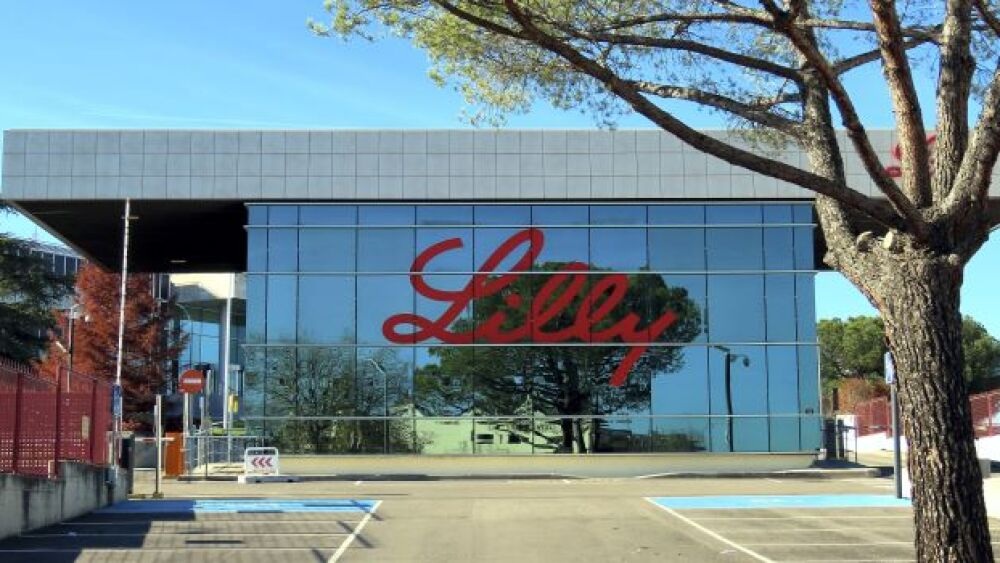
For decades, the trillion-dollar club has been the province of Silicon Valley giants—names like Apple, Microsoft, and Alphabet that shaped the digital age. But on Friday, a company far from the tech corridors of California briefly muscled its way into that elite circle.
Eli Lilly, the 147-year-old drugmaker headquartered in Indianapolis, touched a $1 trillion market capitalization in morning trading, marking the first time in history a health-care company has reached that milestone.
Its stock cooled afterward but continued trading near $1,048 a share, still reflecting the astonishing momentum behind the company’s transformation into the face of the global weight-loss drug boom. In the U.S. market, only Warren Buffett’s Berkshire Hathaway had previously reached the trillion-dollar threshold as a non-technology firm.
Register for Tekedia Mini-MBA edition 20 (June 8 – Sept 5, 2026).
Register for Tekedia AI in Business Masterclass.
Join Tekedia Capital Syndicate and co-invest in great global startups.
Register for Tekedia AI Lab.
The climb has been swift as Eli Lilly’s stock has surged more than 36 percent this year, fueled by an insatiable appetite from investors who have watched the company outpace its Danish rival Novo Nordisk in the fiercely competitive GLP-1 drug category. At the heart of Lilly’s surge are two modern pharmaceutical phenomena: its weight-loss injection Zepbound and its diabetes treatment Mounjaro, both of which have reshaped the global conversation around chronic disease and obesity management.
Last month, Eli Lilly reported that Mounjaro generated $6.52 billion in third-quarter revenue, a 109 percent jump from a year earlier. Zepbound, approved for obesity, delivered $3.59 billion in the same period, soaring 184 percent year-over-year. Few modern medicines have posted growth at that scale, and demand is still accelerating as regulators approve new uses, insurers widen coverage, and policymakers grapple with how to integrate these therapies into public health systems.
Lilly expects the momentum to continue. An oral version of its blockbuster drugs is slated to reach the market next year, promising patients a more convenient alternative to injections—while giving the company a product that is cheaper to manufacture and easier to distribute at scale. Analysts now project that the global weight-loss drug market could surpass $150 billion by the early 2030s, and Lilly appears positioned to dominate that universe for years to come.

However, other players in the market are vying for the top spot as competition evolves. Novo Nordisk, despite recent stumbles and leadership changes, remains a powerful counterweight with its GLP-1 drug Wegovy and diabetes treatment Ozempic. And another heavyweight has now muscled in: Pfizer vaulted forward this month when it beat Novo Nordisk in a $10 billion bidding war to acquire obesity-drug developer Metsera. Analysts believe it’s just the beginning of the scramble for next-generation metabolic therapies.
The frenzy around Zepbound and Mounjaro has thrust Eli Lilly back into the center of global medicine in a way few expected. But the foundations of its success are deeply rooted. The company traces its origins to 1876, when Eli Lilly, a pharmaceutical chemist and Union veteran of the U.S. Civil War, opened a small laboratory in Indiana.
By 1923, the firm had introduced the world’s first commercial insulin, laying the groundwork for a century of leadership in diabetes care. It later brought to market a string of influential drugs, including the antidepressant Prozac and one of the earliest polio vaccines. Lilly went public on the New York Stock Exchange in 1952.

Its modern rise began in May 2022, when U.S. regulators approved tirzepatide—sold as Mounjaro—for diabetes. The injectable treatment arrived at a moment when Novo Nordisk’s Ozempic had already reshaped the landscape, yet Mounjaro offered something different.
The drug mimics two gut hormones, GLP-1 and GIP. While GLP-1 reduces appetite and food intake, GIP not only helps suppress appetite but may also improve how the body processes sugar and fat. Novo Nordisk’s semaglutide, used in Ozempic and the weight-loss drug Wegovy, targets only GLP-1.
The dual-hormone mechanism helped Mounjaro smash expectations. It reached “blockbuster” status—more than $1 billion in annual sales—within its first full year. By late 2023, Lilly secured approval for tirzepatide as a treatment for obesity, launching it as Zepbound and placing it in direct competition with Wegovy. The commercial effect was immediate. By 2024, Mounjaro had raked in $11.54 billion, while Zepbound reported $4.93 billion in revenue.
That momentum has now rewritten market history. A 19th-century laboratory founded by a Civil War veteran has entered the same valuation tier once reserved for the modern titans of technology.