

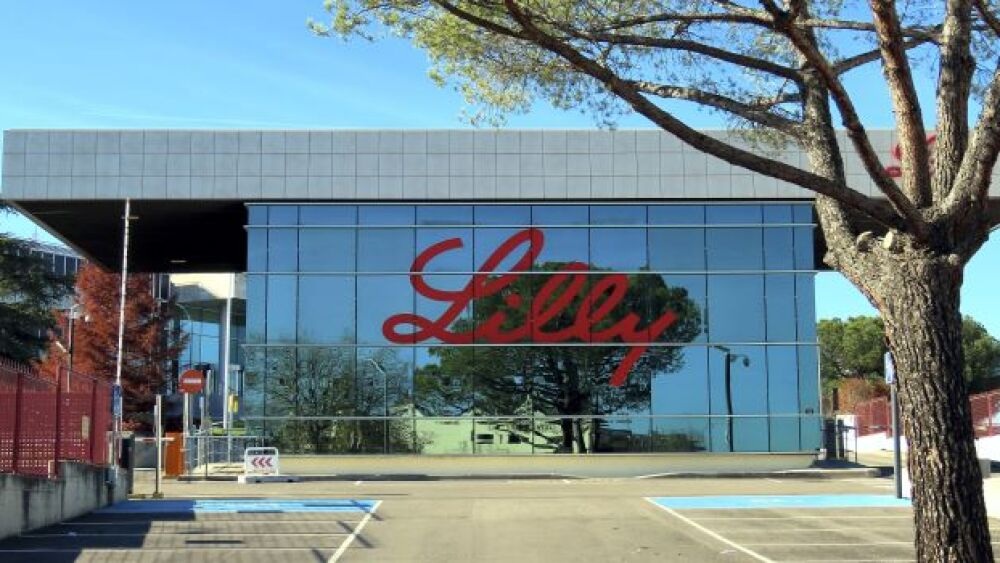
Eli Lilly has announced plans to invest more than $1 billion in India over the next several years — a move that signals not just the pharmaceutical giant’s global expansion, but also a strategic shift at a time when U.S. trade policies and tariffs are reshaping the direction of foreign investment.
The American drugmaker said the investment would boost manufacturing and supply through collaborations with Indian drug producers, targeting increased availability of its major treatments for obesity, diabetes, Alzheimer’s, cancer, and autoimmune conditions.
Lilly, which launched its blockbuster weight-loss drug Mounjaro in India this year, currently has no manufacturing facility in the country. The company said it is actively engaging with contract manufacturers and will set up a new manufacturing and quality control facility in Hyderabad to expand its local footprint. Recruitment has already begun for engineers, chemists, and quality assurance experts to manage its contract manufacturing operations.
Register for Tekedia Mini-MBA edition 20 (June 8 – Sept 5, 2026).
Register for Tekedia AI in Business Masterclass.
Join Tekedia Capital Syndicate and co-invest in great global startups.
Register for Tekedia AI Lab.
The company’s president of international operations, Patrik Jonsson, said India has become “a hub for capability building” within its global network. He emphasized that Lilly is making “significant investments to increase manufacturing and medicine supply capacity around the world.” The move is part of a broader strategy to strengthen supply resilience amid geopolitical uncertainty, particularly as trade friction between Washington and major trading partners deepens.
The timing of Lilly’s expansion into India is noteworthy. It comes as the Trump administration’s new tariff regime reshapes global trade dynamics and prompts multinational corporations to reassess their overseas investment strategies.
On October 1, the United States imposed a 100 percent tariff on imported branded and patented drugs, a move that has triggered a rush among pharmaceutical firms to expand domestic production while seeking alternative supply chains abroad. The new rules have also affected India, which faces steep tariff barriers on a range of exports to the U.S., including pharmaceutical ingredients, machinery, and auto components.

The administration’s trade office described the tariffs as a “reciprocal fairness” measure aimed at rebalancing deficits with trading partners. But Indian officials have denounced the move as “unjustified protectionism,” warning that the duties could affect up to 87 percent of India’s exports to the U.S. and lead to significant disruptions in cross-border supply. Analysts say the tariffs are creating uncertainty that could dampen new foreign investment in both directions.
Yet Eli Lilly’s billion-dollar commitment suggests a different calculation. By producing in India, the company can hedge against tariff shocks, lower production costs, and tap into a pool of skilled pharmaceutical labor that has helped India become a manufacturing powerhouse for global drugmakers. India already serves as a contract manufacturing base for companies such as Pfizer, Novartis, and GSK, producing injectables and complex biologics at scale. Lilly’s entry into this network could deepen its access to local expertise while ensuring greater control over its supply chain.
The move also comes as other U.S. industries—particularly technology—are slowing their pace of expansion in India in response to tariff uncertainty and shifting regulatory priorities. The Trump administration’s trade agenda has led major firms to take a more cautious approach. While some, such as Apple, have continued to expand their Indian manufacturing operations, others are delaying investment until tariff frameworks stabilize.

Apple’s experience provides an instructive parallel. The company, through its manufacturing partner Foxconn, has steadily increased iPhone exports from India to the U.S., accounting for about 97 percent of total Indian iPhone exports between March and May 2025. This marks a dramatic rise from just over 50 percent a year earlier. Apple’s expansion reflects a broader strategic effort to reduce dependence on China as trade tensions escalate. Analysts say Eli Lilly’s India push serves a similar purpose — diversifying production away from high-tariff zones while leveraging India’s capacity for advanced manufacturing.
Globally, Lilly has been on a massive investment drive. In September, it announced a $5 billion investment in a new facility in Virginia, part of a broader $27 billion expansion to build four new U.S. plants over the next five years. The dual approach — investing heavily both in the United States and abroad — reflects how multinationals are repositioning themselves for an era of volatile trade policies and supply chain nationalism.
In India, meanwhile, Lilly’s ambitions coincide with a growing market for weight-loss and diabetes drugs. The launch of Mounjaro has sparked significant consumer interest, doubling sales within months of its introduction. The market is becoming increasingly competitive, with Danish rival Novo Nordisk’s Wegovy also gaining traction. Some analysts say India could become one of the world’s most important markets for obesity treatments, with the country projected to have the second-largest obese population by 2050.
However, Indian generic drugmakers are already preparing to launch cheaper versions of Wegovy once its main ingredient, semaglutide, goes off patent next year — a development that could reshape market dynamics and pricing structures. For Eli Lilly, establishing a strong local manufacturing presence could be a crucial step in staying ahead of that curve.
In the broader picture, the company’s billion-dollar bet on India represents more than a search for growth — it is believed to be a strategic adaptation to the new global order.