

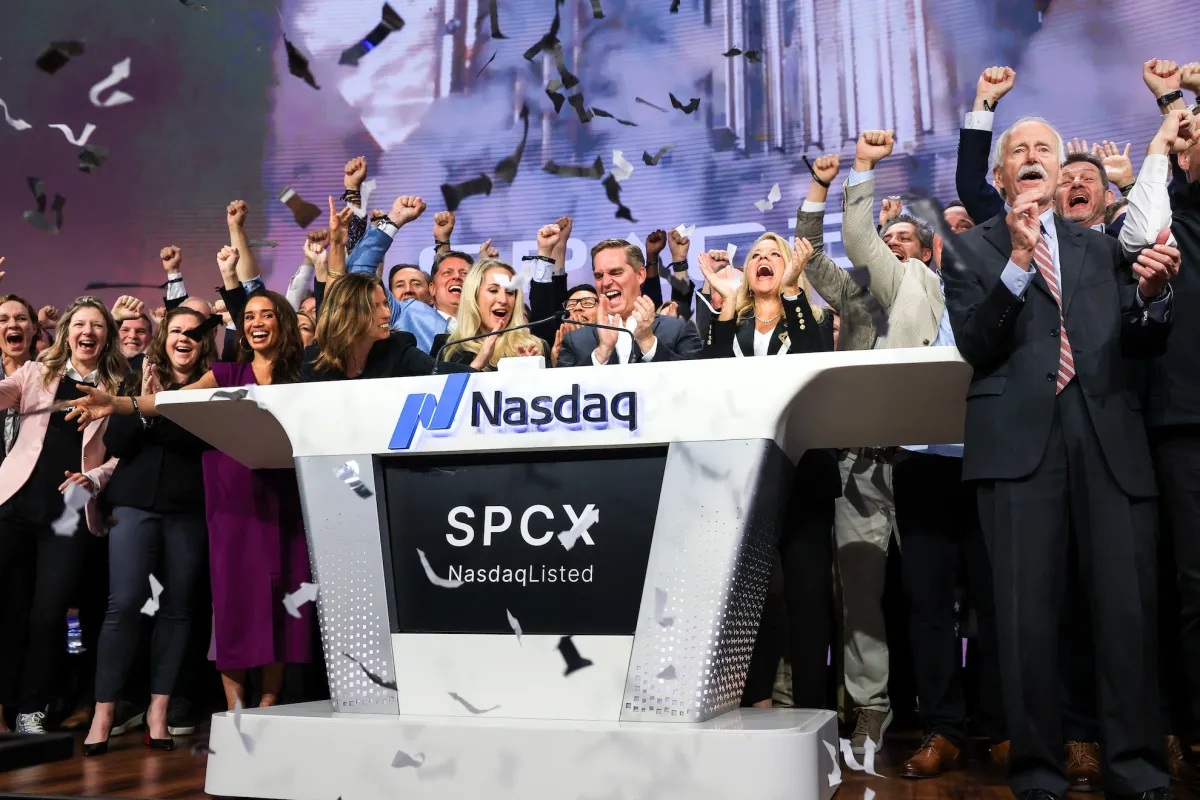
Elon Musk has announced he will give one of his personal SpaceX shares to every child in America next year, calling it “the first of many.”
In a post on X, the SpaceX CEO and world’s richest person wrote: “Next year, I will give one of my SpaceX shares to every kid in America. This will be the first of many.”
The statement came hours after AI company Anthropic said it would commit at least 5% of its shares to a new public benefit fund dedicated to social causes. Musk had earlier criticized that approach, recommending that companies distribute shares directly to the public instead.
Register for the next Tekedia Mini-MBA.
Register for Tekedia AI in Business Masterclass.
Join Tekedia Capital Syndicate and co-invest in great global startups.
SpaceX entered the public markets on June 12, 2026, following an initial public offering (IPO) that raised approximately $75 billion.
The company priced its shares at $135 apiece, valuing the business at about $1.77 trillion and making it one of the largest public offerings in financial market history.
The listing marked a significant milestone for Musk’s aerospace company, which had spent years operating as a privately held business. Its public debut provided investors with a direct opportunity to participate in the company’s financial performance and future expansion.

Investor enthusiasm was evident from the beginning. SpaceX shares opened at approximately $150 and closed their first trading session at $160.95, representing a gain of nearly 19.2% over the IPO price.
The stock subsequently climbed above $225 at its peak, reflecting strong demand for exposure to the company’s rocket technology, Starlink satellite network and emerging AI ambitions.
One of the principal reasons behind the renewed interest in SpaceX shares is the company’s expanding exposure to artificial intelligence.

Traditionally recognised for launching satellites and transporting cargo and astronauts into space, SpaceX has broadened its ambitions to include AI computing infrastructure. This strategy could provide the company with additional revenue opportunities beyond rocket launches and satellite internet subscriptions.
Investors are particularly interested in the possibility that SpaceX could combine its expertise in space technology with the growing demand for AI computing capacity. However, the long-term commercial returns from these investments remain an important question for the market.
Starlink, meanwhile, continues to represent a significant component of the company’s growth strategy. Its satellite network delivers internet connectivity to customers in locations where traditional telecommunications infrastructure is limited or expensive to deploy.
The business has created opportunities in residential broadband, enterprise communications, aviation, maritime services, and government connectivity. Its potential expansion into direct-to-mobile satellite services could open another market by allowing compatible mobile devices to connect through satellites in areas with limited terrestrial coverage.
These opportunities have strengthened the investment case for SpaceX because they offer the prospect of recurring revenue alongside its rocket-launching operations.
Earlier this year, SpaceX President Gwynne Shotwell and her husband pledged one SpaceX share each to the “Trump Accounts” of more than two million children, a contribution valued in the hundreds of millions of dollars.
Musk’s pledge arrives amid growing scrutiny of technology companies over their societal impact, particularly in artificial intelligence.
By framing the gift as the start of a broader pattern, he positioned the move as a direct alternative to institutional funds, emphasizing personal ownership of company equity by the next generation of Americans.
Outlook
Elon Musk’s proposed giveaway could introduce a new dimension to the debate over wealth distribution, corporate ownership and the social responsibilities of technology billionaires.
If implemented, the plan to distribute SpaceX shares to children across the United States would give millions of young Americans a direct stake in one of the world’s most valuable aerospace companies, potentially allowing them to benefit from its future growth.