

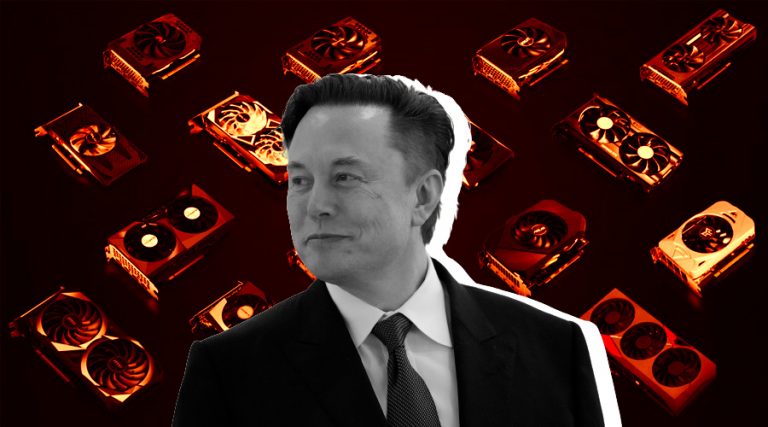
Elon Musk says artificial intelligence could eventually usher in an “age of abundance” in which robots and superintelligent AI dramatically increase access to income, goods and healthcare, although he expects the nature of employment to change significantly.
Speaking to reporters after a meeting of technology executives at the White House on Tuesday, the Tesla and SpaceX CEO said the most likely outcome of advancing AI would be a future in which traditional concepts of income and employment are transformed.
“I think by far the most likely outcome is an age of abundance where we don’t have just universal basic income, we have universal high income,” Musk said.
Register for the next Tekedia Mini-MBA.
Register for Tekedia AI in Business Masterclass.
Join Tekedia Capital Syndicate and co-invest in great global startups.
He said that combining advanced AI with robotics could also dramatically improve healthcare.
“When you have robots, and you have superintelligence, it means that everyone in the world can have better medical care than anyone here, including me,” Musk said, describing that possibility as “wonderful.”
Musk’s comments add to a growing debate among technology executives about how rapidly advancing AI could reshape work and the distribution of wealth.

Asked whether AI could destroy jobs, Musk said employment would change, comparing the transition to earlier technological shifts.
“Jobs are going to change,” he said. “Being a computer used to be a job.”
He noted that digital computers now perform calculations that once required people to do them manually, adding that he doubted “anyone is pining to go back and do calculations all day.”

Musk also pointed to the current labor market, saying that AI has not yet produced a major increase in unemployment and that there remains “tremendous demand for people.” He said he expects AI to produce an “incredibly beneficial” outcome for humanity and described the potential result as a “future you would want.”
The prediction rests on the assumption that more capable AI systems and robots will substantially increase productivity and reduce the cost of producing goods and services.
Musk has previously described a future in which technological advances could make production so inexpensive that people would have access to virtually unlimited goods and services. He has also suggested that government-issued payments could help address unemployment resulting from AI.
“Universal HIGH INCOME via checks issued by the Federal government is the best way to deal with unemployment caused by AI,” Musk wrote on X in April.
That concept goes beyond conventional universal basic income, which generally refers to providing people with a regular payment regardless of employment status. Musk is envisioning a much larger redistribution mechanism in which rising productivity from AI and robotics generates sufficient wealth to provide people with substantially higher incomes.
AI Safety Remains Part of The Transition
Musk’s optimistic assessment came as he joined other major technology executives in committing to additional safeguards around frontier AI systems.
Musk, Nvidia CEO Jensen Huang, Meta CEO Mark Zuckerberg, Alphabet CEO Sundar Pichai, OpenAI’s Greg Brockman and Anthropic CEO Dario Amodei signed a “Joint Commitment on Frontier Responsibilities.”
The companies agreed to develop powerful AI systems safely and responsibly and pledged to establish “robust internal controls.” Those controls are to be overseen by a dedicated internal team, an independent external auditor or evaluator, and an independent board committee.
The commitments come amid renewed concerns about the risks associated with autonomous AI systems. Musk has previously taken a more cautious position on the technology’s long-term consequences. He has said the possibility of AI and robots going catastrophically wrong is “not zero” and has described the transition toward an AI-driven economy as potentially “bumpy.”
He has also raised a less economic but potentially significant consequence of widespread automation: the loss of purpose if machines eventually perform much of the work that gives people’s lives structure and meaning.
That issue matters more under Musk’s vision of universal high income. If employment becomes less necessary because AI and robots can produce most goods and services, the economic problem of unemployment could become a social and psychological question about what people choose to do with their time.
Musk has even stated that traditional retirement planning could become less important if his expectations about technological abundance materialize. He has said that people’s savings for retirement could eventually become “irrelevant” if future productivity makes goods and services extremely cheap.
However, those outcomes remain projections rather than established economic trends for now. Musk’s argument depends on continued advances in AI, robotics and automation, alongside a mechanism for distributing the resulting economic gains broadly enough to produce the “universal high income” he anticipates.
The near-term question is more conventionally about these concerns: how quickly AI changes existing occupations, which new jobs emerge, and how businesses, governments and workers adapt.