

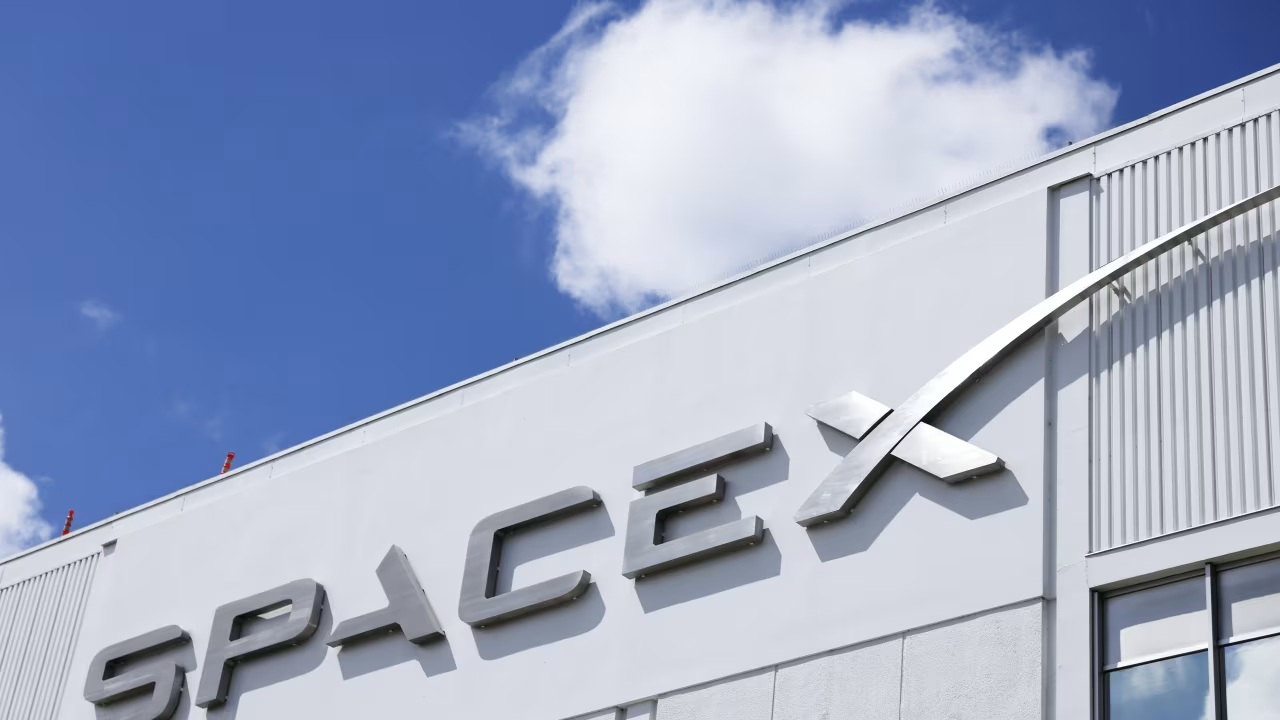
Elon Musk has offered an ambitious glimpse into SpaceX’s financial future, projecting that the aerospace company could generate as much money in 2023.
On August 27, 2026, Musk said on X that his best guess is for the company to reach $3.5 trillion in annual revenue around 2033, offering a glimpse into his ambitious outlook for the company’s future growth
His comment came in response to discussion of a recent Morgan Stanley research note that projected SpaceX reaching roughly the same level of annual revenue only in 2040.
Register for the next Tekedia Mini-MBA.
Register for Tekedia AI in Business Masterclass.
Join Tekedia Capital Syndicate and co-invest in great global startups.
Morgan Stanley’s model, shared with large investors around the time of SpaceX’s June 2026 public listing under the ticker SPCX, estimated about $330 billion in revenue by 2030 and approximately $3.4–3.5 trillion by 2040.
The forecast highlights Musk’s growing expectations for SpaceX as the company expands beyond rocket launches into satellite internet, space infrastructure and other emerging opportunities
That long-term figure assumed a dramatic ramp in Starship activity, potentially reaching 5,800 launches per year from eight pads. Musk’s timeline advances the bank’s target by seven years while aligning with the scale of the opportunity he has previously described.

The prediction builds on his earlier comments. In June 2026, shortly after the IPO, he said he thought SpaceX might reach approximately $1 trillion in revenue by 2030 and would be surprised if it did not exceed that level in 2031.
After debuting as the most volatile stock among its large-cap peers, SpaceX equity hasn’t moved in three weeks, with shares trading in a $10 range around the $140 level.
The company priced its IPO at $135 per share on June 12, giving it a valuation of roughly $1.77 trillion, making it the largest IPO in history. It reported $18.67 billion in revenue for full-year 2025, up 33% from 2024.

In the second quarter of 2026 alone, revenue reached $7.81 billion, a 92% year-over-year increase, bringing first-half 2026 revenue to $12.51 billion. Trailing-twelve-month revenue stood near $23 billion as of mid-2026.
Reaching $3.5 trillion would require sustained, extremely high growth—on the order of 90% compound annual growth for several years from today’s base. For perspective, Amazon, still the world’s largest company by revenue in recent years, generated about $717 billion in 2025. A $3.5 trillion SpaceX would be nearly five times that size.
Investor sentiment around SpaceX appears divided between long-term optimism and valuation concerns. Bullish investors view the company as more than a traditional aerospace business. Its Starlink satellite network, Starship launch system, AI infrastructure ambitions, and acquisition of xAI have created a much broader growth story.
MarketWatch noted that investors are still struggling to determine whether SpaceX should primarily be valued as an AI company or a space and telecommunications company.
Its stock has shown relatively little correlation with major technology names such as Nvidia, Apple, Microsoft and Alphabet, highlighting how unusual SpaceX’s business model is.
The more cautious camp argues that much of SpaceX’s future growth is already reflected in its valuation. Morningstar, for example, assigned the company a fair value of $63 per share, less than half its $135 IPO price.
Its analysis argued that the IPO valuation effectively required investors to place a very high probability on SpaceX successfully executing its most ambitious plans, including a rapidly reusable Starship and commercially viable orbital data centers.
Despite early volatility, industry leaders like Nvidia’s CEO Jensen Huang and Wall Street analysts remain optimistic, projecting the stock could reach $240 to $800 by 2027.
The path Musk envisions relies on the scaling of Starship, continued expansion of Starlink connectivity services, and a major push into AI compute infrastructure, including both terrestrial data centers and longer-term concepts for orbital facilities.
SpaceX has already begun breaking out AI-related revenue, which contributed meaningfully to the strong second-quarter results. The company also recently announced plans for a $100 billion launch complex in Louisiana, described as its largest spaceport project and one that Morgan Stanley noted could support even higher launch cadences than its 2040 assumptions.
The implication for investors is that SpaceX’s stock could have enormous upside if Musk’s vision materializes, but equally significant downside if Starship, AI infrastructure or Starlink fail to scale as expected.
Whether SpaceX can convert technical capability and market opportunity into revenue on this timeline remains an open question. The company has never issued formal long-range revenue guidance in its filings, and Musk’s figures are personal estimates rather than official targets.
Achieving the numbers would require near-flawless execution on reusable launch systems at unprecedented rates, continued dominance in satellite broadband, and successful commercialization of AI infrastructure at massive scale. Execution risks, capital intensity, regulatory hurdles, and competitive responses are all significant.
Still, Musk has repeatedly framed SpaceX’s ambitions in the broadest possible terms, enabling the expansion of civilization and advancing toward a multi-planetary future.