

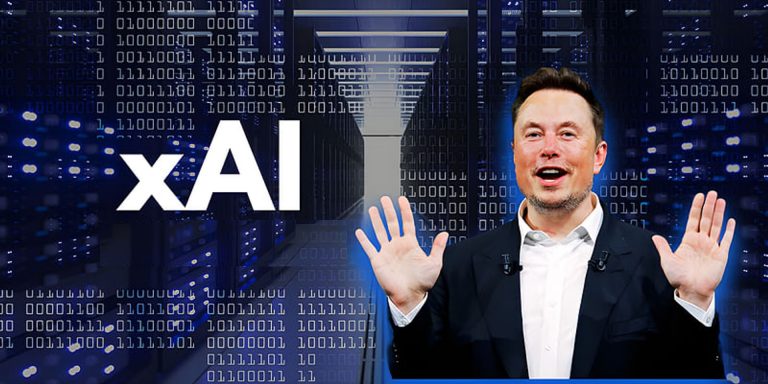
Elon Musk has signaled his interest in bringing Jensen Huang into his business empire, saying it would be “an honor” to hire the Nvidia co-founder as the chipmaker faces a leadership crisis that has unsettled investors and raised questions about the future of its artificial intelligence strategy.
Musk made the comment late Wednesday after financial blog ZeroHedge posted on X: “Elon please hire Jensen.” The Tesla chief executive and SpaceX founder replied: “That would be an honor.”
The exchange came as reports emerged that Nvidia’s board was preparing to discuss Huang’s future, following revelations about his personal relationships and allegations involving a business executive whom US intelligence officials reportedly identified as a Chinese intelligence asset.
Register for the next Tekedia Mini-MBA.
Register for Tekedia AI in Business Masterclass.
Join Tekedia Capital Syndicate and co-invest in great global startups.
The developments added to pressure on Nvidia shares, which fell more than 8% in after-hours trading following the reports. Huang subsequently resigned as Nvidia’s president and chief executive, ending a leadership tenure that began when he co-founded the company in 1993.
Nvidia confirmed in a regulatory filing on Thursday that its board had accepted Huang’s resignation. He also stepped down as a member of the board. Chief Financial Officer Colette Kress was appointed interim chief executive while the company searches for a permanent successor, and former Synopsys chief executive Harvey C. Jones became chairman of the board.
Musk’s public response has therefore taken on added significance. Huang is no longer simply a chief executive facing uncertainty over his position at Nvidia. He is an executive whose departure creates a major succession question at one of the most valuable companies in the global technology industry.

Consequently, Huang’s departure has exposed the extent to which Nvidia’s identity and long-term direction have been tied to its founder. He led the company’s transformation from a gaming graphics hardware manufacturer into the leading supplier of processors used to develop and operate advanced AI systems.
That experience has made succession particularly difficult. Investors are concerned about who can maintain Nvidia’s product strategy, customer relationships, and influence over the direction of the AI computing market.
Musk’s remark does not mean that an employment offer has been made or that Huang is considering joining one of his companies. It does, however, place the possibility of a new role for the Nvidia founder into public discussion at a time when his expertise remains valuable across the technology industry.

Musk’s companies have substantial interests in artificial intelligence and computing infrastructure. He is developing a chip plant named Terafab. Tesla is also developing AI systems for autonomous driving and robotics, while SpaceX has been expanding its ambitions beyond conventional satellite services. Huang’s experience building Nvidia’s computing platform could be relevant to those businesses, although neither Musk nor his companies have announced a plan to recruit him.
For Nvidia, the prospect of Huang joining another technology company would add another dimension to the leadership transition. His knowledge of chip development, accelerated computing and the commercial relationships behind the AI infrastructure boom has been key to Nvidia’s growth. A rival gaining access to that experience could attract attention from investors and technology executives, although Huang’s departure alone does not transfer Nvidia’s technology, intellectual property, or customer contracts to another company.
The more immediate issue is how Nvidia manages the transition. Kress has extensive knowledge of the company’s finances and operations, but her interim appointment does not settle the question of who will provide the long-term technical vision associated with Huang. Jones, as the new board chairman, will also face pressure to demonstrate that the company has a credible succession process and effective oversight.
The uncertainty has already affected market confidence. Nvidia shares had fallen more than 20% over the previous month before the latest developments, with the reports about Huang’s position adding to the pressure. The nearly 10% decline on Thursday pushed the company’s market capitalization below $4 trillion.
The leadership crisis followed a series of reports about Huang’s personal relationships. He acknowledged having an extramarital affair, while The New York Times reported that he had been romantically involved with Alice Huang, also known by her Chinese name Huang Le, a business executive whom US intelligence officials reportedly believed had been recruited by China’s Ministry of State Security to gather information about him.
The allegations have not been independently established in the material made public. China has rejected the broader narrative of Chinese espionage involving Huang as baseless.
The New York Times also reported that Huang had another extramarital relationship with an Nvidia executive. The reports intensified questions about corporate governance, particularly because the reported relationship involved an employee within the company’s management structure.
Political pressure added to the situation. Senator Kevin Cramer, a Republican member of the Senate Banking Committee, renewed his call for Huang to resign on Wednesday, joining Democratic Representative Suhas Subramanyam and Republican Representative Don Bacon.
“As a matter of his own conscience, he should resign,” Cramer told CNBC.
The calls for Huang’s departure came as the allegations attracted attention in Washington because of Nvidia’s importance to US technological competition with China. The company is a major supplier of advanced computing hardware, and its sales to Chinese customers have been a contentious issue in US export-control policy.
Huang’s exit removes an influential executive from the center of those discussions, but it does not resolve the broader questions surrounding Nvidia’s China business or the US government’s approach to advanced chip exports.