

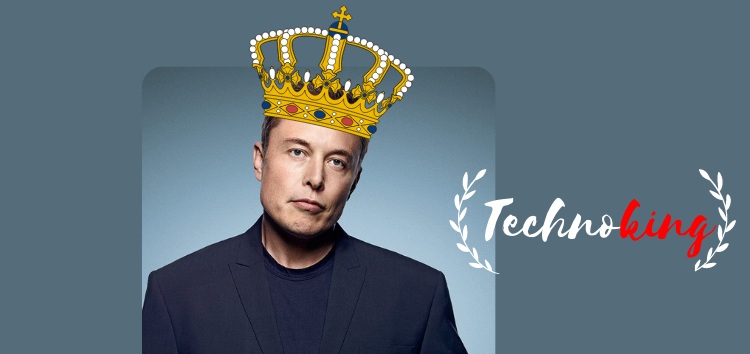
Elon Musk has suggested that SpaceX could eventually be worth $128 quintillion if the company succeeds in establishing human life beyond Earth and capturing a fraction of the Sun’s energy, setting out a potential valuation that is roughly 75 million times its current market capitalization.
In a post on X early Thursday, Musk said SpaceX could become worth about one million times the size of the global economy if it achieved those goals and harnessed even one-millionth of the Sun’s energy.
“These are obviously absurdly difficult goals, but there is a path to achieving them,” Musk wrote. “I recommend holding on to your shares.”
Register for the next Tekedia Mini-MBA.
Register for Tekedia AI in Business Masterclass.
Join Tekedia Capital Syndicate and co-invest in great global startups.
The International Monetary Fund estimates the global economy at approximately $128 trillion. Applying Musk’s proposed million-fold multiple produces a potential SpaceX valuation of $128 quintillion, equivalent to $128,000,000,000,000,000,000.
That figure is far beyond the company’s current valuation. SpaceX had a market capitalisation of approximately $1.7 trillion at Wednesday’s close. Reaching $128 quintillion would require an increase of roughly 75 million times.
Musk’s calculation also implies an extraordinary potential return for existing shareholders. Based on a share price of about $127 at Wednesday’s close, one SpaceX share could theoretically be worth approximately $9.5 billion if the company reached that valuation and issued no additional shares. That assumption excludes dilution from future fundraising, employee compensation or other share issuance.

The proposed valuation is tied to objectives that extend well beyond SpaceX’s existing commercial operations. The company operates its Starlink satellite internet network and develops rockets and spacecraft through its Starship programme. Musk’s broader vision involves making humanity multiplanetary and developing the capacity to capture and use energy on a scale far beyond current terrestrial infrastructure.
The reference to harnessing a millionth of the Sun’s energy points to an economic model based on access to resources and energy at an astronomical scale. However, Musk did not provide a financial model, timetable, or operational milestones showing how those capabilities would translate into corporate earnings or shareholder value.
The scale of the estimate also makes it difficult to compare with conventional company valuations, which are generally based on expected cash flows, assets, earnings, and the size of markets a business can serve. SpaceX’s potential value under Musk’s scenario would rest on economic activity that does not yet exist at the scale required to support the figure.

This is not the first time Musk has made a claim linking SpaceX’s long-term value to the expansion of human activity beyond Earth. In October, he said the company, which also includes the Starlink, Starship, Grok and X businesses, could eventually be worth “orders of magnitude more than the current Earth economy.”
He later clarified that the statement was not an expression of extreme confidence, but rather his belief that a path to such an outcome existed and that its probability was not zero.
The latest claim follows a separate prediction in October that SpaceX generating $1 trillion in annual revenue by 2028 was “no longer impossible.” Even if the company reached that revenue target and subsequently expanded annual revenue by another 1,000 times to $1 quadrillion, the figure would still represent less than 1% of the $128 quintillion valuation Musk has now suggested.
The comparison illustrates the distance between SpaceX’s nearer-term commercial ambitions and the scale of the economic transformation underpinning Musk’s latest estimate.
SpaceX’s Financial Performance and Shareholder Appeal
The valuation claim comes as SpaceX reports strong financial growth. The company generated $14.6 billion in revenue last quarter, an increase of 161% from the same period a year earlier. It also moved from a net loss of $1.1 billion to net income of $4.4 billion.
Those results point to a rapidly expanding business, although its reported quarterly revenue remains far below the annual revenue Musk has projected for 2028. They also do not provide a financial basis for the $128 quintillion scenario, which depends on technological and economic developments on a much larger scale.
Musk’s latest comments also followed his pledge to match SpaceX’s gift of one share to every active Trump Account. The company said the commitment formed part of his plan to give one of his SpaceX shares to “every kid in America” next year.
The pledge places the company’s shares at the center of a broader effort to extend ownership to young Americans, while Musk’s public comments encourage existing shareholders to retain their holdings.
However, investors are looking at the gap between SpaceX’s current financial performance and a hypothetical future in which the company helps build an economy extending beyond Earth. Its revenue growth, satellite network, and rocket development provide measurable indicators of its present business. But a $128 quintillion valuation remains a scenario tied to ambitions whose commercial feasibility, timing, and economic returns have not been established.
Musk’s statement is therefore a projection of what SpaceX might become under an extraordinary set of conditions, not a conventional valuation target supported by the company’s current earnings or operating outlook.