

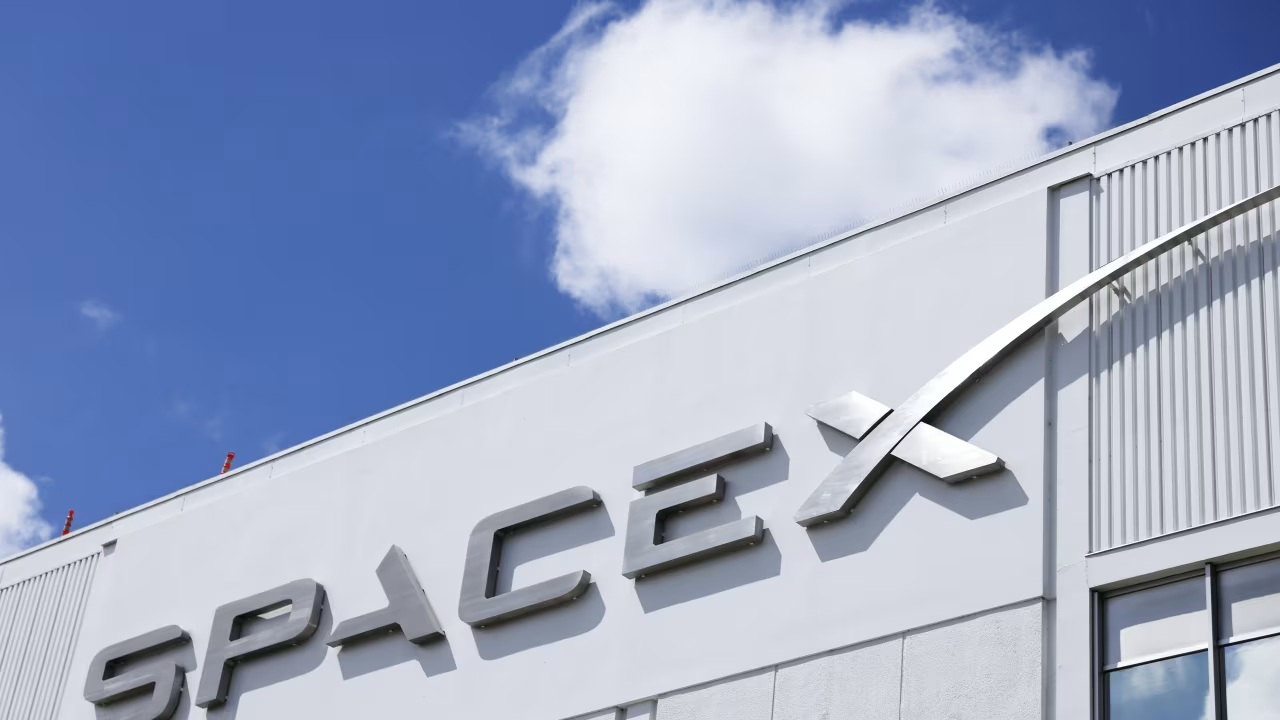
Elon Musk has made another ambitious prediction about the future of space exploration, suggesting that SpaceX could one day become so valuable that its worth vastly exceeds the entire economy of Earth.
The statement reflects Musk’s long-standing belief that humanity’s economic future will eventually extend beyond the boundaries of the planet. While the idea may appear extraordinary today, it highlights his vision of transforming space into a major center of industrial production, technological innovation, and economic growth.
SpaceX has already changed the global aerospace industry by developing reusable rockets and reducing the cost of sending payloads into orbit. Traditionally, space missions have been expensive because rockets were largely discarded after launch.
Register for the next Tekedia Mini-MBA.
Register for Tekedia AI in Business Masterclass.
Join Tekedia Capital Syndicate and co-invest in great global startups.
SpaceX challenged this model by creating launch vehicles capable of returning to Earth and being reused. This innovation has helped the company secure contracts with governments, commercial satellite operators, and scientific organizations while strengthening its position in the rapidly expanding space economy.
A major driver of SpaceX’s business is Starlink, its satellite internet service designed to provide connectivity across remote and underserved regions. By deploying thousands of satellites into low Earth orbit, the company has established an increasingly important communications network.
Starlink has the potential to generate substantial recurring revenue from households, businesses, governments, and organizations operating in areas where traditional broadband infrastructure remains limited. As demand for reliable internet grows, satellite connectivity could become one of the company’s most important commercial assets.

However, Musk’s prediction extends far beyond satellite internet and rocket launches. His broader ambition involves establishing a future in which humanity becomes a multiplanetary civilization, with Mars serving as a potential destination for permanent settlement.
Achieving this objective would require enormous investment in transportation systems, life-support technologies, energy infrastructure, and manufacturing capabilities. If these systems eventually become commercially viable, space could develop into an economic environment supporting industries that are difficult or impossible to establish on Earth.
The prospect of asteroid mining, space-based manufacturing, and large-scale orbital infrastructure adds another dimension to this vision. In theory, extracting valuable resources from asteroids or producing certain materials in microgravity could create new commercial opportunities. Yet these possibilities remain highly uncertain.

Technical challenges, transportation costs, regulatory questions, and the difficulty of maintaining human settlements beyond Earth could prevent many proposed industries from becoming profitable for decades.
There is an important distinction between a company’s valuation and the size of the global economy. Earth’s economic output represents the value of goods and services produced over a particular period, while a company’s valuation estimates the worth of its future earnings, assets, and growth opportunities.
Comparing the two is therefore not straightforward. For SpaceX to become worth vastly more than the world’s economy, investors would need to believe that its future business opportunities are extraordinarily large and sustainable.
Financial markets can reward companies for ambitious visions, but expectations alone cannot guarantee success. SpaceX must continue demonstrating technological reliability, managing enormous capital requirements, navigating regulation, and competing in a changing aerospace market. Accidents, development delays, environmental concerns, and geopolitical tensions could also affect its growth.
Musk’s prediction captures the scale of his ambitions. He is not simply seeking to improve rocket transportation but attempting to build the infrastructure for a future in which economic activity extends beyond Earth.
Whether SpaceX ever reaches the extraordinary valuation he imagines remains uncertain. What is clearer is that reusable rockets, satellite communications, and commercial spaceflight are already changing how humanity approaches space.
SpaceX’s long-term success will depend on whether its bold vision can be translated into sustainable technological and economic achievements. Musk’s prediction may sound unrealistic today, but it invites a serious question: if humanity eventually develops a thriving space economy, could the companies building its foundations become more valuable than anything the world has previously imagined?