

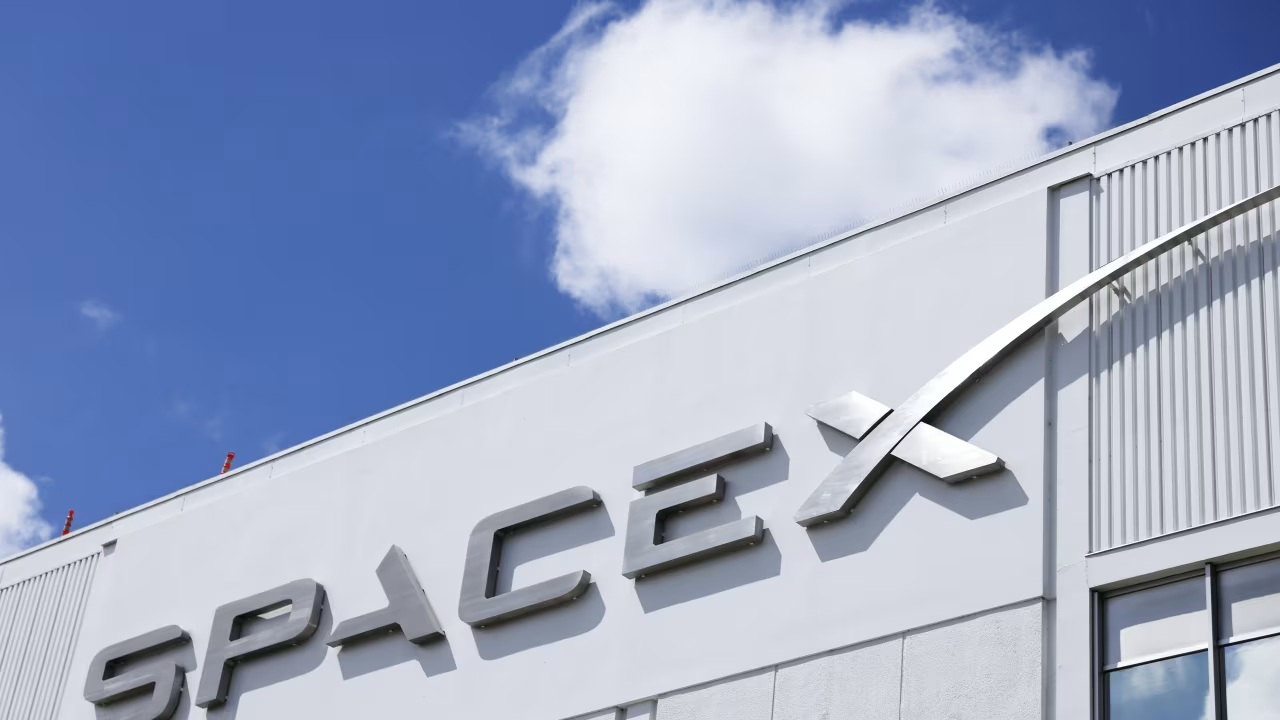
Elon Musk is increasingly bullish on SpaceX’s long-term growth prospects, as the billionaire entrepreneur continues to outline an ambitious future for the aerospace company.
Musk believes the company’s expanding space exploration ambitions, and advancements in rocket technology could unlock unprecedented value, even suggesting that SpaceX reaching a $1 quadrillion valuation is a “possible” outcome.
In a post on X, he wrote,
Register for the next Tekedia Mini-MBA.
Register for Tekedia AI in Business Masterclass.
Join Tekedia Capital Syndicate and co-invest in great global startups.
“This will sound super crazy, but I see a path to SpaceX being worth orders of magnitude more than the current Earth economy.”
With global GDP estimated at roughly $110 trillion, even one order of magnitude higher already points to a figure exceeding $1 quadrillion. Financial accounts and news outlets quickly translated Musk’s statement into concrete terms, with WatcherGuru summarizing it as Musk calling a $1 quadrillion valuation for SpaceX ($SPCX) a “possible” outcome.
The remark comes only months after SpaceX’s historic public debut. In June 2026 the company completed the largest IPO on record, raising about $75 billion and closing its first trading day with a market value of approximately $2.1 trillion.

That debut made Musk the world’s first trillionaire and positioned SpaceX as one of the most valuable public companies in the United States. Current valuations hover in the low-to-mid $2 trillion range—still a tiny fraction of the scale Musk is now discussing.
Musk’s ambitions for SpaceX extend far beyond launching rockets and deploying satellites. The company is developing Starship, a fully reusable transportation system designed to carry people and cargo to the Moon and Mars.
Musk envisions Starship as the foundation for establishing a self-sustaining human settlement on Mars, an ambition that could open new economic opportunities in space transportation, infrastructure, resource utilization, and interplanetary travel.

At the same time, Starlink has emerged as a significant commercial component of SpaceX’s business model. By providing internet services to consumers, businesses, governments, and other organizations, the satellite network offers a potential source of recurring revenue that could help finance the company’s more ambitious space exploration projects.
SpaceX is also pursuing direct-to-cell satellite connectivity, which could expand its reach into mobile communications and create additional opportunities in the telecommunications industry.
These businesses form part of the broader investment case behind Musk’s suggestion that SpaceX could eventually reach a valuation of $1 quadrillion.
The figure would represent an unprecedented scale of corporate value, resting on the assumption that SpaceX could evolve from a launch services provider into a major player in global telecommunications, space infrastructure, and eventually the emerging space economy.
Musk has long argued that the true economic potential of space dwarfs anything possible on Earth alone. He has previously linked extreme valuations to the industrialization of the Moon and Mars, the harnessing of space-based solar power, asteroid resources, and the eventual shift away from traditional currencies toward measures of mass and energy.
In earlier comments he noted that reaching quadrillionaire-level wealth would require factories on other planetary bodies and that, by then, dollars themselves may no longer serve as the primary unit of account.
These ideas sit within Musk’s broader multi-planetary vision for SpaceX. The company’s Starship program, Starlink satellite constellation, and expanding role in AI and data infrastructure form the practical foundation for that ambition.
Musk has repeatedly framed SpaceX’s mission as making life multi-planetary and “taking the fiction out of science fiction,” with the long-term goal of enabling large-scale human presence beyond Earth.
The latest comment has sparked the usual mix of awe, skepticism, and speculation. Some observers point to the enormous energy resources available in space, Earth currently uses far less than a trillionth of the Sun’s output as a theoretical basis for valuations that eclipse the terrestrial economy.
Others note that a $1 quadrillion figure remains astronomically distant from today’s numbers and would require technological and economic breakthroughs on a civilizational scale.
Discussions have also included renewed talk of possible synergies or even a future combination between Tesla and SpaceX, though no formal plans have been announced.
Whether a path to valuations measured in quadrillions ever materializes remains an open and highly speculative question.
What is clear is that Musk continues to evaluate SpaceX’s potential not against the limits of the current Earth economy, but against the far larger possibilities he believes space itself can unlock.