

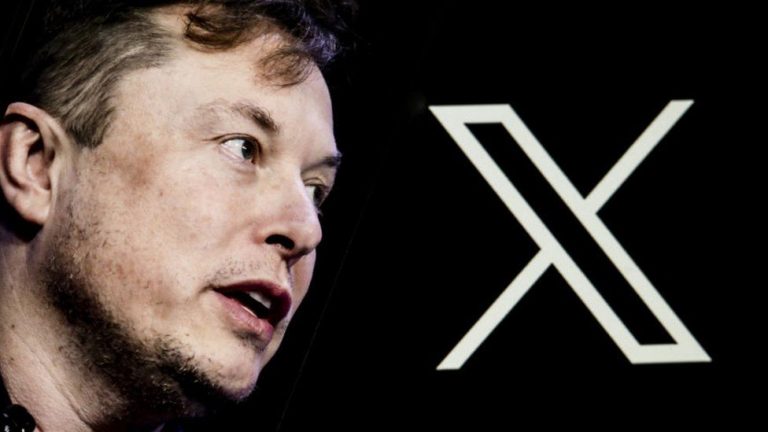
Elon Musk’s X is refusing to back down in India, vowing to appeal a court ruling that upheld New Delhi’s expanded content removal regime — the latest turn in a rocky relationship between the billionaire and the world’s largest democracy.
The social media company said on Monday it was “deeply concerned” by the judgment, which quashed its petition challenging India’s tightened takedown mechanisms. X warned that the framework had “no basis in the law,” violated Supreme Court precedents, and undermined Indians’ fundamental rights to freedom of speech and expression.
Prime Minister Narendra Modi’s government has defended the system, arguing it tackles a flood of unlawful content and ensures accountability online. Under new rules introduced in 2023, far more government officials can issue takedown requests and submit them directly to platforms through a portal launched in October that year. Last week, a judge reinforced the state’s position, saying every company operating in India “must accept that liberty is yoked with responsibility.”
Register for Tekedia Mini-MBA edition 20 (June 8 – Sept 5, 2026).
Register for Tekedia AI in Business Masterclass.
Join Tekedia Capital Syndicate and co-invest in great global startups.
Register for Tekedia AI Lab.
In its response, X stressed that it “respects and complies with Indian law,” but disagreed with the view that it had no right to question the framework simply because it was incorporated abroad. The platform, owned by Musk since 2022, has consistently framed the dispute as a fight for free expression.
Musk’s fallout with India
Musk’s dealings with India have been fraught for years, long before this court challenge. His flagship company, Tesla, has repeatedly sparred with New Delhi over import duties, which Musk has called among the highest in the world. Attempts to negotiate tax breaks for bringing Tesla cars into the country have stalled, frustrating his broader ambitions in one of the fastest-growing automotive markets.
On the social media front, X (then Twitter) had already clashed with Indian regulators in 2021 when it resisted government orders to block accounts critical of the Modi administration during protests by farmers. That standoff escalated into raids on Twitter’s offices in New Delhi and a broader push by the government to force the platform into compliance. Musk’s ownership has not changed the pressure: since 2023, the government has leaned more heavily on its content removal powers, and X has become the most vocal challenger.

A global pattern of clashes
Musk’s struggle in India is part of a wider pattern of friction between X and regulators worldwide. In Brazil, the company faced the threat of a nationwide suspension earlier this year after refusing to comply with Supreme Court orders to block accounts accused of spreading disinformation. In Europe, the platform is under investigation for alleged failures to curb hate speech and disinformation under the EU’s new Digital Services Act. Musk has often presented these disputes as battles for free expression, positioning himself as a “free speech absolutist” against what he describes as heavy-handed governments.
But many believe that his approach is inconsistent. In Turkey, for instance, X has been accused of yielding to government demands to restrict opposition voices ahead of elections. The push-and-pull has created uncertainty for X’s global standing, leaving users, advertisers, and policymakers questioning how far Musk is willing to go in defending speech when his companies face commercial or legal risk.
India’s stakes in the fight
The battle in India carries outsized importance. With over 800 million internet users, the country represents one of the most critical growth markets for global tech firms. Yet it is also among the most tightly regulated, with frequent demands on platforms to remove politically sensitive or security-related content. For Musk, India is both a potential goldmine for X’s user growth and a difficult market that has already complicated his automotive ambitions with Tesla.

Thus, by appealing the ruling, X is effectively betting that higher courts might still rein in New Delhi’s powers. But if the government’s position is upheld, the decision could cement India’s authority to dictate digital speech at a scale unmatched in most democracies. That leaves Musk — who has championed “absolute free speech” as a core principle for X — facing a choice: adapt to India’s regulatory strictures or risk exclusion from one of the largest and fastest-growing online communities in the world.