

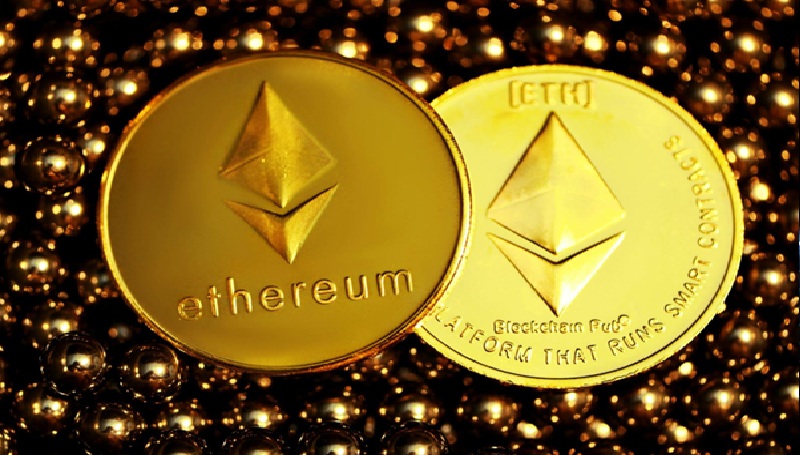
Ethereum’s long-term roadmap is expanding beyond its traditional focus on scalability. As the network matures, developers are increasingly prioritizing privacy, quantum security, native rollups and protocol simplification, reflecting a broader effort to ensure Ethereum remains resilient, efficient and competitive for decades to come.
For years, Ethereum’s most visible challenge was scalability. The network’s roadmap became heavily centered on rollups and other layer-2 technologies designed to increase transaction capacity while keeping Ethereum as the underlying settlement and security layer.
That strategy has helped create a large ecosystem of scaling networks, but Ethereum’s future development is now being framed around a much wider set of technical priorities.
One of the most important additions is privacy. Ethereum has historically operated as a transparent blockchain, allowing transactions and account activity to be publicly inspected.
Register for the next Tekedia Mini-MBA.
Register for Tekedia AI in Business Masterclass.
Join Tekedia Capital Syndicate and co-invest in great global startups.
While transparency is valuable for verification and accountability, it can create serious limitations for individuals, businesses and institutions that do not want every financial interaction exposed on a public ledger.
Greater privacy could therefore become an important component of Ethereum’s next phase. Developers are exploring cryptographic technologies that could allow users to prove information without revealing unnecessary underlying data.
Such capabilities could make decentralized applications more practical for financial institutions, businesses and ordinary users while preserving the verifiability that makes public blockchains useful. Quantum security represents another increasingly important consideration.

Quantum computing remains an emerging technology, but sufficiently powerful quantum machines could eventually threaten some cryptographic systems used by blockchain networks.
Ethereum’s willingness to consider quantum-resistant infrastructure before such threats become immediate demonstrates a long-term approach to protocol security.
Native rollups remain central to Ethereum’s scaling ambitions. Rather than treating scaling networks as separate experiments, Ethereum’s roadmap increasingly envisions a deeper integration between rollup-based execution and the core protocol.
The objective is to make transactions cheaper and faster while preserving Ethereum’s decentralization and security assumptions. Protocol simplification is equally significant. Ethereum has become an extraordinarily complex system after years of upgrades, experimentation and expanding functionality.

Complexity can create technical debt, increase maintenance costs and make the protocol harder for developers and validators to understand. Simplifying Ethereum’s architecture could therefore improve security and make future upgrades easier to implement.
These priorities illustrate how Ethereum’s evolution is changing. The network is no longer pursuing a single technological objective. Scalability remains critical, but privacy, security, usability and simplicity are becoming equally important pieces of the long-term strategy.
The roadmap could influence Ethereum’s position in the broader digital-asset economy. As tokenized assets, decentralized finance and institutional blockchain applications expand.
Infrastructure will increasingly be judged not only by transaction speed but also by confidentiality, reliability and resistance to emerging technological threats. Ethereum’s roadmap acknowledges these changing expectations.
The broader implication is that Ethereum is attempting to build infrastructure capable of surviving multiple technological eras. The network must accommodate increasing demand, support sophisticated financial applications, protect users against emerging threats and remain decentralized enough to preserve its core principles.
Ethereum’s roadmap therefore represents more than a collection of upgrades. It is an attempt to redefine what a global blockchain infrastructure should become.
By combining native scaling, stronger privacy, quantum resilience and a simpler protocol, Ethereum is positioning itself not merely for the next market cycle, but for a technological future that could look dramatically different from today.