

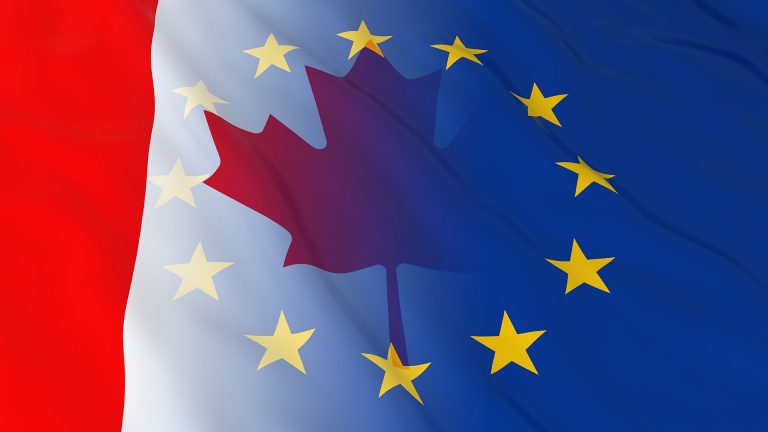
The European Union and Canada are strengthening their relationship as geopolitical tensions and strained relations with the United States reshape the global political and economic landscape.
At the conclusion of a two-day summit in Montreal on Friday, officials from both sides announced an “alliance for the future,” signalling a shared commitment to deeper cooperation, economic resilience and international stability.
The agreement reflects growing concerns about the reliability of traditional partnerships and the need for countries to diversify their diplomatic and economic relationships.
Register for the next Tekedia Mini-MBA.
Register for Tekedia AI in Business Masterclass.
Join Tekedia Capital Syndicate and co-invest in great global startups.
As disagreements with Washington create uncertainty across international trade and security arrangements, Brussels and Ottawa are increasingly looking toward each other as strategic partners.
For the European Union, Canada represents a valuable ally with significant natural resources, advanced industries and a commitment to democratic institutions.
For Canada, closer ties with Europe offer an opportunity to expand export markets, attract investment and reduce dependence on its powerful southern neighbour. Economic cooperation is expected to remain central to the developing partnership.

Both sides have strong incentives to strengthen trade, improve supply-chain security and encourage investment in strategic industries. These priorities have become particularly important as governments seek to protect their economies against geopolitical disputes, trade restrictions and disruptions affecting critical materials.
Energy security is another area where cooperation could produce meaningful benefits. European countries have been working to diversify their energy supplies and reduce vulnerabilities exposed by international conflicts.
Canada, with its substantial energy resources, could contribute to Europe’s efforts to establish more reliable supply arrangements while attracting investment into its own energy sector.

Critical minerals, clean technology and advanced manufacturing offer opportunities for collaboration. As demand for the materials needed to produce electric vehicles, batteries and renewable-energy equipment increases, both partners have reasons to build more resilient supply chains.
Closer coordination could reduce reliance on concentrated suppliers and strengthen their industrial competitiveness. Security and defence are equally important.
Russia’s war against Ukraine and wider international instability have reinforced the need for cooperation among democratic countries. Canada and European governments share concerns about territorial security, cyber threats and the protection of critical infrastructure.
Stronger coordination could improve their ability to respond to emerging challenges while supporting the international institutions underpinning global stability. However, the partnership also faces considerable obstacles.
Political declarations do not automatically translate into concrete economic results. Differences in national priorities, regulatory requirements and budgetary constraints could slow progress. Both sides must demonstrate that their commitments can generate measurable benefits for businesses and citizens.
Their relationship with the United States presents another complication. Despite current tensions, Washington remains an essential economic and security partner for both Canada and European countries. The EU and Canada are therefore unlikely to abandon transatlantic cooperation entirely.
Instead, their closer relationship may represent an effort to strengthen their independence while preserving important existing connections. The Montreal summit highlights a broader transformation in international relations.
Governments are increasingly seeking partnerships that provide greater flexibility in an unpredictable world. For Canada and the European Union, closer cooperation offers a way to protect shared interests, diversify economic opportunities and strengthen their influence.
Whether their alliance for the future becomes a lasting strategic partnership will depend on implementation. Sustained political commitment, practical agreements and tangible economic results will determine whether this initiative can deliver meaningful change.
As global uncertainty continues, Canada and Europe are making clear that cooperation and diversification will play increasingly important roles in their future.