

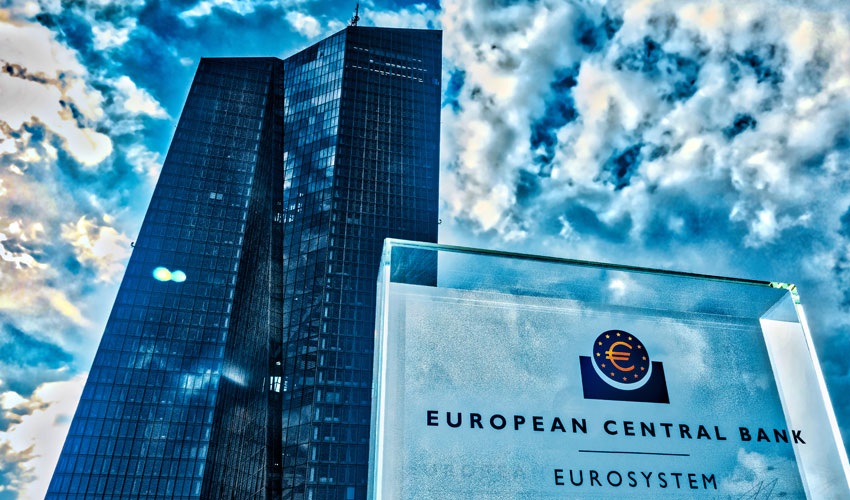
European stocks and government bonds rallied on Thursday as investors assessed the European Central Bank’s next policy move and awaited earnings from Amazon and Intel, with mounting concerns over the cost of artificial intelligence infrastructure weighing on technology shares.
The STOXX 600 rose 0.5%, holding up despite a roughly 1% decline in Nasdaq futures and volatile trading across Asian markets. Alphabet’s latest results intensified concerns that the enormous sums technology companies are committing to AI infrastructure may be putting pressure on cash flow before investors can see sufficient returns.
Alphabet shares fell 10.5% in premarket trading after the company reported disappointing results in its core search business and a sharp acceleration in cash spending as it expanded its AI operations. The decline threatened to erase nearly $400 billion from the company’s market value, adding to pressure on investors to reassess the financial returns expected from the industry’s investment boom.
Register for the next Tekedia Mini-MBA.
Register for Tekedia AI in Business Masterclass.
Join Tekedia Capital Syndicate and co-invest in great global startups.
The divergence between European equities and US technology futures suggested that investors were responding to different market pressures. In Europe, falling energy prices and expectations that the ECB would pause its rate increases supported sentiment. In the United States, attention remained fixed on whether the revenues generated by AI products would justify the capital expenditure required to build and operate them.
The euro and euro zone government bond yields edged lower as oil and natural gas prices declined ahead of the ECB’s widely expected decision to leave interest rates unchanged. The market reaction also followed a rally in US Treasuries on Wednesday, after Federal Reserve Chair Kevin Warsh expressed greater confidence in the inflation outlook while the Fed held rates steady.
RBC European Macro Strategist George Moran said the bank expected the ECB to maintain its benchmark rate at 2.50%, followed by one final increase to 2.75% in December. Money markets, however, were pricing in as many as three additional increases, reflecting uncertainty over the inflation outlook and the potential consequences of higher energy costs.

“Widening sovereign spreads, particularly for France, give the ECB cover to avoid further aggressive tightening,” Moran said, despite the recent surge in energy prices.
That contrast between RBC’s forecast and market pricing underscores the difficulty facing policymakers. Higher energy costs could push inflation upward and complicate the case for holding rates steady. Yet additional tightening could increase borrowing costs for governments and businesses at a time when financial markets are already showing signs of strain.
France remains a particular source of concern. The yield spread between French government bonds and benchmark German Bunds, a key measure of perceived sovereign risk within the euro zone, stood at 153.50 basis points on Thursday. The gap had approached 178 basis points last week, its widest level in nearly 15 years.

The retreat from that peak offered some relief, but the spread remained elevated. Investors are demanding a greater premium to hold French debt than German government bonds, reflecting concerns about France’s fiscal position and political outlook. Wider sovereign spreads also complicate the ECB’s task because a single monetary policy must operate across countries facing different borrowing costs and fiscal pressures.
The ECB’s leadership transition added another challenge. President Christine Lagarde confirmed that she would leave her position in February, following months of speculation about an early departure.
Her exit would allow French President Emmanuel Macron and other European Union leaders to select a successor before France’s presidential election in the spring. Opinion polls suggest the far right could win that vote, making the appointment particularly significant for the direction of European economic policy.
The ECB president influences the euro zone’s response to inflation, financial-market instability and economic weakness, making the timing notable. A change in leadership would not automatically alter the bank’s policy framework, but it could shape how future decisions are communicated and how policymakers balance price stability against mounting pressure on government finances.
AI Spending and Technology Valuations
In Asia, MSCI’s broadest index of shares outside Japan fell nearly 0.5%, while Japan’s Nikkei ended more than 1% higher after another volatile session.
Corporate earnings produced mixed reactions. Samsung Electronics reported another record set of results, supported by strong demand for memory chips, but its shares fell 4% after the company offered no announcement on plans to increase shareholder returns. South Korea’s KOSPI dropped 1.2%, reversing part of its nearly 7% gain in the previous session.
SK Hynix moved in the opposite direction, extending its rally as investors responded to its plans to return about $75 billion to shareholders this year. Its shares gained more than 15% over two sessions, highlighting the market’s willingness to reward companies that combine exposure to AI demand with substantial capital-return commitments.
The contrast shows a growing distinction within the AI supply chain. Demand for advanced memory chips remains strong, but investors are also assessing how companies allocate the resulting profits and whether heavy investment will translate into sustainable shareholder returns.
Alphabet’s sell-off brought that scrutiny into sharper focus. The company’s spending on AI infrastructure is intended to strengthen its position in a market where computing capacity, models and integrated services are becoming increasingly essential. However, disappointing search performance alongside accelerating cash expenditure raised questions about the near-term financial trade-offs.
Investors were looking for further evidence from Amazon and Intel, both scheduled to report after US markets closed on Thursday. Their results could provide additional indications of how AI investment is affecting spending plans, operating performance and expectations for future growth.
“Investors are starting to scrutinize monetization timelines versus the capital expenditure burn rates. Some investors are no longer giving all hyperscalers a ‘free pass’ to spend without limit,” said Jeremy Saltzberg, vice president and senior investment officer at Check Capital Management.