

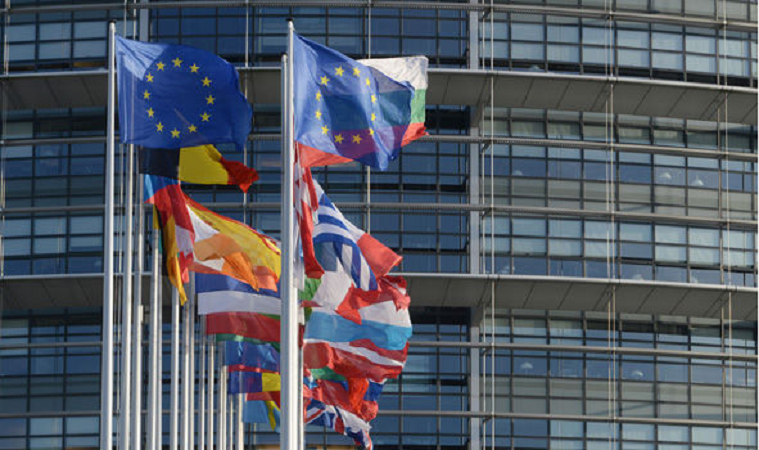
The EU’s Digital Services Act (DSA), a landmark regulation aimed at promoting transparency, accountability, and user safety on large online platforms.
X designated as a “very large online platform” (VLOP) under the DSA, was found to have breached several key transparency requirements. The penalty totals €120 million, equivalent to approximately $140 million at current exchange rates, representing about 5% of X’s estimated global annual revenue.
The Commission’s two-year investigation identified three main areas of non-compliance Misleading Verified Badges. X’s shift under Elon Musk’s ownership—changing blue checkmarks from indicators of account verification based on identity and notability to a paid subscription perk via X Premium—was deemed “deceptive” and not aligned with industry standards.
This design could mislead users about the authenticity or credibility of accounts, potentially amplifying misinformation or scams. The fine for this infraction is €45 million. X failed to provide adequate access to its public data and algorithms for independent researchers, public authorities, and regulators.
Register for Tekedia Mini-MBA edition 20 (June 8 – Sept 5, 2026).
Register for Tekedia AI in Business Masterclass.
Join Tekedia Capital Syndicate and co-invest in great global startups.
Register for Tekedia AI Lab.
The DSA requires VLOPs to enable such access to support studies on systemic risks like disinformation or election interference. This breach carries a €40 million penalty. X’s ad library lacks the required level of detail and accessibility, making it hard for users and watchdogs to scrutinize targeted ads for potential biases or violations.
This drew a €35 million fine. The Commission emphasized that the fine was calculated proportionally, considering the infringements’ gravity, duration, and impact on EU users— X has over 100 million monthly active users in the bloc.
EU tech chief Henna Virkkunen stated: “We are not here to impose the highest fines. We are here to make sure that our digital legislation is enforced and if you comply with our rules, you don’t get the fine.”

This follows earlier probes into X’s content moderation and risk assessments. In contrast, TikTok avoided a fine today by agreeing to concessions, such as improving its ad library transparency, and called for “equal and consistent” application across platforms.
The decision has sparked criticism from U.S. figures. Vice President JD Vance posted on X: “Rumors swirling that the EU commission will fine X hundreds of millions of dollars for not engaging in censorship.
The EU should be supporting free speech not attacking American companies over garbage.” Elon Musk has not yet commented publicly, but the fine could fuel ongoing transatlantic tensions over tech regulation similar to GDPR or antitrust cases against Apple and Meta.

X can appeal the decision, potentially escalating to the EU’s General Court. Non-compliance with DSA rules can lead to fines up to 6% of global turnover in future cases. The Commission has ordered X to remedy these issues within a set timeframe, with ongoing monitoring.
X must address the violations within 90 days, including redesigning its blue checkmark system to reduce “deceptive” elements like clearer distinctions between paid and verified accounts, enhancing its ad repository for better transparency on targeted ads, and granting researchers fuller access to public data and algorithms.
Failure to comply could escalate to the DSA’s maximum penalty of 6% of global annual revenue—potentially billions for X. This forces X to balance Musk’s free-speech ethos with regulatory realities, possibly diluting features like paid verification that drive Premium subscriptions.
Though manageable for Musk’s portfolio— xAI, Tesla, SpaceX, the fine adds to ongoing costs from global scrutiny. It reinforces perceptions of X as a regulatory lightning rod, potentially deterring advertisers already wary of misinformation risks.
Musk is expected to contest the ruling, likely via appeal to the EU’s General Court, prolonging uncertainty and legal expenses. Expect tweaks like hybrid verification via paid badges labeled as such and API expansions for academics, which could improve trust but frustrate users valuing X’s “unfiltered” vibe.
In the long term, this might accelerate X’s pivot toward non-EU markets or integration with Musk’s other ventures for data handling. This enforcement validates the DSA’s teeth after its 2023 rollout, targeting “very large online platforms” like X, Meta, and TikTok.
It sets a benchmark for future cases—TikTok settled similar ad transparency charges today by agreeing to fixes, avoiding a fine, while probes into Meta and Temu loom. The EU positions itself as a global regulator, exporting standards via the “Brussels Effect,” where companies comply EU-wide to avoid fragmentation.
This ruling underscores the EU’s push to hold Big Tech accountable for platform design choices that affect user trust and societal harms.