

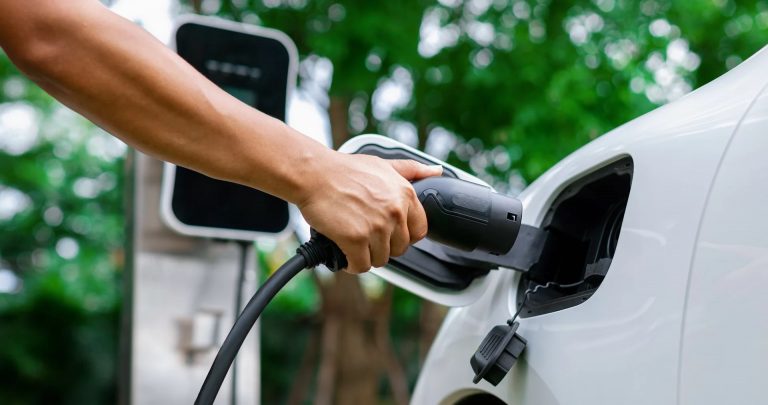
Electric vehicle sales in the United States are experiencing a sharp spike as consumers rush to take advantage of tax credits worth up to $7,500 before they expire at the end of September.
The looming deadline, set under legislation backed by Republicans in Congress and signed by President Donald Trump in July, marks a dramatic policy shift that will effectively eliminate federal incentives for new, used, and leased EVs after September 30 — a full seven years earlier than originally planned under the Biden administration’s Inflation Reduction Act.
Under Biden’s plan, the credits would have remained in place until 2032, part of a broader strategy to cut greenhouse gas emissions from the transportation sector, which is the single largest contributor to U.S. emissions. The change now leaves a narrow window for buyers to lock in significant savings, pushing the EV market into a frenzy.
Register for Tekedia Mini-MBA edition 20 (June 8 – Sept 5, 2026).
Register for Tekedia AI in Business Masterclass.
Join Tekedia Capital Syndicate and co-invest in great global startups.
Register for Tekedia AI Lab.
Auto analysts say the surge is unprecedented. Stephanie Valdez Streaty, senior analyst at Cox Automotive, predicts the third quarter could set an all-time record for EV sales.
“People are rushing out to buy because they know the incentives are going away,” she said.
In July alone, Americans purchased nearly 130,100 new EVs — the second-highest monthly sales total on record, just behind December’s 136,000. That’s a 26.4% jump from June and almost 20% higher than a year earlier. EVs made up 9.1% of all passenger vehicle sales for the month, the largest share ever recorded.

Used EVs are also seeing record demand, with nearly 36,700 sold in July, according to Cox data. Certain models have emerged as clear winners, including the Chevy Equinox EV, Honda Prologue, and Hyundai IONIQ 5. The Equinox EV alone sold 8,500 units in July — the highest single-month total for any non-Tesla EV in the U.S. Tesla, still the market leader, has seen its own sales slip for two straight quarters, down 12% year-over-year in Q2 and 9% in Q1.
The appeal of the tax credits is simple economics. A new EV costs an average of $55,689, compared to $48,078 for a new gasoline-powered car. With the federal credit, the price gap all but disappears, bringing an EV’s cost to around $48,189 — near parity with conventional vehicles. Without that subsidy, the affordability advantage vanishes overnight.
Tom Libby, analyst at S&P Global, warns that the end of the credits will “jeopardize” EV price competitiveness, even as state governments and utility companies continue to offer smaller, localized incentives.

Dealers are making the most of the ticking clock. Tesla’s homepage now blares “$7,500 Federal Tax Credit Ending” alongside “Limited Inventory — Take Delivery Now,” urging customers to finalize purchases before the cutoff. To sweeten the deal, automakers are stacking additional discounts on top of the federal credit. In July, new EV buyers received an average of $9,800 in extra incentives from dealers, worth 17.5% of the average transaction price, the highest level since before EVs began to gain mainstream traction in late 2017.
But the rush may be short-lived. Analysts warn of a steep drop in sales once the tax credit disappears.
“EV sales are likely to collapse in the fourth quarter of 2025,” Streaty said, predicting that the market will have to recalibrate to a new financial reality.
One possible bright spot could be the used EV market, which has already been growing without much help from incentives. Only about one-third of used EVs sold qualified for the $4,000 federal credit even before the policy change, suggesting demand won’t crater as dramatically. With more used EVs entering the market and fewer subsidies for new ones, analysts expect pre-owned models to attract more buyers in the months ahead.
However, the looming expiration of federal incentives has created a paradox of an artificial boom in sales today, shadowed by the threat of a sharp contraction tomorrow.